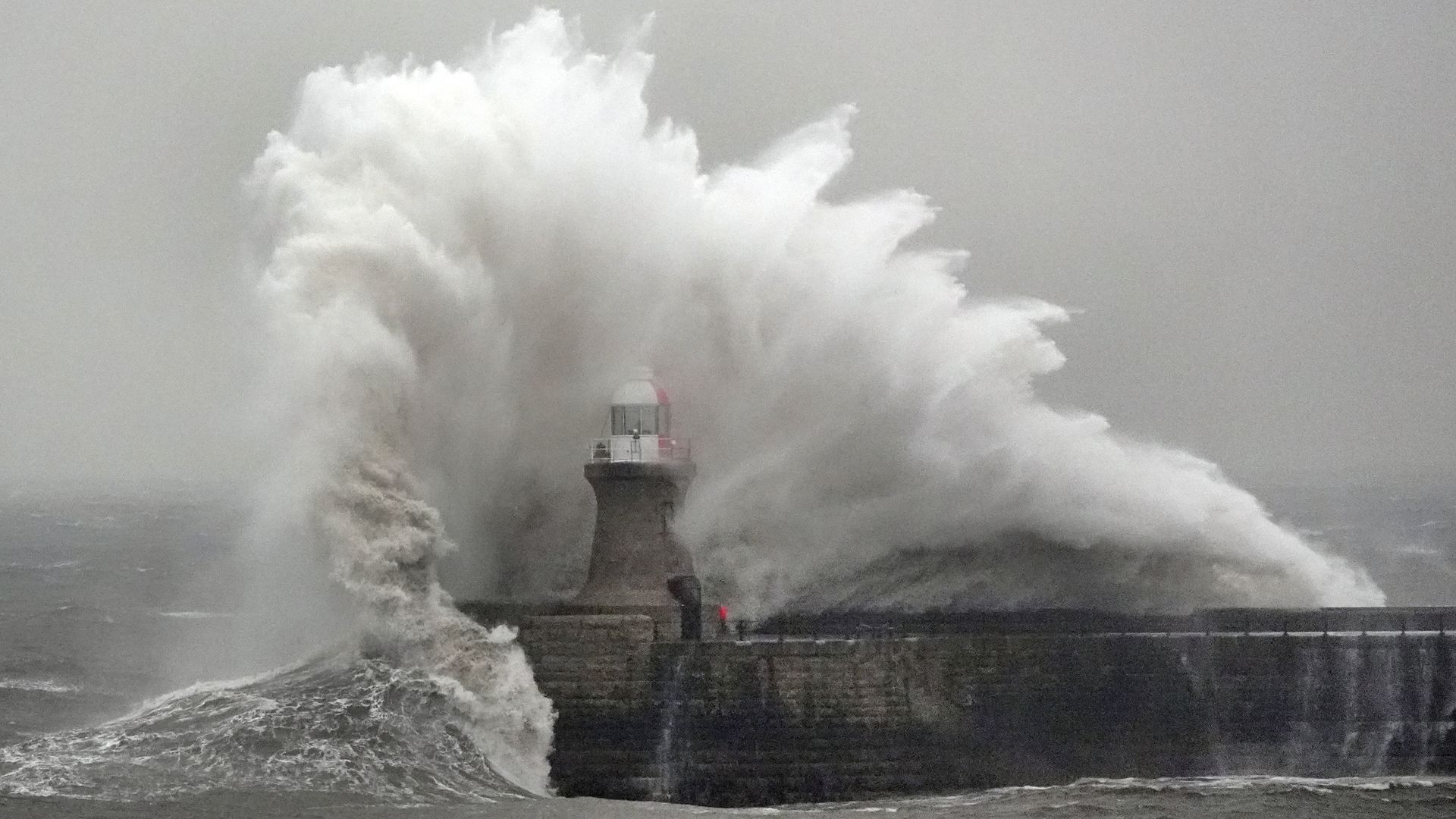
Yellow warnings for wind are already active. If you were planning a coastal walk or a garden barbecue this Easter, you might want to rethink that. The Met Office has flagged a massive surge in wind speeds across southern England and parts of Wales, and this isn't just a light breeze. We’re looking at gusts hitting 60mph to 70mph in exposed areas. It’s the kind of weather that turns a harmless trampoline into a low-flying aircraft.
People often underestimate wind. They think it’s just about holding onto your hat. It isn’t. When you get into the 50mph range, driving becomes a physical chore, especially if you’re in a high-sided vehicle. Throw in the Easter bank holiday traffic—which is already a nightmare—and you have a recipe for chaos on the M4 and M5. You’ve got millions of people trying to reach the coast just as the coast becomes the most dangerous place to be.
What those wind warnings actually mean for your travel
The Met Office doesn't issue these warnings for fun. A yellow warning means there’s a high probability of "slight" disruption, but for many, "slight" means a three-hour delay on a train line because a branch fell on the overhead wires. Most of the pressure is hitting the south coast. From Cornwall up through Hampshire and into Kent, the wind is expected to be relentless.
Rail networks are notoriously sensitive to high winds. Network Rail often has to implement speed restrictions when gusts exceed 50mph. Why? Because if a tree falls, a train going 100mph can't stop in time. If you're heading to London from the West Country, expect your journey to take significantly longer than the app says. Don't trust the scheduled arrival times today. They're basically fiction at this point.
Ferry crossings are another big one. If you're heading across the Channel or over to the Isle of Wight, check the status before you leave the house. High seas and gale-force winds don't just make people seasick; they lead to cancellations. I've seen plenty of people stuck at the docks in Portsmouth because they didn't check the maritime forecast. It’s a miserable way to start a holiday.
The science behind this Easter wind surge
This isn't some freak occurrence, but it is poorly timed. We’re seeing a deep area of low pressure moving in from the Atlantic. Because it’s clashing with slightly warmer spring air, the pressure gradient tightens. That’s what creates the "shove" of air we feel as wind.
Coastal areas bear the brunt of this because there’s no friction. Over land, trees and buildings slow the wind down. Over the English Channel, there’s nothing to stop it. That’s why places like the Isle of Wight or the cliffs of Dover will see those 70mph peaks while inland towns might only see 40mph. It sounds like a small difference. It’s not. The force of wind increases exponentially with speed. A 70mph gust has roughly double the force of a 50mph gust. It’s enough to knock an adult off their feet or shatter a fence panel like it’s made of paper.
Why the timing couldn't be worse
Easter is the first big break of the year. Everyone’s desperate to get outside after a long winter. That desperation leads to bad decision-making. I’ve seen hikers out on the South Downs during wind warnings because they "already booked the hotel." That’s a mistake. Aside from the wind, we’re seeing heavy rain moving through. Saturated ground means tree roots are loose. A wind that a tree might survive in October could easily topple it in April because the soil is basically soup.
Protecting your home and garden from the blast
If you’re at home, take ten minutes to secure your stuff. Garden furniture is the biggest culprit. Those plastic chairs become projectiles once the wind hits 40mph. If you have a trampoline, net it down or turn it upside down. It sounds overkill until you’re explaining to your neighbor why your kids' play equipment is in their conservatory.
Check your roof too. Loose tiles are the silent killers in these storms. If you see one that’s slightly wonky, don't try to fix it now—you'll just get blown off a ladder—but be aware of where you park your car. Parking under a large oak tree or next to an old brick wall is a gamble you don’t need to take this weekend.
- Clear your gutters if you can do it safely; the rain accompanying the wind will be heavy.
- Bring in any hanging baskets. They act like sails and will rip their brackets right out of the wall.
- Make sure your external bins are weighted down or tucked into a garage.
Realities of driving in gale force conditions
Driving in 60mph gusts is exhausting. You’re constantly fighting the steering wheel to stay in your lane. If you’re driving a van, a caravan, or even a tall SUV, you’re basically driving a giant sail. The "buffeting" effect when you pass a large lorry can be enough to pull you across a lane line.
If you have to be on the road, slow down. It’s the most basic advice but the most ignored. Increasing your following distance is vital because if the car in front of you hits a fallen branch, you need extra time to react without slamming on your brakes and skidding. Keep both hands on the wheel at all times. This isn't the time for one-handed casual driving.
Watch out for the "hidden" hazards
It’s not just the wind you can feel; it’s what the wind moves. Debris is the biggest hazard on A-roads. You’ll turn a corner and find a bin, a branch, or even a shed roof in the middle of the tarmac. If it’s dark, your visibility is already cut by the rain. High-sided vehicles are often banned from certain bridges like the Dartford Crossing or the Severn Bridge when winds hit these levels. Check the National Highways website before you set off. If those bridges close, the surrounding roads turn into a gridlocked mess instantly.
Power cuts and infrastructure stress
Whenever we see gusts over 60mph, the power grid takes a hit. It’s usually caused by branches hitting power lines. While the National Grid is usually quick to respond, being without power on a cold, rainy Easter Sunday is grim.
Keep your phone charged. Have a torch with actual batteries—don't just rely on your phone light, which drains the battery you might need for an emergency call. If you’re in a rural area, you’re more likely to see a prolonged outage. It’s worth checking on elderly neighbors who might not be as tapped into the weather apps as you are. They might not realize how severe the gusts are supposed to get.
What to do if you’re booked for a coastal trip
If you’re heading to the West Country or the South Coast, stay away from the sea walls. "Storm chasing" or trying to get the perfect photo of a wave crashing over a pier is a great way to get swept out to sea. It only takes a few inches of fast-moving water to knock you off your feet. The RNLI is already stretched thin during bank holidays; don't give them another job to do because you wanted a cool Instagram shot.
The reality is that this Easter is going to be a washout for much of the UK. The "Big Help Out" and other outdoor community events are likely to be moved indoors or postponed. It’s frustrating, but fighting the weather is a losing battle.
If your plans involve being outside, have a Plan B. Find an indoor museum, go to the cinema, or just stay home and eat your chocolate in the dry. The wind is expected to peak on Saturday and slowly die down by Monday, but the ground will remain a mess.
Check the Met Office site every few hours. These storms can shift track slightly, meaning the "danger zone" could move twenty miles north or south within a few hours. Stay updated, stay inside if it looks hairy, and keep your car away from anything that looks like it might fall over.


