The wind in Jerusalem on Holocaust Remembrance Day does not just blow; it carries a weight that feels like lead. It pulls at the heavy coats of the elderly survivors sitting in the front rows, men and women whose skin is now as thin as the parchment of the records that once marked them for death. They sit in a silence so profound it becomes a physical presence. This is not the silence of peace. It is the silence of a void left by six million ghosts.
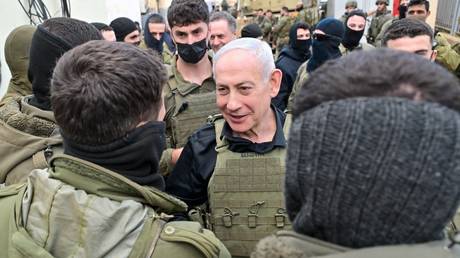
When Benjamin Netanyahu stood before the cameras at Yad Vashem, he wasn't just a prime minister delivering a scheduled address. He was a man leaning into the gale of history, looking across the Mediterranean toward a Europe that he believes is drifting into a dangerous, familiar fog.
The friction is sharp. It is jagged.
He spoke of a "moral weakness" that has begun to seep into the foundations of European capitals. To understand that accusation, you have to look past the diplomatic jargon and the headlines. You have to look at the table where the decisions are made. Imagine, for a moment, a high-ranking official in a sun-drenched office in Brussels or Paris. This official—let’s call him Julian—sincerely believes in human rights. He champions international law. He wakes up every morning convinced he is a "good person."
But when Julian looks at the rising tide of antisemitism in his own streets, or the calls for the dismantling of the Jewish state, he hesitates. He calculates. He worries about the optics of his response. He issues a statement that is balanced, measured, and ultimately, hollow.
This is the "moral weakness" Netanyahu is targeting. It is the tendency to prioritize comfort over the uncomfortable truth that hatred does not negotiate.
The Geography of Memory
History has a cruel way of repeating its melodies, even if it changes the lyrics. Decades ago, the world stood by as the machinery of the Holocaust was assembled, piece by piece, in the open air. Today, the Israeli leadership sees a different kind of assembly. They see it in the streets of London, Berlin, and Malmö, where the line between political critique and ancient blood libels has become dangerously blurred.
Netanyahu’s critique of Europe is grounded in a specific, painful irony. The very continent that served as the graveyard for a third of the world’s Jews is now, in his view, struggling to find the spine to defend the survivors' descendants.
Consider the statistics. They aren't just numbers; they are heartbeats. Reports of antisemitic incidents across Europe have surged by triple digits in some regions over the last year. Jewish schools now require the kind of security protocols usually reserved for military installations. Parents are telling their children to hide their kippahs under baseball caps. This isn't ancient history. This is Tuesday.
The Prime Minister’s rhetoric was designed to be a jolt to the system. He wasn't looking for a polite round of applause. He was looking to draw a line in the sand. He suggested that the "enlightened" world is falling into the same trap of complacency that snared its ancestors. It is a trap lined with the desire to be liked and the fear of being seen as "intolerant" toward those who preach intolerance.
The Invisible Stakes
Why does this matter to someone who isn't Jewish, or who doesn't live in the Middle East?
It matters because moral weakness is a contagion. When a society loses the ability to distinguish between the aggressor and the defender, or when it becomes too exhausted to uphold the values it claims to cherish, the entire structure begins to wobble.
Think of it as a structural failure in a bridge. You might not see the rust eating through the steel from a distance. The cars keep driving. The commuters keep drinking their coffee. But the integrity is gone. Eventually, the weight of reality becomes too much for the compromised metal to bear.
Netanyahu’s "slam" against Europe is an attempt to point out the rust. He is arguing that the Holocaust shouldn't just be a museum piece or a day of somber speeches. It should be a lens. If that lens is cloudy—if it doesn't allow a leader to see the difference between a sovereign nation defending its borders and a group dedicated to its erasure—then the lesson of the "Never Again" vow has been lost.
The Burden of the Survivor
There is a specific kind of exhaustion that comes with being the world’s conscience.
The survivors at Yad Vashem don't have the luxury of nuance. For them, the rhetoric of "context" and "complexity" sounds a lot like the excuses they heard when the trains were running. When they hear European leaders hesitate to condemn groups that explicitly call for Jewish genocide, they don't see a complex geopolitical puzzle. They see the beginning of a sequel they never wanted to watch.
The Prime Minister channeled that exhaustion. He positioned Israel as the only entity that can truly be trusted with the safety of the Jewish people, effectively telling Europe: We hoped you would be different this time. We see that you are not. So, we will do what we must.
This isn't just about policy. It’s about the fundamental right to exist without apology.
The air in Jerusalem eventually grew colder as the ceremony ended. The torches were extinguished. The elderly men and women stood up, their joints creaking, and began the slow walk back to their lives. They leave behind the empty chairs that represent the millions who couldn't be there.
Those chairs are the most honest things in the room. They don't compromise. They don't make excuses. They simply sit there, waiting for someone to have the courage to acknowledge why they are empty, and to ensure that no more chairs are added to the row.
The world can look away, or it can look directly into the void. But the void is patient, and it remembers exactly what happens when the "morally weak" decide that the truth is too expensive to defend.