The Disaster of Reactive Governance
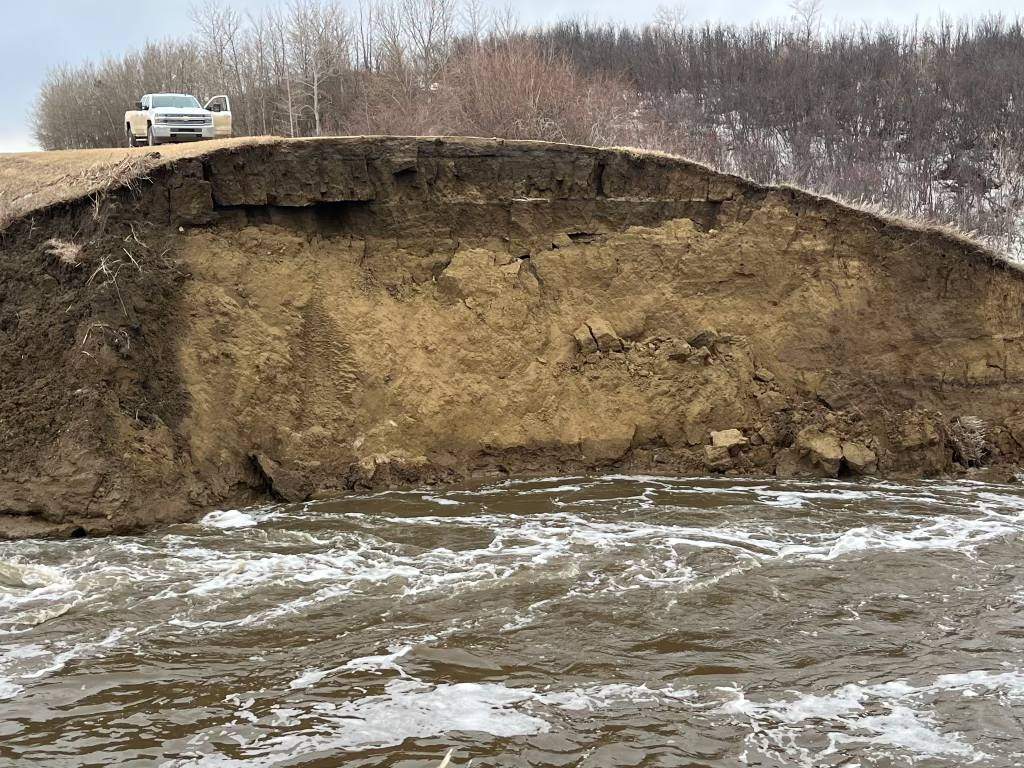
Every time a river crests in Saskatchewan, we see the same script. Local officials rush to microphones, declare a state of emergency, and the media paints a picture of helpless communities caught off guard by the "unprecedented" fury of nature.
It is a lie. You might also find this related story insightful: James Comey and the Reality of Digital Threat Prosecution.
Calling a flood an "emergency" in the prairies is like calling a snowfall in January a surprise. We have spent decades treating routine hydrological cycles as freak accidents. This reactive posture doesn't save towns; it guarantees their eventual decay. By leaning on the emergency declaration as a primary tool, leaders are signaling that they have failed at the one job that actually matters: permanent, aggressive infrastructure adaptation.
The Myth of the Unprecedented Event
The current narrative focuses on three communities under duress. We are told the water levels are "historic." But "historic" is a convenient word used by bureaucrats to excuse a lack of foresight. As discussed in detailed articles by Al Jazeera, the implications are worth noting.
If you look at the Water Security Agency data over the last century, the pattern is clear. Prairie hydrology is defined by its variability. We don't have "normal" years; we have years of extreme drought punctuated by years of extreme saturation. Treating a high-water year as a deviation from the norm is a fundamental misunderstanding of the geography.
When a town declares a state of emergency, they aren't just unlocking provincial funding. They are admitting that their baseline infrastructure is insufficient for the known reality of the region. We are building for the average when we should be building for the edge cases.
The Moral Hazard of Disaster Relief
I have spent years watching municipal budgets. There is a perverse incentive at play here.
If a town invests $10 million in permanent dikes and drainage systems today, the council has to justify that expense to taxpayers who would rather see a new hockey rink. However, if that same town does nothing, waits for the water to hit the doorsteps, and declares an emergency, the provincial and federal governments swoop in with "disaster recovery" cash.
We are subsidizing risk.
By bailing out communities that refuse to move out of floodplains or upgrade their culverts, we are ensuring that the next "emergency" will be even more expensive. We are paying people to stay in harm's way.
The Cost of Temporary Fixes
- Sandbags: A labor-intensive, temporary solution that creates massive environmental waste.
- Temporary Hesco Barriers: Expensive rentals that provide a false sense of security while delaying permanent earthworks.
- Emergency Pumping: High-energy, last-minute efforts that often just move the problem to the neighbor’s property.
None of these actions build long-term value. They are the equivalent of putting a Band-Aid on a sucking chest wound and calling it surgery.
Stop Fighting the Water
The traditional engineering approach in Saskatchewan has been "command and control." We try to pin the water down. We build straight channels and high walls. This is a losing battle. Water always wins because it has more time than we do.
The contrarian approach—the one nobody wants to fund because it isn't "tough"—is managed retreat and naturalized storage.
Instead of fighting to keep every single acre of a flood-prone town dry, we need to identify the high-risk zones and abandon them. This isn't defeatism; it's intelligence. Converting flood-prone residential areas into seasonal wetlands or parkland creates a buffer that protects the rest of the community.
But suggesting that a house shouldn't be rebuilt in the same spot for the third time in twenty years is political suicide. So, we keep declaring emergencies. We keep rebuilding. We keep wasting capital that could have been used to diversify the local economy or modernize the power grid.
The Engineering Fallacy
We often hear that we need "better" drainage. This is a dangerous half-truth.
In many parts of Saskatchewan, "better" drainage just means moving water off one farmer's field or one town's street faster. Where does it go? It goes downstream, where it accumulates and forces the next town to declare an emergency.
We don't have a water volume problem as much as we have a water velocity problem. Our obsession with efficiency has stripped the landscape of its ability to hold water. We've drained the sloughs and straightened the creeks. Now, when the snow melts, it all hits the system at once.
True expertise in this field requires admitting that the "pioneer" mindset of drying out the land was a mistake. We need to re-complicate the landscape. We need more bends in the rivers, more "useless" swampy patches, and fewer straight lines.
The Accountability Gap
Who is held responsible when a "state of emergency" is declared? Usually, no one. The leaders are praised for their "swift action" during the crisis.
This is backward.
A state of emergency should be viewed as a professional failure. It is an admission that the risk management strategies in place were inadequate. We should be asking why the $5 million spent on "studies" over the last decade didn't result in a single meter of permanent berm construction.
Why the Public is Part of the Problem
The public loves the drama of a flood. They love the images of neighbors helping neighbors. It creates a temporary sense of community. This emotional high masks the cold reality that the community is literally sinking.
If you live in a community that is under a state of emergency today, stop thanking your local officials for the sandbags. Ask them why the sandbags were necessary in the first place. Ask them why they approved the new subdivision in the low-lying east end. Ask them why the drainage budget was diverted to a "beautification" project three years ago.
Risk is Not a Surprise
We have the satellite imagery. We have the soil moisture maps. We have the historical flow data. There is no excuse for being "surprised" by water in Saskatchewan.
The current "emergency" in these three communities is a choice. It is a choice to prioritize short-term savings over long-term survival. It is a choice to rely on provincial bailouts instead of local responsibility.
The true contrarian truth is this: many of these towns shouldn't exist in their current footprint. Until we have the courage to stop declaring emergencies and start relocating infrastructure, we are just waiting for the next "unprecedented" event to prove us wrong again.
Stop sandbagging. Start moving.