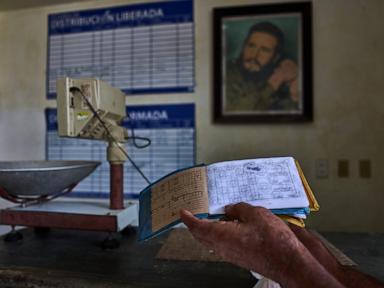
The Cuban libreta was once the bedrock of social stability, a small booklet that guaranteed every citizen a baseline of survival. Today, it is a relic of broken promises. For decades, the Cuban government used this ration book to distribute subsidized rice, beans, sugar, and oil, ensuring that even the poorest families could eat. That system is now in a state of total collapse. Supply chains have dried up, state coffers are empty, and the items that do arrive are often weeks late or missing entirely. This is not just a logistical failure; it is the disintegration of the social contract that has held the island together since 1962.
The Infrastructure of Scarcity
The current crisis stems from a perfect storm of internal mismanagement and external pressures. While the Cuban government frequently points to the U.S. embargo as the primary culprit, the rot goes much deeper into the domestic economic structure. The state-run distribution system, known as Empresa de Comercio Minorista, is paralyzed by a lack of foreign currency. Without "hard" cash like the U.S. dollar or Euro, the Cuban state cannot buy grain on the international market or repair the aging trucks needed to move goods from the ports to the bodegas.
In the past, the Soviet Union and later Venezuela provided the subsidies necessary to keep the libreta filled. Those lifelines are gone. Now, the government is forced to prioritize. Fuel goes to tourism or the military, while the bread for the neighborhood bakery remains unbaked because there is no flour. This is not a temporary shortage. It is a fundamental shift in how the Cuban economy functions, or fails to function.
The Rise of the Two Tiered Food Market
As the ration book fails, a brutal two-tiered system has emerged. On one side are the state-run bodegas, where prices are low but the shelves are bare. On the other side are the Pymes, the small private businesses that were legalized in 2021. These shops have plenty of food—Spanish olive oil, Brazilian chicken, and Mexican milk—but the prices are astronomical.
A single carton of eggs in a private shop can cost a significant portion of a monthly state pension. This creates a bitter irony. There is food on the island, but it is effectively invisible to the people who need it most. The government has essentially outsourced the problem of food security to the private sector while maintaining the fiction that the state still provides.
The disparity is visible in every neighborhood. You see long lines of elderly people waiting hours for a pound of sugar that may never arrive. Meanwhile, those with relatives abroad sending remittances can walk into a private store and buy whatever they need. The libreta was supposed to be the great equalizer. Instead, it has become a symbol of a growing class divide that the revolution once swore to abolish.
The Math of Hunger
To understand the desperation, you have to look at the numbers. The average state salary in Cuba hovers around 4,000 to 5,000 pesos. A liter of cooking oil in the private market can cost 1,000 pesos. A kilogram of powdered milk might cost 2,000.
For a family of four, the ration book used to provide enough for about ten to fifteen days of the month. They would then supplement the rest with "free market" purchases. Now, the ration book might only provide three or four days of food. This leaves a massive "calorie gap" that many families simply cannot fill. They are skipping meals. They are watering down milk. They are surviving on bread and sugared water.
Agriculture and the Failure of Reform
Cuba has some of the most fertile land in the Caribbean, yet it imports nearly 80% of its food. This is perhaps the greatest indictment of the state-led model. Farmers are tied down by Acopio, the state agency that mandates what they grow and what price they must sell it for.
Suppose a farmer in Pinar del Río grows tomatoes. Under the current rules, he must sell the majority of his crop to the state at a fixed price, often below the cost of production. If the state truck doesn't show up to collect the harvest—which happens frequently due to fuel shortages—the tomatoes rot in the fields. The farmer loses everything and has no incentive to plant more next season.
Attempts to "liberalize" agriculture have been half-hearted. The state remains terrified of losing control over the food supply, even as that supply vanishes. Instead of allowing farmers to sell directly to consumers at market rates, the bureaucracy adds layer upon layer of red tape. The result is a country that cannot feed itself despite having the climate and the soil to be an agricultural powerhouse.
The Energy Link
Food security in Cuba is inextricably linked to the power grid. The island’s electrical plants are ancient, many dating back to the Soviet era, and they are prone to frequent breakdowns. When the power goes out—which now happens for 12 to 18 hours a day in many provinces—the little food people have spoils.
Freezers melt. The limited meat people managed to find becomes a health hazard. Furthermore, without electricity, the water pumps stop working. This means families cannot cook the rice or beans they fought so hard to obtain. The psychological toll of this "double hit"—no food and no power—is pushing the population toward a state of chronic exhaustion and resentment.
The Exit Strategy
The primary way Cubans are dealing with the failure of the libreta is by leaving the country. In the last two years, more than 4% of the population has fled, mostly to the United States. This is a massive "brain drain" and "muscle drain." The people leaving are the young, the healthy, and the educated.
Those left behind are often the elderly, who are the most dependent on the ration system. By failing to provide the basics, the Cuban state is effectively dismantling its own future. The shops are empty, the farms are struggling, and the people are walking away.
The government has recently tried to implement "macroeconomic stabilization" plans, which involve cutting subsidies further and raising fuel prices. They claim this is necessary to fix the economy. However, for the person standing in line at 5:00 AM for a loaf of bread, these are just words. They see the reality in the thinness of their children’s faces and the blank pages of their ration books.
The social contract is not just frayed; it is gone. When a government can no longer guarantee a bowl of rice, it loses its last shred of legitimacy. The libreta is now a diary of what is missing, a record of a system that has run out of time and out of options. Every empty shelf in a bodega is a testament to a policy that prioritizes survival of the regime over the survival of the people.