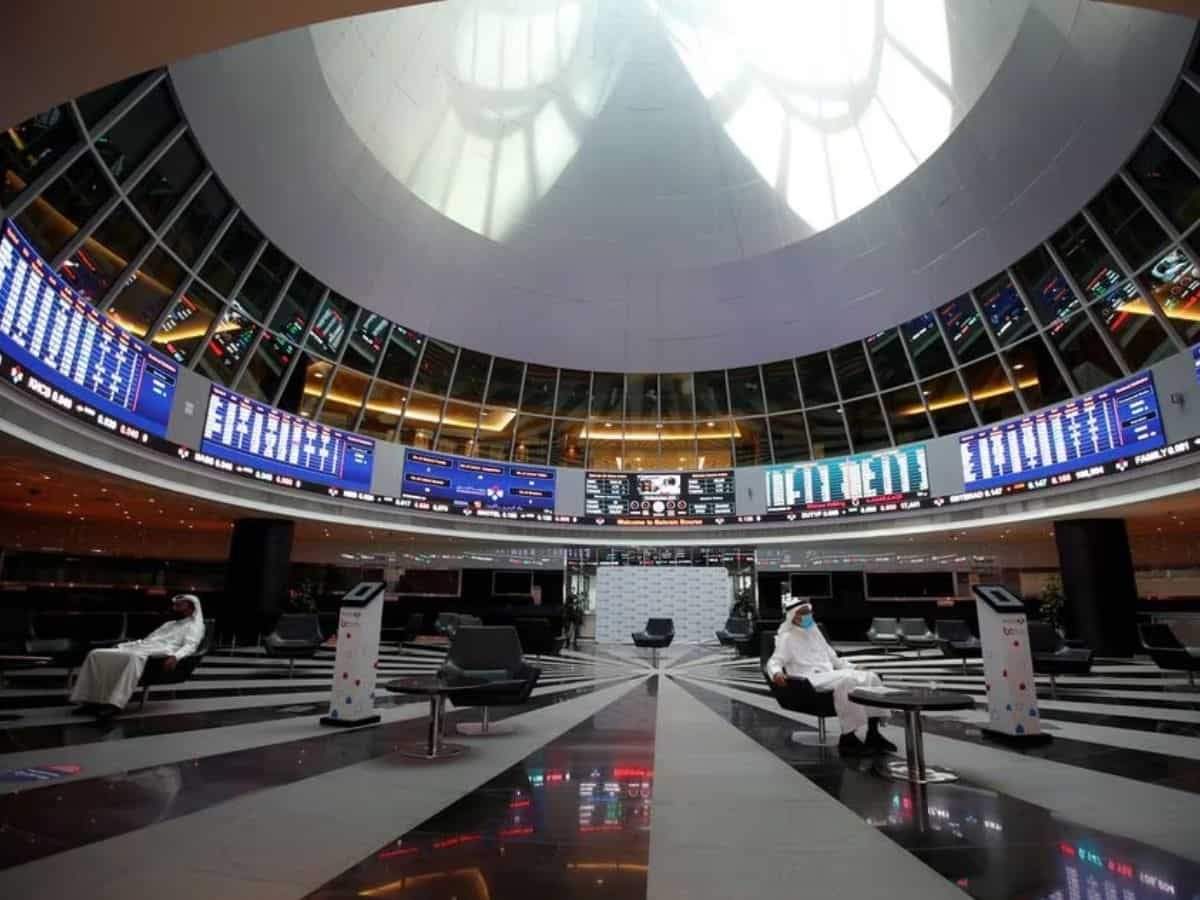
The screen on the trading floor didn’t flash red. It didn’t scream. It just ticked upward with a quiet, mechanical indifference that felt heavier than a shout. For fifteen years, the cost of borrowing money in Europe had been a subterranean creature, dormant and forgotten in the basement of the global economy. Then, in a series of jagged movements, it stepped into the light.
German 10-year yields, the benchmark of stability for an entire continent, crested heights not seen since the Great Financial Crisis. To a data scientist, it’s a line graph. To a family in Madrid or a tech founder in Berlin, it’s the sound of a door locking.
Money is rarely just math. It is time, distilled into a currency. When interest rates sit at zero, time is cheap. You can dream in decades. You can overextend, overbuild, and overpromise because the future is a gift that costs nothing to wrap. But when those rates hit 15-year highs, the future suddenly demands a down payment. The era of the "free lunch" hasn't just ended; the bill has arrived with compound interest.
The Invisible Architect
Consider a woman named Elena. She isn’t real, but her predicament is mirrored in a million apartments from Lisbon to Riga. Elena runs a small architectural firm that specializes in sustainable urban spaces. For five years, her business thrived on the back of "cheap" credit. She expanded her team, leased a sun-drenched studio, and took on projects that wouldn't turn a profit for years. She was betting on the permanence of the status quo.
In her world, the European Central Bank was a distant weather system. She didn't track the Frankfurt meetings or the nuance of "hawkish" versus "dovish" rhetoric. She didn't have to. The environment was a constant, a temperate spring that promised never to turn to winter.
Then the inflation numbers arrived, stubborn and sharp. The central bankers, tasked with the grim duty of cooling a boiling room, began to turn the dial. Each quarter-point hike was a brick added to a backpack Elena didn't know she was wearing. Suddenly, the bridge loan she used to cover payroll between projects doubled in cost. The developers she worked with began to go silent. Their own "all bets are off" moment had arrived.
When borrowing costs spike, the first thing to vanish isn't the money. It’s the confidence. The invisible architect of the European dream—the assumption that tomorrow would always be cheaper than today—has left the building.
The Great Calibration
We are currently witnessing a Great Calibration. For over a decade, the financial markets functioned like a distorted mirror. Because money cost nothing, assets became untethered from reality. Stocks, housing, and even digital tokens were pumped full of "cheap" air.
Now, the air is being sucked out.
Investors are bracing for a reality where the "risk-free rate"—the return you get just for parking your money in government bonds—is actually significant. Why would a venture capitalist bet on a risky startup when they can get a guaranteed 3 or 4 percent from the German or French government? This shift creates a vacuum. Capital that once flowed into the "real" economy—factories, software, grocery chains—is retreating into the safety of debt.
The term "yield" sounds clinical. In practice, it’s a measure of gravity. When yields rise, the gravity of the financial world increases. Everything becomes harder to lift. Every mortgage application is scrutinized with a colder eye. Every government budget is suddenly hemorrhaging cash just to service the debt they already have.
Italy, a nation that has spent years dancing on the edge of a fiscal volcano, feels this gravity more than most. As their borrowing costs climb, the "spread" between their debt and Germany’s widens like a physical crack in the floor of the Eurozone. This isn't just a problem for accountants. It's a problem for the pensioner in Rome whose social services are funded by that very debt.
The Psychology of the Spike
There is a specific kind of vertigo that comes with a 15-year high. It isn't just the height; it’s the memory of what happened the last time we were here.
In 2008, the world broke. We spent the next decade and a half trying to glue it back together with low rates and "quantitative easing," a fancy term for flooding the system with liquidity. We became addicted to the medicine. Now, the doctor is saying the treatment is causing a different kind of sickness—inflation—and the only cure is a cold shower of high rates.
The transition is violent because it is fast. The markets aren't strolling toward higher rates; they are bracing for impact.
Imagine a cruise ship that has been sailing on a glassy sea for days. The passengers have stopped tethering the furniture. They’ve forgotten that the ocean can be cruel. When the storm hits and the ship tilts thirty degrees, it’s the loose furniture that does the damage. In our economy, the "loose furniture" is the trillions of dollars in debt that was taken out under the assumption that the sea would stay glassy forever.
The Human Toll of the Basis Point
We often talk about "basis points" as if they are abstract units, like points in a video game. They aren't. A basis point is a family deciding they can't afford a second child because the mortgage took their savings. It's a student realizing their loan will now take twenty years to pay off instead of ten. It's a small business owner turning off the lights for the last time because the line of credit that kept them afloat during the slow months has become a noose.
The stakes are invisible until they are absolute.
Central bankers are often portrayed as the villains or the heroes of this narrative, depending on who you ask. In reality, they are more like firefighters trying to put out a blaze in a house made of dry timber. If they use too much water (high rates), they ruin the furniture and cause a recession. If they use too little, the house burns down (inflation).
Right now, they are opting for the water. They are betting that we can survive a soggy, cold house better than a charred one. But for those standing in the living room, the experience is simply one of ruin.
The Ghost in the Ledger
There is a ghost haunting the ledgers of Europe. It is the ghost of the 1970s, an era of stagflation and industrial unrest that modern policy-makers are desperate to avoid. They are haunted by the fear that if they don't crush inflation now, it will become "entrenched."
Entrenched inflation is a psychological disease. It’s what happens when people expect prices to rise, so they demand higher wages, which causes businesses to raise prices, which confirms the original fear. It’s a spiral. To break it, the central banks have to inflict pain. They have to make borrowing so expensive that we stop spending.
This is the central paradox of our modern age: to save the economy, we have to hurt the people within it.
We are told this is for our own good. We are told that the "15-year high" is a necessary correction, a return to "normalcy." But normalcy is a relative term. For a generation of professionals who entered the workforce after 2009, this isn't normal. It’s an extinction event for the only world they’ve ever known.
The tech giants of Silicon Valley and the burgeoning hubs in London and Paris were built on the premise that money was a commodity in infinite supply. That world is gone. The new world belongs to the lean, the cautious, and the old-fashioned. It belongs to those who have "real" profit, not just "projected" growth.
The Quiet Change
If you walk through the financial districts of London or Frankfurt today, you won't see people panicking in the streets. There are no ticker tapes falling from windows. The change is quieter. It’s in the hushed tones of a board meeting where a project is quietly shelved. It’s in the frantic recalculation of a spreadsheet in a middle-class home.
We are bracing. We are pulling our elbows in. We are waiting to see if the 15-year high is a peak or merely a plateau.
The true cost of borrowing isn't paid in euros. It’s paid in the projects that will never be built, the risks that will never be taken, and the dreams that were predicated on a zero-percent interest rate. The ledger is being rebalanced, and the ink is still wet.
The silence on the trading floor is the sound of an entire continent holding its breath, waiting for the floor to stop moving beneath its feet.