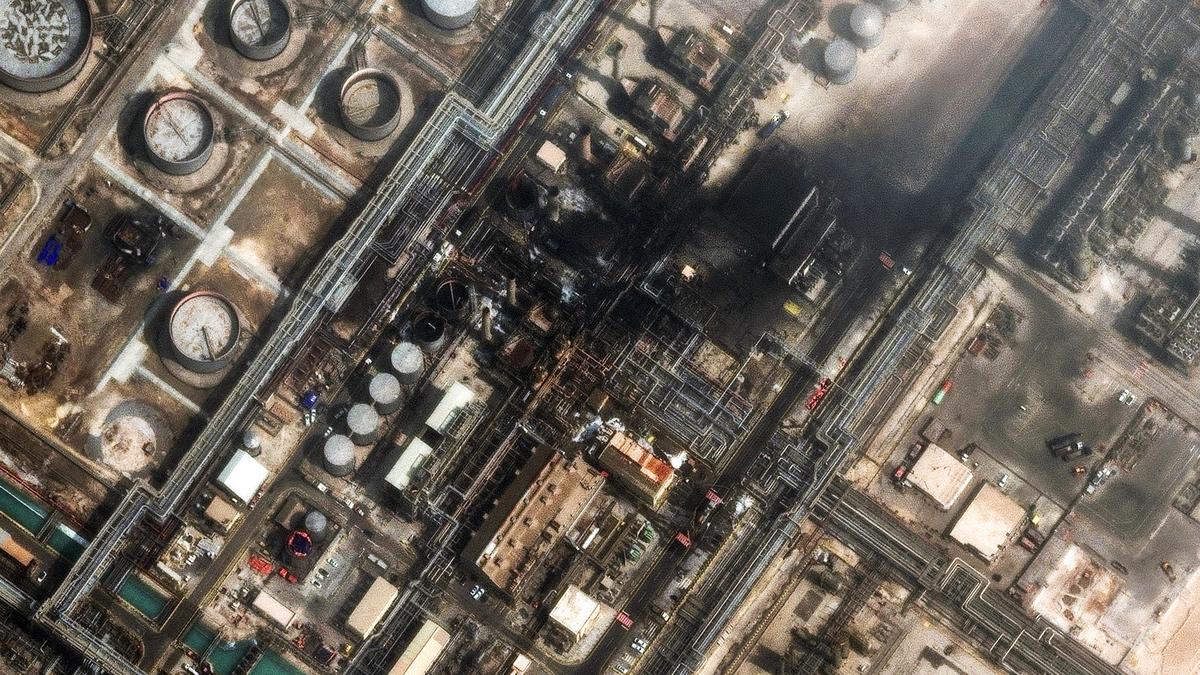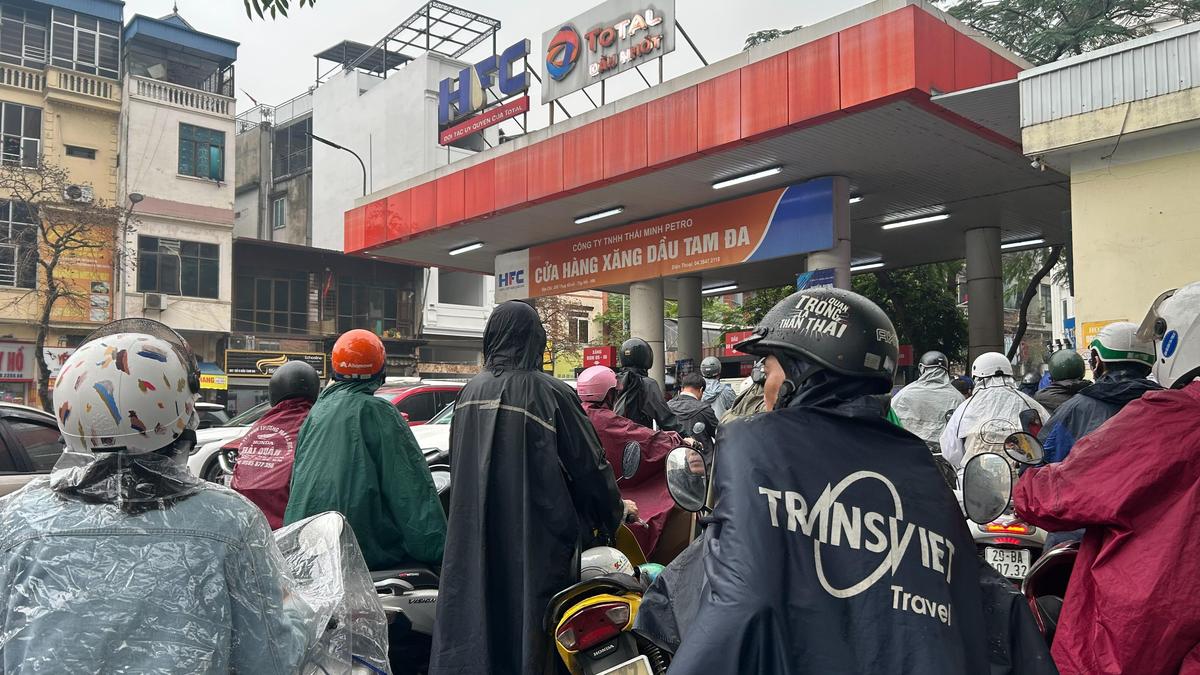
Vietnam’s domestic economy is currently caught in a pincer movement between West Asian geopolitical instability and a rigid internal fiscal structure. The Ministry of Finance’s consideration to suspend or remove fuel duties is not a mere populist relief measure; it is a tactical attempt to decouple domestic industrial output from the global volatility of the Brent-WTI spread. The strategic necessity of this move is driven by the fact that Vietnam’s manufacturing sector, the primary engine of its GDP growth, operates on razor-thin margins that cannot absorb sustained energy price spikes without triggering a systemic inflationary spiral.
The current proposal centers on the Environmental Protection Tax (EPT) and the Most Favored Nation (MFN) tariffs on petroleum. By evaluating the suspension of these duties, the Vietnamese government is essentially choosing to subsidize industrial continuity at the expense of sovereign revenue.
The Three Pillars of Vietnam’s Energy Crisis
To understand the stakes, the situation must be viewed through three distinct structural layers.
1. The Geopolitical Supply Chain Bottleneck
West Asian conflicts create more than just price increases; they create physical delivery risks. Vietnam relies heavily on imported crude and refined products to supplement its domestic production from the Nghi Son and Dung Quat refineries. When the Strait of Hormuz or Red Sea transit routes are threatened, the "Risk Premium" added to every barrel of oil behaves as a regressive tax on Vietnamese exporters.
Unlike Western economies that have shifted toward service-based GDP, Vietnam remains an industrial-heavy economy. A 10% increase in fuel costs does not translate to a 10% increase in transport costs; it cascades through the supply chain, increasing the cost of raw material extraction, factory operations, and the "last mile" logistics to the Port of Hai Phong or Ho Chi Minh City.
2. The Fiscal Revenue Contradiction
Fuel duties are a reliable, high-velocity source of government income. Removing them creates a budget deficit that must be financed elsewhere. The Ministry of Finance faces a "Fiscal Trap":
- Revenue Loss: The EPT contributes significantly to the national budget.
- Inflationary Pressure: If duties remain, high fuel prices drive up the Consumer Price Index (CPI), threatening the State Bank of Vietnam’s (SBV) inflation targets.
- Currency Devaluation: High energy costs increase the demand for USD to pay for imports, putting downward pressure on the Vietnamese Dong (VND).
3. The Industrial Elasticity Factor
Vietnamese manufacturing is highly elastic concerning energy inputs. Small fluctuations in the price per liter of RON95 or E5 petrol determine whether medium-sized enterprises (SMEs) remain solvent. Since many of these firms operate on fixed-price contracts with international buyers (like Samsung, Nike, or Apple suppliers), they cannot "pass through" the increased energy costs to the consumer. The government’s move to cut duties is an admission that the private sector’s balance sheets are currently too fragile to act as a buffer for global oil shocks.
The Cost Function of Duty Removal
The decision to slash taxes is governed by a complex cost function where the variables are not just monetary, but temporal.
$$Total Impact = (R_l \times T) - (G_i + S_p)$$
In this framework:
- $R_l$ represents the Revenue Loss from taxes.
- $T$ is the duration of the tax holiday.
- $G_i$ is the GDP growth protected by maintaining industrial output.
- $S_p$ is the Social Stability premium gained by preventing a surge in transport and food prices.
The Vietnamese government is betting that $(G_i + S_p)$ will outweigh $(R_l \times T)$. However, this logic only holds if the West Asian conflict is short-lived. If the supply disruption becomes a multi-year structural shift, the removal of duties becomes an unsustainable drain on the treasury.
Tactical Breakdown: Why the MFN Tariff is the Primary Lever
While the Environmental Protection Tax is the most visible to the public, the Most Favored Nation (MFN) tariff is the more potent strategic tool. By lowering the MFN rate, Vietnam can diversify its import sources. Currently, Vietnam benefits from Free Trade Agreements (FTAs) with ASEAN partners and Korea, which already offer low or zero tariffs. However, when those specific markets are tight, Vietnam needs to buy from non-FTA countries (like those in West Asia or the US).
Reducing the MFN tariff from its current levels (often around 10% to 20% for various refined products) to a lower threshold allows Vietnamese importers to source fuel from a broader global pool without paying a "penalty" for buying outside of their FTA network. This increases the liquidity of the domestic fuel market and prevents localized shortages.
The Mechanism of Price Stabilization
The Vietnamese government utilizes the Petrol and Oil Price Stabilization Fund (BOG). This fund acts as a shock absorber. When global prices are low, a portion of the pump price is diverted into the fund. When prices spike, the fund subsidizes the cost to keep pump prices steady.
The current crisis has revealed a critical limitation: the BOG is finite. If global prices stay above $90-$100 per barrel for an extended period, the BOG will be depleted. Once the fund is empty, the government has only two choices:
- Allow pump prices to reflect the market (risking social unrest and industrial slowdown).
- Cut taxes (the current path).
This confirms that the tax cut is not a first-choice strategy, but a "lender of last resort" move for the energy sector.
Identifying the Bottlenecks in the Proposal
The transition from "mulling over" to "executing" tax removals faces three specific bottlenecks:
- The Legislative Calendar: Significant tax changes often require National Assembly approval, which can be a slow process. While the Government can make some adjustments to the EPT within a certain range, a total overhaul requires a higher level of consensus.
- The Smuggling Incentive: Vietnam shares porous borders with Cambodia and Laos. If Vietnam aggressively lowers its fuel prices through tax cuts while neighboring countries do not, it creates a massive incentive for cross-border fuel smuggling. This would mean the Vietnamese taxpayer is essentially subsidizing the fuel consumption of neighboring nations.
- The Green Energy Pivot: Vietnam has made ambitious COP26 commitments to reach Net Zero by 2050. Removing the "Environmental Protection" tax—even temporarily—sends a contradictory signal to the market. It risks slowing down the transition to electric vehicles (EVs) and renewable energy because it artificially keeps internal combustion engine (ICE) costs low.
Comparative Resilience: Vietnam vs. Regional Competitors
Vietnam’s strategy must be compared to peers like Thailand and Indonesia. Thailand has frequently used subsidies for diesel to support its logistics sector. Indonesia has a history of massive fuel subsidies that have, at times, threatened its sovereign credit rating.
Vietnam’s approach is notably more clinical. Rather than open-ended subsidies (which are hard to claw back), the focus on "duty removal" suggests a temporary suspension of revenue rather than a permanent cash outlay. This preserves the government's ability to reinstate the taxes once Brent crude stabilizes.
The Operational Risk of Refined Product Scarcity
A fact often missed in generalist analysis is the distinction between crude oil and refined products (Petrol, Diesel, Jet Fuel). Even if crude is available, the "Crack Spread"—the profit margin for turning crude into refined products—can skyrocket if refineries in the Middle East or Europe are offline or redirected.
Vietnam’s two refineries, Nghi Son and Dung Quat, cover roughly 70-80% of domestic demand. The remaining 20-30% must be imported as finished product. When the West Asia conflict hits, it is this 30% that becomes the volatility driver. The duty removal is specifically targeted at this imported margin to ensure that the "weighted average cost" of fuel in Vietnam doesn't exceed the threshold of industrial viability.
Strategic Forecast for Market Participants
The move to cut fuel duties should be interpreted as a defensive play to protect the 2026 GDP growth target of 6.5% to 7%. Investors and operators should prepare for the following sequence:
- Immediate Duty Reduction: Expect a tiered reduction in the EPT first, as it is the fastest lever to pull.
- MFN Adjustment: A broader reduction in MFN tariffs will follow if the conflict in West Asia shows signs of persisting beyond a single quarter.
- Monetary Policy Tightening: To offset the inflationary risks of the fiscal deficit created by these tax cuts, the SBV may be forced to keep interest rates higher for longer to protect the VND.
Logistics-heavy industries and manufacturers should utilize this tax-induced price plateau to hedge their long-term energy needs. The tax cut is a window of stability, not a permanent change in the global energy trajectory. Firms that fail to optimize their energy intensity during this period will be uniquely vulnerable when the duties are inevitably reinstated to plug the fiscal gap.
The most effective play for the Vietnamese government now is a "Sunsetting Clause" on any duty removal. By pre-scheduling the return of taxes based on a Brent price trigger (e.g., "taxes return when Brent stays below $75 for 30 consecutive days"), the state can provide immediate relief without permanently damaging its long-term revenue architecture.