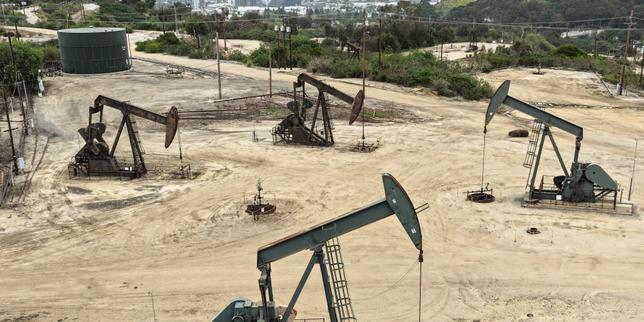
The domestic economic policy of the incoming administration rests on a fundamental contradiction: the pursuit of a $3.00 per gallon gasoline price ceiling through expanded extraction versus the inflationary pressure generated by aggressive protectionist trade barriers. While the "Drill, Baby, Drill" mantra suggests a simplistic supply-side solution to energy costs, the actual mechanism of global oil pricing and the structural dependencies of the U.S. refining complex create a bottleneck that political rhetoric cannot easily bypass. To understand the risk to the Consumer Price Index (CPI), one must deconstruct the specific friction points between federal energy directives and the realities of the global Brent-WTI spread.
The Cost Function of Energy Independence vs. Global Parity
The primary fallacy in current discourse is the assumption that increased domestic production linearly dictates lower domestic prices. U.S. crude oil is a global commodity. Because the U.S. is a net exporter of refined products and certain grades of crude, domestic prices remain tethered to the global benchmark. Even if the Department of the Interior accelerates leasing on federal lands, the marginal barrel of oil is priced at the global equilibrium, not a localized "cost-plus" model.
The disconnect exists in the Refinery Configuration Constraint. Most U.S. Gulf Coast refineries were engineered decades ago to process heavy, sour crudes from Venezuela, Canada, and the Middle East. However, the shale revolution produces light, sweet crude. Consequently, the U.S. must export its light surplus while continuing to import heavy barrels to keep refineries running at optimal utilization. Any trade policy that imposes universal tariffs (e.g., a 10-20% baseline) effectively taxes the feedstock of domestic refineries. This creates a "Tariff-Energy Feedback Loop" where:
- Tariffs raise the landing cost of heavy crude imports.
- Refiners pass these costs to the pump.
- Elevated fuel costs increase logistics and transportation overhead for all consumer goods.
- The resulting "Transported Inflation" offsets any marginal gains from increased domestic drilling volume.
The Three Pillars of the Trump Energy Disruption
To quantify the impact of the administration's signals, we must categorize the policy levers into three distinct pillars, each with a different lag time and inflationary weighting.
1. The Deregulatory Supply Shock (Long-term)
The administration aims to strip NEPA (National Environmental Policy Act) requirements and shorten the permitting tail for pipelines and liquefied natural gas (LNG) terminals. While this reduces the "regulatory risk premium" for CAPEX investments by E&P (Exploration and Production) companies, the timeline for these projects is measured in years, not months. The immediate market reaction is psychological rather than structural.
2. The Geopolitical Risk Discount (Short-term)
Trump’s approach to the Middle East—specifically the "Maximum Pressure" 2.0 on Iran—serves as a double-edged sword for oil prices. Stricter enforcement of sanctions on Iranian barrels removes supply from the global market, exerting upward pressure on Brent. Conversely, a potential negotiated settlement in Eastern Europe could reintroduce or stabilize Russian flows to the West, providing a bearish counter-signal. The net result is high volatility in the "Geopolitics Alpha," which prevents corporations from locking in long-term, low-cost energy hedges.
3. The Strategic Petroleum Reserve (SPR) Manipulation (Immediate)
The SPR currently sits at historically low levels following the 2022 releases. The administration faces a strategic choice: refill the reserve to ensure national security (bullish for prices) or use the remaining inventory as a tactical tool to suppress price spikes during election cycles or periods of high CPI (bearish for prices). Using the SPR as a price-control mechanism rather than an emergency buffer creates a "hollowed-out" risk profile, where the economy becomes hyper-vulnerable to actual supply disruptions in the Strait of Hormuz.
The Mechanism of Inflationary Divergence
A critical oversight in standard political analysis is the failure to distinguish between the Energy CPI and the "Sticky" CPI. While energy prices (specifically gasoline and heating oil) are volatile and can drop rapidly under certain supply scenarios, they are only a component of the broader inflationary picture. The real danger of the administration's conflicting signals lies in the Secondary Inflation Pass-Through.
Consider the "Tariff-to-Energy" transmission mechanism. When a 10% universal tariff is applied to imported machinery, refining equipment, or chemicals necessary for drilling, the cost to produce domestic energy increases. The resulting "Refining Margin Compression" forces refiners to choose between lower margins or higher consumer prices. In a capital-intensive industry, the second option is the default.
The following logic flow dictates the inflationary outcome:
- Step A: Imposed tariffs raise the cost of inputs for U.S. shale producers.
- Step B: The Breakeven WTI price (currently roughly $45-$55 per barrel for most basins) rises to $60+.
- Step C: Despite a "pro-oil" rhetorical environment, the ROI on new wells decreases.
- Step D: Capital Discipline (enforced by Wall Street, not the White House) prevents a massive surge in new rigs.
- Step E: Supply remains constrained while the cost of distribution remains high due to imported goods tariffs.
This sequence results in "Cost-Push Inflation," a condition where prices rise not because of high demand, but because the cost of supplying goods has increased. This type of inflation is notoriously difficult for the Federal Reserve to combat, as raising interest rates further suppresses the capital investment needed to expand supply.
Why Standard Metrics Miss the Structural Shift
Mainstream economic commentary often focuses on the "Nominal" price of a barrel. This is a lagging indicator. A more accurate metric for the coming term is the Energy-to-Tariff Elasticity Ratio. This measures how much the price of a gallon of gasoline fluctuates relative to changes in the cost of imported refinery feedstocks and infrastructure components.
If the administration implements a 60% tariff on Chinese-made steel or electronics used in automated drilling rigs, the "Efficiency Gain" that shale producers have enjoyed over the last decade will evaporate. The U.S. shale industry is now a mature, technologically dependent sector. It cannot operate at high efficiency using 1970s-era isolationist supply chains.
The "Red-Tapism-at-the-Border" effect is the second invisible tax. Customs delays, increased compliance costs for oil imports from Canada or Mexico, and the potential for retaliatory tariffs from OPEC+ nations create a "Friction Premium" on every barrel of oil moved.
The Geopolitical Arbitrage Constraint
Another logic point frequently ignored is the role of the U.S. Dollar. The "Petrodollar" system and the dollar's status as the global reserve currency are directly tied to the energy trade. If the administration’s trade policies trigger a global de-risking from the dollar or a competitive devaluation by China, the price of oil (which is priced in USD) will rise in nominal terms to compensate for the weaker currency.
The administration’s "Strong Dollar" vs. "Low Interest Rate" desires are a direct contradiction. Low interest rates tend to weaken the currency, making imported oil more expensive. High interest rates make it more expensive for E&P companies to finance new exploration. This is the Financial Trap of Energy Expansion: you cannot have cheap capital and a strong currency simultaneously without a massive, sustained trade surplus, which the U.S. currently lacks.
Tactical Realities of the Domestic Labor Market
Energy production is labor-intensive at the site level but highly automated at the systems level. The administration's immigration policies could create a localized labor shortage in the Permian Basin and other shale plays. While the rhetoric focuses on automation, the physical infrastructure of oil and gas still requires a massive influx of skilled and semi-skilled labor for construction and maintenance. A tightening of the labor supply in the energy belt will drive up "Wage-Push Inflation" within the sector, which then manifests as higher service costs for the end consumer.
The "Cost of Protectionism" is not just a line item on a spreadsheet; it is a structural change in the way energy is extracted and transported. When the cost of a pipeline rises by 15% due to steel tariffs, that cost is amortized over 20 years and baked into the transmission fees that utility companies pay.
The Operational Logic of the Strategic Play
The administration’s signals are not "contradictory" so much as they are "sequential." The intent is to use deregulation as a long-term supply expansion tool while using tariffs as a short-term negotiating chip for trade. However, the market processes both signals simultaneously. The result is a High-Volatility Equilibrium.
For market participants and strategic planners, the focus should not be on the nominal price of WTI, but on the Refining Spread (Crack Spread). If the administration succeeds in lowering domestic crude prices through drilling but raises the cost of refining and distribution through tariffs, the consumer sees no benefit. The profit is absorbed by the frictions of the trade war.
The structural action for the next four years is a pivot away from the "Energy Independence" narrative toward a "Supply Chain Resilience" model. Investors and corporations must hedge against the volatility of the "Political Risk Premium" which will now be a permanent fixture of the WTI price.
The final strategic move is to monitor the Spread between WTI and the Canadian Western Select (CWS). As the administration negotiates with Canada, any disruption to the heavy crude pipeline flow from the north will be the single most significant driver of gasoline price spikes in the U.S. Midwest and Gulf Coast, regardless of how many new permits are issued in Texas or North Dakota. The real-world price at the pump is determined at the refinery gate, and that gate is currently locked behind a wall of potential tariffs.