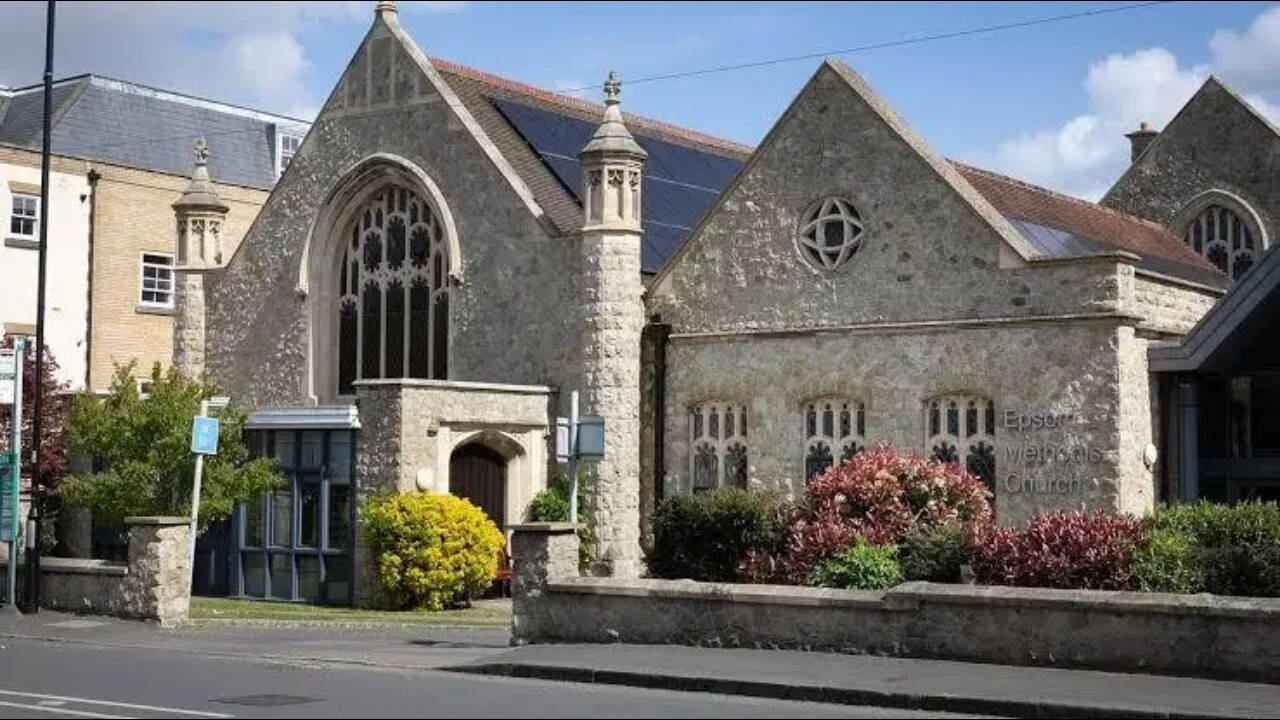
Surrey Police are currently scrambling to close a digital net around a suspect following a brutal sexual assault near St Martin’s Church in Epsom. The attack, which occurred in the early hours of a Sunday morning, has triggered a massive appeal for dashcam footage, doorbell camera recordings, and private CCTV. Detectives are focusing on a specific window between 1:00 AM and 3:00 AM, betting that the silent witnesses of suburban security tech will provide the breakthrough that traditional patrols could not.
The incident is not just a localized tragedy; it is a stark reminder of how much modern policing now relies on the "private eye" of the citizen. When a crime occurs in the shadows of a historic churchyard, the authorities are no longer just looking for people who saw something. They are looking for hard drives that recorded something. This reliance highlights a shifting dynamic in public safety where the boundary between public oversight and private data is increasingly blurred.
The Clock and the Camera
The geography of Epsom, with its mix of open green spaces and dense residential pockets, creates a unique challenge for investigators. Church Street and the surrounding arteries are well-traveled, but at two in the morning, the human witnesses are few. This is why the plea for digital evidence is so urgent. Surrey Police aren't just asking for a look at the footage; they are asking for a specific digital breadcrumb trail that can reconstruct the movements of both the victim and the perpetrator.
Standard police CCTV in market towns is often criticized for being outdated or positioned poorly. While local councils maintain a network of cameras, these are frequently supplemented—and often outperformed—by high-definition consumer products like Ring doorbells and Tesla Sentry Mode. In cases of serious sexual assault, the first 48 hours are the most critical. The delay in identifying a suspect often comes down to the time it takes to knock on doors and manually review hours of grainy, low-light video.
Why the Churchyard Setting Matters
St Martin’s isn't just a religious site; it's a transit point. It sits at a junction of footpaths that locals use to navigate the town away from the main roads. Criminals often exploit these "soft" areas—places where lighting is inconsistent and official surveillance is sparse. By targeting a location near a church, an attacker utilizes the natural cover provided by ancient stone walls and sprawling foliage.
There is a grim irony in the fact that one of the town’s most peaceful spots became the site of such violence. The investigative team led by the Sexual Offences Investigation Team (SOIT) is treating the area as a complex forensic puzzle. DNA evidence from the scene is a priority, but in the modern court system, a DNA hit is significantly bolstered by a visual timeline. Juries want to see the "before" and "after." They want to see a hooded figure walking toward the churchyard at 1:15 AM and running away at 1:45 AM. Without that visual corroboration, a defense solicitor can often find enough "reasonable doubt" to sink a prosecution.
The Burden on the Public
We have entered an era where the public is essentially an auxiliary wing of the forensics department. The police appeal specifically mentions dashcam footage from anyone driving through the town center or toward the racecourse during the early hours. This reflects a reality where the police simply do not have the resources to monitor every corner of a borough.
However, this "crowdsourced" investigation model has its own flaws.
- Data Retention: Most home security systems overwrite data every 24 to 72 hours. If the police don't get the word out fast enough, the evidence is gone forever.
- Privacy Concerns: While most people are happy to help catch a rapist, the mass collection of private footage raises questions about how long the state holds onto data from innocent bystanders captured in those same clips.
- Technical Literacy: Not everyone knows how to export a specific timestamped file from their NVR or cloud storage, leading to "lost" evidence through sheer technical frustration.
The Surrey investigation is currently navigating these hurdles. Officers are conducting house-to-house inquiries not just to ask "Did you see anything?" but to ask "Can we see your hard drive?"
The Failure of Preventative Policing
While the hunt for the Epsom attacker intensifies, the broader conversation must turn to why these incidents continue to happen in areas that are supposedly "safe." Surrey is often characterized as an affluent, low-crime county. This reputation can lead to a dangerous sense of complacency. When street lighting is dimmed to save costs or when police numbers are concentrated in urban hubs like Guildford or Woking, towns like Epsom are left vulnerable.
The "broken windows" theory of policing suggests that neglected environments invite crime. While a churchyard is hardly a slum, the lack of active, visible patrols after midnight creates a vacuum. When the state retreats from the streets, predators fill the space. The reliance on retrospective video evidence is an admission that the crime could not be prevented, only—hopefully—punished.
The Victim Support Gap
In the wake of an attack like this, the focus is naturally on the manhunt. But the long-term impact on the community and the victim is where the real struggle lies. Epsom is a town where people walk their dogs and take their children to school with a sense of security. That security has been punctured.
The Sexual Offences Investigation Team is tasked with more than just catching a criminal; they have to manage the trauma of a survivor in a system that is often cold and bureaucratic. The conviction rate for rape in the UK remains staggeringly low, often hovering around the 2-3% mark for reported cases. This is the "brutal truth" that the police don't mention in their media appeals. Even with the best footage in the world, the road to justice is paved with evidentiary hurdles that favor the accused.
Identifying the Suspect
Information released by the authorities usually remains vague in the early stages to avoid compromising an identity parade. However, the search for a "witness" is often a coded way of identifying a person of interest without officially naming them a suspect. If you were in the Epsom area on that Sunday morning, your presence is vital not because you are in trouble, but because you might be the "calibration point" for the entire timeline.
If a car passed the church at 1:50 AM, its headlights might have illuminated the attacker for a split second. That split second is the difference between a cold case and a life sentence.
Mapping the Risk Zones
The Epsom incident should serve as a catalyst for a local safety audit.
- Lighting: Are the paths around St Martin’s sufficiently lit?
- CCTV Integration: Can the council access private feeds in real-time during emergencies?
- Patrol Frequency: Is the "night-time economy" of Epsom being policed effectively, or are the outskirts being ignored?
The police are doing their job by appealing for footage, but the community needs to ask why the footage is the only thing they have to go on. A proactive strategy would involve more than just asking for help after a life has been shattered.
If you have a dashcam and you drove through Epsom between 1:00 AM and 3:00 AM on the night in question, do not wait for a knock on the door. Check your memory card now. Look for anyone on foot, especially individuals who appeared out of place or were moving with uncharacteristic haste. The digital footprint of the attacker exists; it just needs to be found before the system deletes it.
Every minute that passes without a lead allows the trail to grow cold. The suspect is likely someone familiar with the Epsom area, someone who knew the churchyard provided a blind spot. They are counting on the darkness and the silence of the town. Your doorbell camera might be the only thing that saw his face. Check the footage. Save the files. Call 101.