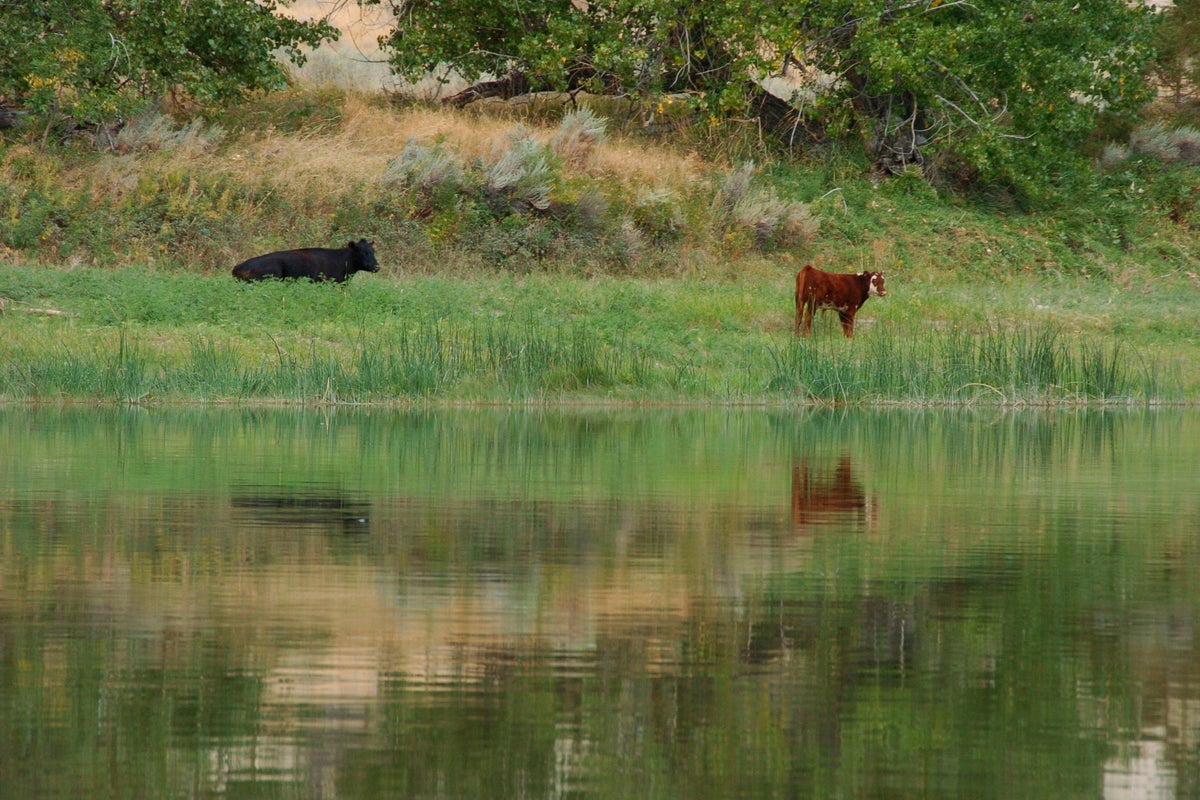
The red dust of the American West doesn’t care about bureaucracy. It clings to the wheel wells of a rusted Ford F-150 and settles into the deep creases of a rancher’s palms just as easily as it coats the boots of a backpacker seeking a week of silence. For decades, we viewed this land—hundreds of millions of acres of it—as a giant, multi-layered cake. Some wanted to slice off the timber. Others wanted to dig for the minerals baked into its crust. A few just wanted to walk across it and breathe.
But a fundamental shift recently occurred in how we define the "use" of this earth. For a brief window, the Bureau of Land Management (BLM) decided that leaving the land alone—restoring a stream, protecting a migration corridor, or simply letting the grass grow—was just as valid a "use" as drilling an oil well. It was a rule that put conservation on equal footing with extraction.
Now, that footing has been kicked out from under us.
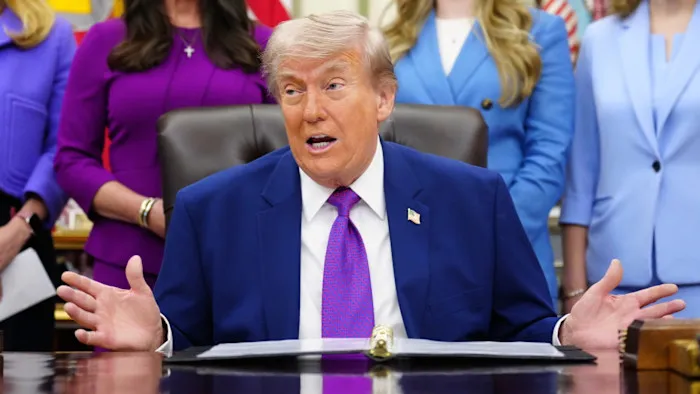
The Trump administration has moved to rescind the Public Lands Rule, effectively striking "conservation" from the list of official ways we are allowed to utilize our collective inheritance. It sounds like a dry clerical error. A footnote in a federal register. In reality, it is a choice about whose voice matters when we decide what the future looks like.
The Myth of the Empty Space
Consider a hypothetical cattleman named Elias. Elias has grazed his herd on the same public allotments his grandfather did. To him, the land is a workplace. If a new rule says a section of that land is now "set aside" for a conservation lease, Elias sees a fence where there used to be a gate. He sees a threat to his livelihood. His fear is real, grounded in the bone-deep anxiety of a man trying to keep a multi-generational business afloat in a world of rising costs and erratic weather.
Now, consider a woman named Sarah. She lives three states away but spends her winters dreaming of the sagebrush. She isn’t a rancher or an oil executive. She is an owner. Along with every other American citizen, she holds a fractional deed to 245 million acres managed by the BLM. To Sarah, conservation isn't "doing nothing." It is an active investment in the planet’s respiratory system. It is the act of ensuring that when her daughter is old enough to hike, the water in the creek is still clear enough to drink.
For years, the law favored the Eliases of the world. The 1976 Federal Land Policy and Management Act mandated "multiple use," but in practice, that usually meant "multiple ways to extract value." If you weren't pulling something out of the ground, you weren't really using it.
The Public Lands Rule attempted to bridge the gap between the extractor and the observer. It introduced "restoration leases," allowing organizations or individuals to pay the government to heal over-grazed land or protect sensitive habitats. It was a market-based approach to environmentalism. It treated a healthy ecosystem with the same respect we give a barrel of crude.
The Stroke of a Pen
The cancellation of this rule isn't just about policy; it's about a return to a specific, industrial philosophy. By removing conservation as a recognized "use," the administration is signaling that the land has no intrinsic value unless it is being exploited.
Critics of the rule argued that it was an "overreach," a way for the federal government to lock up land and bypass the intent of Congress. They framed it as a war on rural economies. But this perspective ignores the math of the modern West. Recreation on public lands—fishing, hunting, hiking, and wildlife viewing—contributes billions to the national economy every year. A standing forest provides a service. A clean aquifer provides a service. We just haven't been very good at putting those services on a balance sheet.
When we prioritize extraction to the exclusion of all else, we treat the land like a mine rather than a home.
The logic of the repeal suggests that conservation is a luxury we can no longer afford, or perhaps a hobby that shouldn't interfere with the "real" business of energy independence. But there is a quiet, terrifying irony here. The very industries being protected—ranching, mining, drilling—are the ones most vulnerable to the degradation of the landscape. You cannot graze cattle on dust. You cannot drill in a wasteland where the social license to operate has completely evaporated.
The Ghost of the Migration Path
Imagine a mule deer. Every year, it follows an ancient internal map, moving from the high mountains to the low deserts. This path is miles long and crosses dozens of invisible boundaries. Under the conservation rule, a local group could have leased a portion of that path to ensure no new roads or rigs blocked the way. It was a way to protect the "infrastructure" of the natural world.
Without the rule, that deer’s path is just "available space."
We often talk about "public lands" as if they are a distant, abstract concept. They aren't. They are the background of our collective American story. They are the places where we go to remember what the world looked like before we paved it. When we strip away the legal protection for conservation, we aren't just helping an oil company or a ranching collective. We are telling ourselves that the only things worth keeping are the things we can sell.
The stakes are invisible until they are gone. You don't notice the loss of silence until the drill starts. You don't notice the loss of the creek until the fish stop jumping.
The Weight of the Choice
The repeal of the rule is a victory for those who view the West as a warehouse. For the rest of us, it feels like a foreclosure on a home we were still living in. The administration argues this will "unleash" economic potential, but at what cost to the long-term health of the soil?
There is a stubbornness in the American spirit that likes to think we can have it all. We want the cheap gas, and we want the pristine wilderness. We want the booming industry, and we want the quiet solitude. But the land is finite. It can only give so much before it breaks.
By devaluing conservation, we are gambling with the only thing we can't manufacture more of. We are betting that the future doesn't need wild spaces as much as the present needs a few more percentage points of growth. It is a cynical bet.
The dust continues to blow across the basins of Wyoming and the red rocks of Utah. It doesn't care about the Federal Register. It doesn't care which political party holds the pen. But the people who live in that dust—the hunters, the ranchers, the birdwatchers, and the children who will inherit the remnants of our decisions—they will feel the difference.
We are entering an era where the quietest parts of our country are being told they have no right to exist in peace. The fences are going up, even if we can't see them yet. The gates are swinging shut on the idea that nature, in its untouched state, is a resource worth defending.
One day, we may look out across a landscape that has been "used" to its absolute limit and wonder when we decided that the beauty of the earth was a secondary concern. We will look for the mule deer and find only a road. We will look for the stream and find only a dry bed. And we will realize, too late, that you cannot eat the money we made from the destruction of the things we loved.
The sun sets over the Great Basin, casting long, purple shadows across the sagebrush. For now, the land remains. It is patient. It has outlasted empires and ice ages. But it has never before faced an opponent armed with the power to redefine its very soul into a commodity.