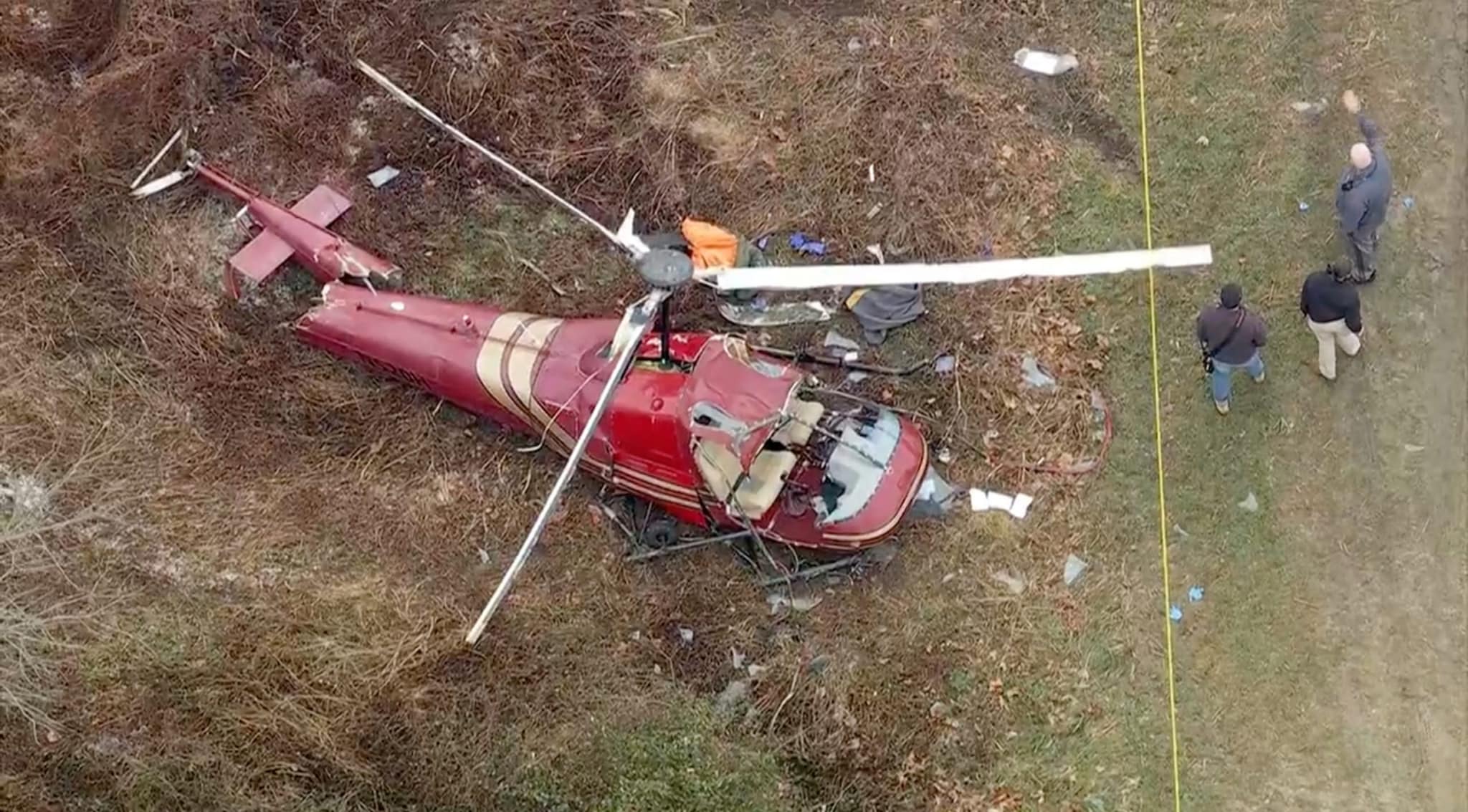
The footage is always the same. A blurred smartphone video, the frantic collective gasp of onlookers, and a multi-million dollar piece of machinery crumpling into the Himalayan hillside like a discarded soda can. The recent crash in Nepal, where a helicopter went down moments before landing, leaving a passenger injured and a hull destroyed, is being framed by the international press as a "tragic mishap" or "unpredictable weather event."
That narrative is a lie.
Calling these incidents accidents is a disservice to physics and a shield for systemic negligence. In the high-altitude theater of the Himalayas, there is no such thing as an unpredictable gust. There is only the predictable limit of a rotor blade’s lift and the catastrophic ego of operators who treat the "Death Zone" like a suburban helipad.
The Thin Air Myth
Most people think helicopters fly because the blades "push" against the air. That is an oversimplification that kills people. At the altitudes required to navigate Nepal’s interior, we are dealing with fluid dynamics at their most unforgiving.
As altitude increases, air density drops. To maintain the same amount of lift, the engine must work harder or the blades must angle more aggressively. In the thin air of the Manaslu or Everest regions, a helicopter is often operating at the absolute razor’s edge of its "power margin."
When a pilot attempts a landing in these conditions, they aren't just flying; they are balancing on a needle. The "lazy consensus" suggests that a sudden gust of wind caused the recent crash. The reality? The aircraft was likely already at its aerodynamic limit. When you have zero margin for error, a standard atmospheric shift isn't an act of God—it’s a mathematical certainty of failure.
I have spent years analyzing flight telemetry in restricted environments. I have seen operators shave off fuel weights and skip maintenance cycles to maximize "tourist throughput." When an aircraft goes down in Nepal, don't look at the clouds. Look at the weight-and-balance sheet.
The High-Altitude Ego Trap
The industry celebrates "Himalayan Pilots" as if they are cowboys. That is exactly the problem. Aviation is not supposed to be about grit; it is about boring, repetitive adherence to checklists.
In Nepal, the culture of "getting it done" has replaced the culture of "safety first." We see it every season:
- The Go-No-Go Fallacy: Pilots feel immense pressure from tour operators to complete flights during narrow weather windows.
- The Landing Zone Scandal: Many "helipads" in the region are nothing more than flattened ridges with zero ground-effect stability.
- The Tourism Industrial Complex: A rescue flight or a luxury tour is worth more than the long-term reputation of the safety record.
We are told that flying in Nepal is inherently dangerous. It isn't. Flying a single-engine light utility helicopter into a high-density altitude environment with a full load of passengers is what’s dangerous. It’s a choice. We have the technology to make these flights safer—twin-engine ships with higher service ceilings—but they cost more.
The "accident" in Nepal wasn't the moment the skids hit the dirt. The accident happened months ago in a boardroom when someone decided that profit margins were more important than a redundant engine.
Stop Asking If It Is Safe
People always ask: "Is it safe to fly in Nepal?"
That is the wrong question. The right question is: "Is the operator using an aircraft rated for this specific density altitude at this specific weight?"
If you are a passenger, you are likely being lied to. You are told the pilot is a "legend." You aren't told that the $Airbus H125$ he is flying is struggling to breathe at 12,000 feet.
The Physics of the Crash
Let’s talk about Vortex Ring State.
When a helicopter descends too quickly into its own downwash, it loses lift. In the thick air of sea level, a pilot can often "fly out" of this. In the thin air of the Himalayas, you fall like a stone. The video of the recent crash shows a classic loss of control in the final stages of the approach. This isn't "bad luck." This is what happens when a pilot is forced to make a steep approach into a confined area because the terrain won't allow for a shallow, safer path.
If the aviation industry in Nepal actually cared about safety, they would stop blaming the wind and start mandating:
- Strict Weight Limits: No "flexible" passenger counts.
- Automated Flight Following: Real-time monitoring that flags erratic maneuvers before they become crashes.
- End of the Single-Engine Era: If you are carrying paying passengers above 10,000 feet, you need two engines. Period.
The Uncomfortable Truth About "Rescues"
A massive portion of helicopter traffic in Nepal is categorized as "medical evacuations." Insider knowledge reveals a darker side: many of these are "convenience evacuations" for tired trekkers, billed to insurance companies at $5,000 to $10,000 a pop.
This creates a high-frequency, high-risk environment. The more "rescues" there are, the more pilots are pushed to fly in marginal conditions. The crash we just saw is a symptom of a system that has commoditized the sky. When you turn the Himalayas into a taxi stand, you get taxi-stand safety standards.
The Equipment Problem
We are using 20th-century thinking for 21st-century tourism. The helicopters currently in use are masterpieces of engineering, but they are being used outside their ideal envelopes.
Imagine a scenario where we stop pretending that a standard light helicopter is a mountain goat. Imagine if we required every mountain flight to have a 30% power reserve at the destination's altitude. Half the flights currently operating in Nepal would be grounded. And that is exactly what should happen.
How to Actually Fix It
If you want to stop seeing these videos on your feed, stop accepting the "unpredictable mountains" excuse.
- Demand Transparency: Operators should be forced to publish their "exceedance" data. How many times did the pilot push the engine past its rated limits this month?
- Insurance Accountability: Insurance companies need to stop paying out for "accidents" that are actually clear violations of operating procedures.
- Passenger Education: If the pilot tells you he can "squeeze in" one more person or one more bag, get off the helicopter. He is gambling with your life to save on fuel or time.
The industry likes to say that the Himalayas are "unforgiving." No. The Himalayas are indifferent. They don't care about your tour schedule, your Instagram photos, or your pilot's "years of experience." Gravity works the same for a rookie as it does for a veteran.
The next time a helicopter goes down in Nepal, don't look at the wreckage. Look at the flight manifest and the altitude. The answer is always in the numbers, not the "bad luck."
Aviation is the art of eliminating variables. In Nepal, they are adding them for profit.
Stop calling these crashes accidents. Start calling them what they are: inevitable outcomes of a broken business model.
Throw the "miracle survival" stories in the trash and start demanding the boring, expensive safety of a redundant system. Or stay on the ground.