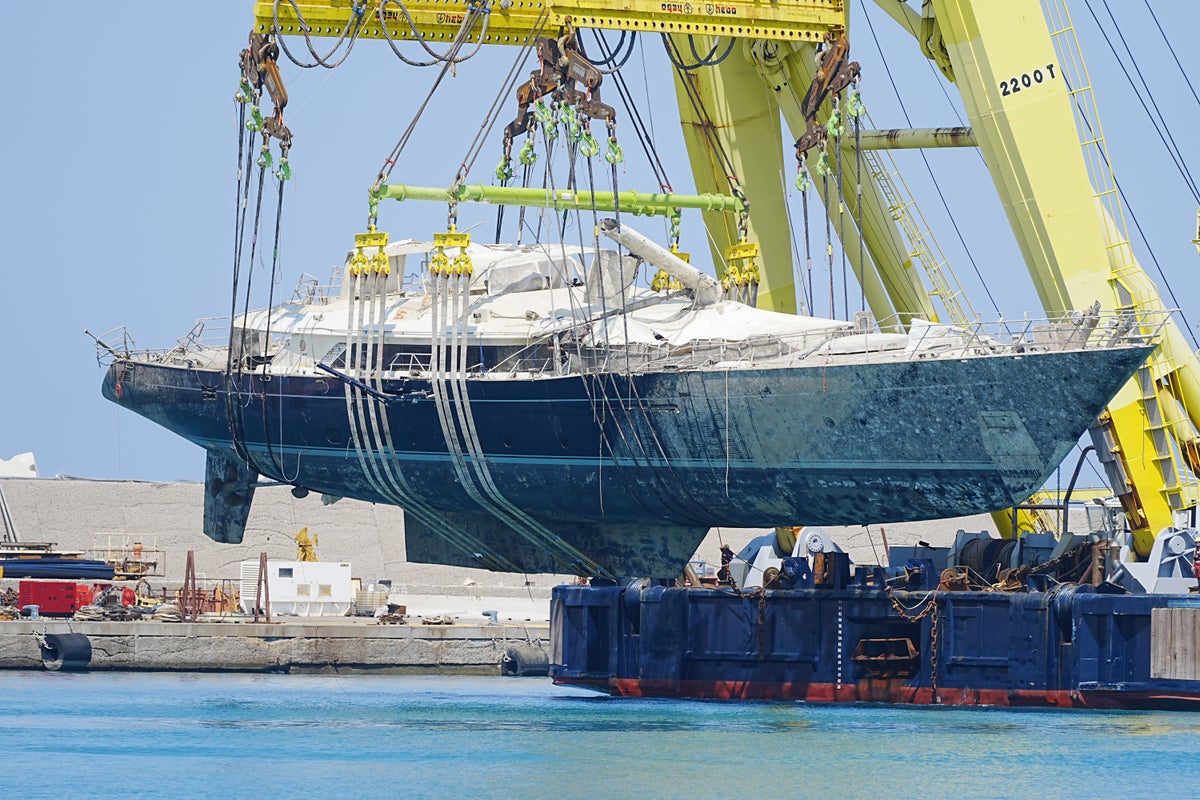
The sinking of the Bayesian was not an act of God. While early reports leaned heavily on the "black swan" narrative of an unpredictable weather event, the preliminary findings from Italian investigators and maritime safety experts suggest a far more disturbing reality. The 56-meter Perini Navi sailing yacht didn't go down because nature was invincible. It went down because a series of human choices and design vulnerabilities stripped the vessel of its inherent stability at the exact moment it needed it most.
When the Bayesian vanished beneath the waves off the coast of Porticello in August 2024, the immediate culprit was identified as a downburst—a powerful, localized wind event. However, seasoned mariners know that yachts of this caliber are engineered to withstand far more than a sudden gust of wind. The core of the investigation has shifted from the sky to the hull. Specifically, the inquiry focuses on why the water ingress happened so rapidly, suggesting that the vessel’s watertight integrity was compromised before the storm even hit its peak.
The Myth of the Unsinkable Superyacht
In the rarefied world of ultra-luxury shipping, there is a dangerous tendency to equate size and price with invulnerability. The Bayesian featured one of the tallest aluminum masts in the world, a 72-meter spire that served as both a feat of engineering and a massive lever. To understand the physics of the disaster, one must look at the relationship between that mast and the ship's ballast.
Stability in a sailing vessel is a constant battle between the force of the wind on the sails (or the mast itself) and the righting moment provided by the keel. The Bayesian utilized a retractable keel. When fully extended, it provided the necessary leverage to keep the boat upright. When retracted, it allowed the yacht to enter shallower harbors but significantly reduced its stability. Preliminary data suggests the keel was not fully deployed during the storm. This single factor shifted the ship's center of gravity, making it far more susceptible to being knocked down by the 100-mph winds of a downburst.
The Open Door Policy
A ship can survive a knockdown if it remains watertight. The Bayesian did not. The speed of the sinking—estimated at mere minutes—points toward "massive flooding" that could only occur through open apertures. This wasn't a slow leak; it was a catastrophic failure of the vessel's "envelope."
Investigators are looking at two primary culprits: the large side-loading tender garage door and the various deck-level hatches. On a calm Mediterranean night, it is common practice to keep these open for ventilation or ease of crew movement. But when a downburst hits, a yacht can tilt to an angle where these openings, usually well above the waterline, suddenly become intake valves for the sea. Once the water reached the heavy engine room or the lower accommodations, the ship’s fate was sealed. The weight of the water creates a runaway effect known as the "free surface effect," where the sloshing liquid further destabilizes the vessel, dragging it down faster than any pump could ever hope to clear.
The Failure of Professional Watchkeeping
Modern superyachts are floating computers, equipped with AIS, advanced radar, and weather-monitoring systems that should provide ample warning of an approaching cell. The "storm" didn't come out of nowhere. Meteorological services in the area had issued alerts for severe weather in the Tyrrhenian Sea.
The failure here appears to be one of situational awareness. On a vessel with guests of such high profile, the bridge should have been in a state of high alert. This involves "buttoning up" the ship—closing all watertight doors, ensuring the keel is down, and readying the engines. The fact that the Bayesian was caught in a vulnerable configuration suggests a lapse in the rigorous protocols that are supposed to govern life at sea. The crew of the Sir Robert Baden Powell, anchored just yards away, managed to keep their vessel stable and even assisted in the rescue. The contrast between the two outcomes is a stinging indictment of how the Bayesian was handled in the final hour.
Engineering Hubris and the Giant Mast
We must talk about the mast. The Bayesian’s 72-meter mast was not just a design choice; it was a physical liability in extreme conditions. A mast of that height acts as a giant sail even when no sails are unfurled. The windage—the surface area exposed to the wind—is immense.
When the downburst hit, the wind pressure on the mast created a massive heeling moment. If the keel was retracted, the boat had no way to fight back. Critics of the ultra-large sailing yacht trend have long warned that the pursuit of record-breaking aesthetics often comes at the expense of traditional safety margins. While the Perini Navi shipyard has a storied reputation for safety, the Bayesian was a unique build with a specific set of physics that required perfect operation to remain safe. There was no room for error.
The Downburst vs. The Waterspout
Early media reports confused downbursts with waterspouts. This is an important distinction for the investigation. A waterspout is a localized tornado over water, which is visible and directional. A downburst is a sudden, violent downdraft of air that hits the surface and spreads out in all directions. It is harder to see at night and hits with the force of a hammer.
Because the Bayesian was at anchor, it was a sitting duck. A vessel under power can often head into the wind to minimize the profile presented to the storm. At anchor, if the wind shifts suddenly, the boat can be caught "broadside." For a vessel with a high center of gravity and open hatches, being caught broadside by a 100-mph wind is a death sentence.
A Systemic Failure of Luxury Standards
The maritime industry is now forced to reckon with the reality that the "Superyacht Code" may be insufficient for the age of extreme weather. Current regulations focus heavily on fire safety and life-saving appliances, but the Bayesian proves that basic stability and watertight integrity are being overlooked in favor of guest comfort and "open-concept" living.
Owners want floor-to-ceiling glass, fold-down balconies, and seamless transitions between indoor and outdoor spaces. These are the very features that compromise a ship’s ability to survive a knockdown. If the industry does not pivot back toward a "safety first" design philosophy, the Bayesian will not be the last tragedy of its kind.
The survivors’ accounts and the ROV footage from the seabed tell a story of a ship that was overwhelmed not by the sea, but by a catastrophic chain of human and mechanical failures. The anchors didn't drag; the hull didn't snap. The ship simply tipped over and filled with water because the people in charge forgot that the Mediterranean, for all its beauty, is a wilderness that demands constant vigilance.
Check the seals on every hatch. Ensure the keel is down when the barometer drops. Never trust a calm sea. These are the lessons written in the wreckage 50 meters below the surface.