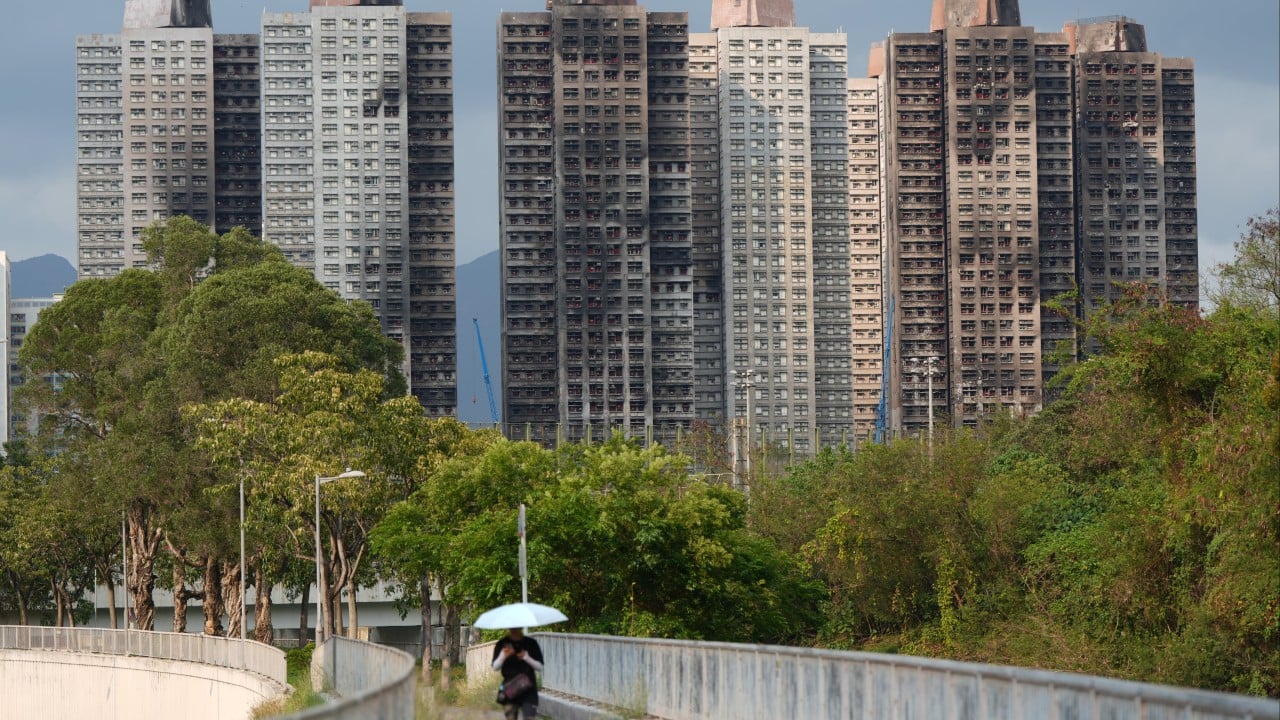
The death of a 45-year-old woman in a Tai Po tenement fire was not a failure of fire-fighting equipment or water pressure. It was a failure of data transmission. When the victim dialed 999 as smoke filled her apartment, she reached a police dispatcher. However, due to a catastrophic breakdown in inter-departmental communication, that life-saving information was never relayed to the Fire Services Department. She remained trapped while rescuers worked mere meters away, unaware a soul was left inside the burning structure.
This incident exposes a brittle infrastructure hidden behind the sleek facade of a modern emergency response system. We are led to believe that a 999 call is a direct line to safety. In reality, it is a manual relay race where the baton is too often dropped.
The Friction in the Relay
Hong Kong’s emergency response relies on a tiered dispatch system. When you dial those three digits, you hit a police-operated console first. This is a legacy of colonial-era administration where the police served as the central nervous system for all civil disturbances. If the emergency is a fire or a medical crisis, the police operator must manually transfer the call or the information to the Fire Services Department (FSD).
During the Tai Po blaze, the system choked. The victim managed to place a call that lasted several minutes. She provided her location. She described her predicament. Yet, the police operator failed to bridge that call to the FSD dispatchers who were already directing engines to the scene.
Why does this gap exist? It comes down to interoperability. The police and fire departments operate on distinct radio frequencies and use different digital logging platforms. There is no automated, cross-departmental "ping" that alerts all agencies to a 999 call’s location data in real-time. Instead, a human being must decide to click a button or pick up a secondary line. When that human fails, the system dies.
Minutes Lost to Bureaucratic Silos
In a high-rise fire, time is measured in breaths. A standard apartment fire can reach "flashover"—the point where every combustible surface ignites simultaneously—in less than five minutes.
While the victim was on the phone with the police, fire crews arrived at the building. They began a standard "offensive" attack on the flames. Because they had no record of a person trapped in that specific unit, they prioritized containment and extinguishing the primary seat of the fire. Had the FSD received the 999 data, their tactics would have shifted immediately to a Search and Rescue (SAR) priority.
The difference is significant. A SAR priority means sending "breathing apparatus" teams directly to the reported flat, bypassing the fire floor if necessary to reach the victim. By the time the fire was controlled and teams performed a secondary sweep, it was too late. The victim was found in the bathroom, having succumbed to smoke inhalation.
The Problem with Verbal Hand-offs
The current protocol relies heavily on verbal communication between dispatchers. In a high-stress environment with multiple incoming calls, "information saturation" occurs. A police dispatcher might be handling a dozen calls about the same fire. If they assume the FSD is already aware because engines are on-site, they might neglect to pass on a specific detail—like a room number or a trapped occupant.
This is a single point of failure.
Modern cities like London and New York have moved toward Integrated Emergency Management Systems (IEMS). In these models, a single digital "ticket" is created the moment a call begins. That ticket is visible to police, fire, and ambulance crews simultaneously. If a caller says "I’m in 4B," that text appears on the dashboard of the fire truck before the driver even hits the siren. Hong Kong remains wedded to a verbal relay that feels increasingly prehistoric.
The Technological Mirage
The government often points to its sophisticated GPS tracking and digital maps as evidence of a "world-class" response. It is a mirage. While the police can see where a mobile phone is located via cell tower triangulation, that data does not always flow to the fire crews on the ground.
- Data Silos: Information stays within the department that receives it.
- Manual Entry: Dispatchers often have to re-type addresses into secondary systems.
- Protocol Rigidity: Operators are trained to follow checklists that don't always account for the chaos of a rapidly spreading fire.
The Tai Po investigation has focused on "human error," but blaming a single dispatcher is a convenient way to avoid fixing a broken architecture. If a system allows one person's mistake to result in a fatality, the system is the problem.
Accountability and the Coronial Inquest
The upcoming coronial proceedings must look past the individual operator. We need to ask why the FSD and the Police Force are still operating as separate islands. There is a long-standing "silo culture" within the civil service where departments guard their data and budgets with fierce autonomy. This lack of cooperation is now costing lives.
We see this also in the way the city handles medical emergencies. Often, an ambulance is dispatched, but the "first responder" fire engine—which may be closer and equipped with a defibrillator—is not alerted until minutes later. These delays are baked into the protocol.
The solution is not more training or longer checklists. The solution is technological integration.
What Must Change Immediately
If the city wants to prevent another Tai Po tragedy, it needs to dismantle the manual relay system. Every 999 call involving a fire must be "joined" by an FSD dispatcher within ten seconds of the call being picked up by police. This is known as "silent monitoring" or "active conferencing." It ensures that the people who actually fight the fire hear the victim's voice themselves.
Furthermore, the city must invest in a unified dispatch platform. A digital incident log should be shared across all emergency services in real-time. When a victim says they are trapped, that information should flash red on every screen in the command center and every tablet in every fire engine within a five-mile radius.
The victim in Tai Po did everything right. She called for help. She stayed on the line. She gave her location. She was failed by a government that prioritizes departmental boundaries over the seamless flow of life-saving data.
Demand a unified emergency response system that treats a 999 call as a single cry for help, not a message to be passed through a game of bureaucratic telephone. Anything less is a gamble with the lives of residents living in one of the most densely populated cities on earth.