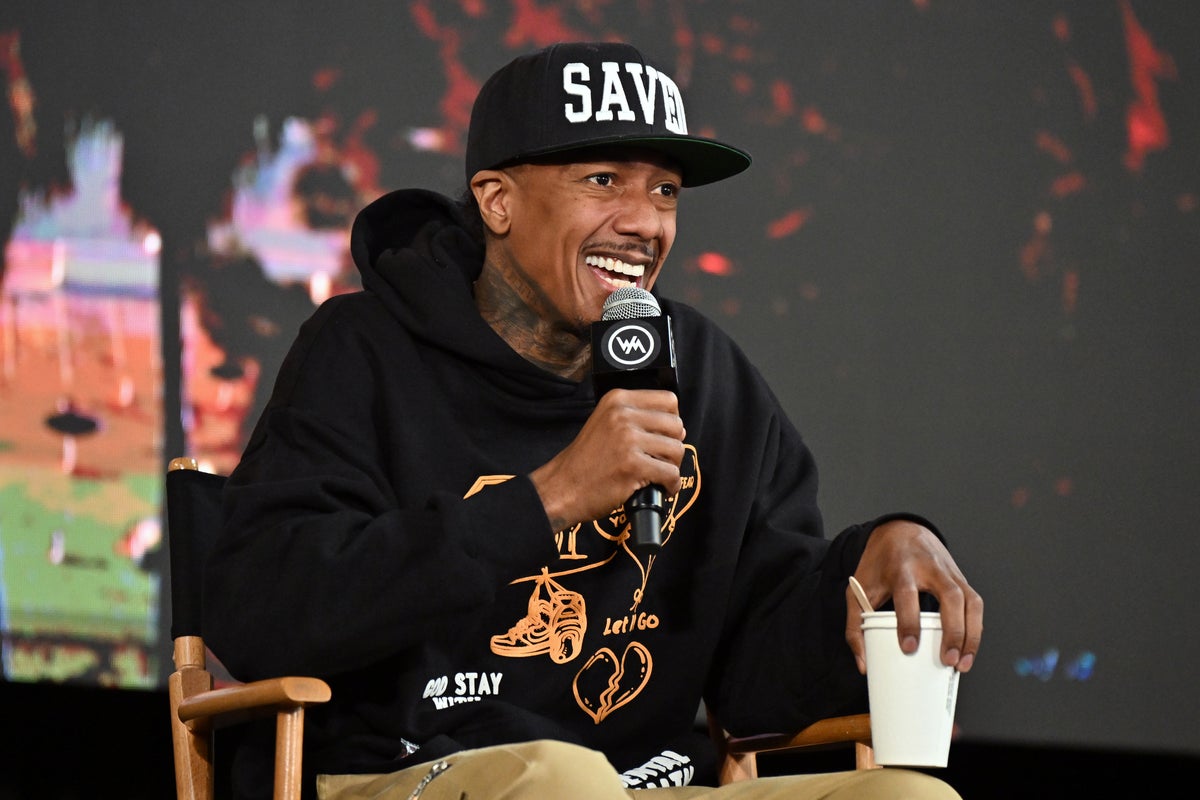
Nick Cannon knows how to hold a microphone. It is an extension of his arm, a tool he has used for decades to command rooms, stadiums, and television screens. But lately, the man who built an empire on laughter and rhythmic wordplay is using that same tool to perform a different kind of surgery on the American psyche. He isn't just telling jokes anymore. He is digging into the roots of identity, dragging the ghosts of the past into the bright, unforgiving light of the present.
The headlines captured the soundbite. They always do. "Nick Cannon slams Democrats." "Nick Cannon praises Trump." The digital ink was barely dry before the internet did what it does best: it retreated into its bunkers. But if you listen past the noise of the clickbait, you hear a man grappling with a fundamental question of ownership. Who owns our history? Who owns the labels we wear? And, perhaps most provocatively, who owns the water?
The Weight of the Name
History is a heavy thing to carry, especially when that history feels like a betrayal. Cannon recently stood before the cameras and didn't just critique policy; he aimed for the jugular of political branding. He pointed a finger at the Democratic Party and invoked the name of the Ku Klux Klan. For many, it felt like a grenade tossed into a quiet room. For Cannon, it seemed more like a reminder of a ledger that hasn't been settled.
He spoke of a time when the lines were drawn differently. He referenced a historical reality that many choose to tuck away in the dusty corners of textbooks: the Southern Democrats of the 19th and early 20th centuries and their entanglement with the origins of the KKK.
Consider a hypothetical young man in a classroom today. Let’s call him Elias. Elias is told that one side represents progress and the other represents the past. Then, he starts reading. He finds the names of senators from seventy years ago who fought tooth and nail against civil rights while wearing the same party banner that now claims to be his only sanctuary. The cognitive dissonance is a physical weight. Cannon is tapping into that specific, localized pain. He is asking why a community should offer loyalty to a brand that has, in his view, merely swapped its tactics while keeping its grip firm on the same voters.
It isn’t about endorsing one side as perfect. It is about the refusal to be an inherited asset. Cannon's rhetoric suggests that the modern political landscape is less about "red versus blue" and more about the struggle to find an exit from a historical loop.
The Rename and the Reclaim
Then there is the matter of the water.
Donald Trump recently floated the idea of renaming the Gulf of Mexico to the "Gulf of America." Most pundits treated it as a footnote, a bit of characteristic bluster to be mocked or ignored. Cannon saw it differently. He didn't see a geographical gaffe. He saw a reclamation of space.
Imagine standing on the edge of the shore. The salt air hits your face, and the horizon stretches out until it breaks into blue-black infinity. For centuries, that water has carried the names of others. To Cannon, the idea of calling it the "Gulf of America" isn't just about nationalism. It is about a psychological shift in how we perceive our own backyard. It is about the audacity to name the world we live in rather than accepting the maps handed down by old empires.
There is a visceral power in naming. When you name a thing, you claim responsibility for it. You claim a right to its future. By siding with this seemingly radical rebranding, Cannon is signaling a desire for a new American identity that isn't beholden to the old world’s designations. He is looking for a "new deal" that isn't written in the ink of the 1930s but in the bold, sometimes messy strokes of a man who wants to see the country through a lens of absolute, unapologetic ownership.
The Invisible Stakes of the Conversation
Why does it matter what a television host says about the KKK or the name of a body of water?
Because the stories we tell ourselves about who we are determine what we believe we deserve.
If you believe you are part of a demographic that is "owed" to a party, you lose your leverage. If you believe the geography of your home is a fixed, unchangeable reality dictated by people who died two hundred years ago, you lose your agency. Cannon is playing a high-stakes game of identity politics where the goal isn't to win an election, but to break a spell.
The reaction to his statements has been a mirror. Those who were outraged weren't just offended by the historical comparison; they were terrified by the idea of the "reliable" voter becoming unreliable. The moment a person stops following the script, they become dangerous to the status quo.
Cannon’s journey mirrors a broader, quieter movement happening across the country. It is the sound of people waking up and realizing that the political "homes" they were born into might just be houses built on sand. They are looking at the cracks in the foundation—the broken promises, the stagnant neighborhoods, the rhetoric that never quite turns into reality—and they are starting to ask if there is another way to live.
The Reality of the Rift
The facts remain on the table. The Democratic Party did have a pro-segregationist wing for a significant portion of its history. The "Southern Strategy" of the Republican Party in the late 20th century flipped the map. These are the logistical maneuvers of power.
But for the person living in the heart of a city that has seen the same leadership for fifty years with little change in the quality of life, those logistical maneuvers feel like a shell game. Cannon isn't talking to the historians. He is talking to the people who feel like the history is still happening to them.
He is looking at the "Gulf of America" as a metaphor for a vast, untapped potential. If we can rename the water, can we rename our future? If we can call out the ghosts of the KKK in the lineage of the powerful, can we finally exorcise them?
It is uncomfortable. It is loud. It is, at times, contradictory.
But the discomfort is the point. We have become so used to the polite, choreographed dance of political discourse that we have forgotten how to have a raw conversation about where we came from. Cannon is tearing up the choreography. He is stepping on toes. He is shouting from the wings.
The stakes aren't just about who sits in the Oval Office. They are about the internal map every American carries. Do you see yourself as a client of a political machine, or do you see yourself as the owner of the "Gulf"?
The man with the microphone isn't asking for permission anymore. He is redefined the borders of the debate, one provocation at a time. The water is still there, deep and churning, indifferent to the names we give it. But the names we choose define us, not the water. And Nick Cannon is betting that America is ready to stop being defined by its scars and start being defined by its reach.
He stands on the stage, the lights reflecting off a suit that costs more than most people's cars, and he talks about the KKK. It is a jarring image. It is meant to be. It is a reminder that you can have everything and still feel like you are living in someone else's story.
The story is changing. The ink is still wet.
The horizon hasn't moved, but the way we look at it has. There is a certain kind of freedom in being the person who points at the map and says, "This isn't right." It doesn't mean you have the new map ready yet. It just means you’ve stopped pretending the old one shows the way home.
The microphone stays hot. The crowd is divided. The water continues to hit the shore, waiting for a name that finally feels like the truth.