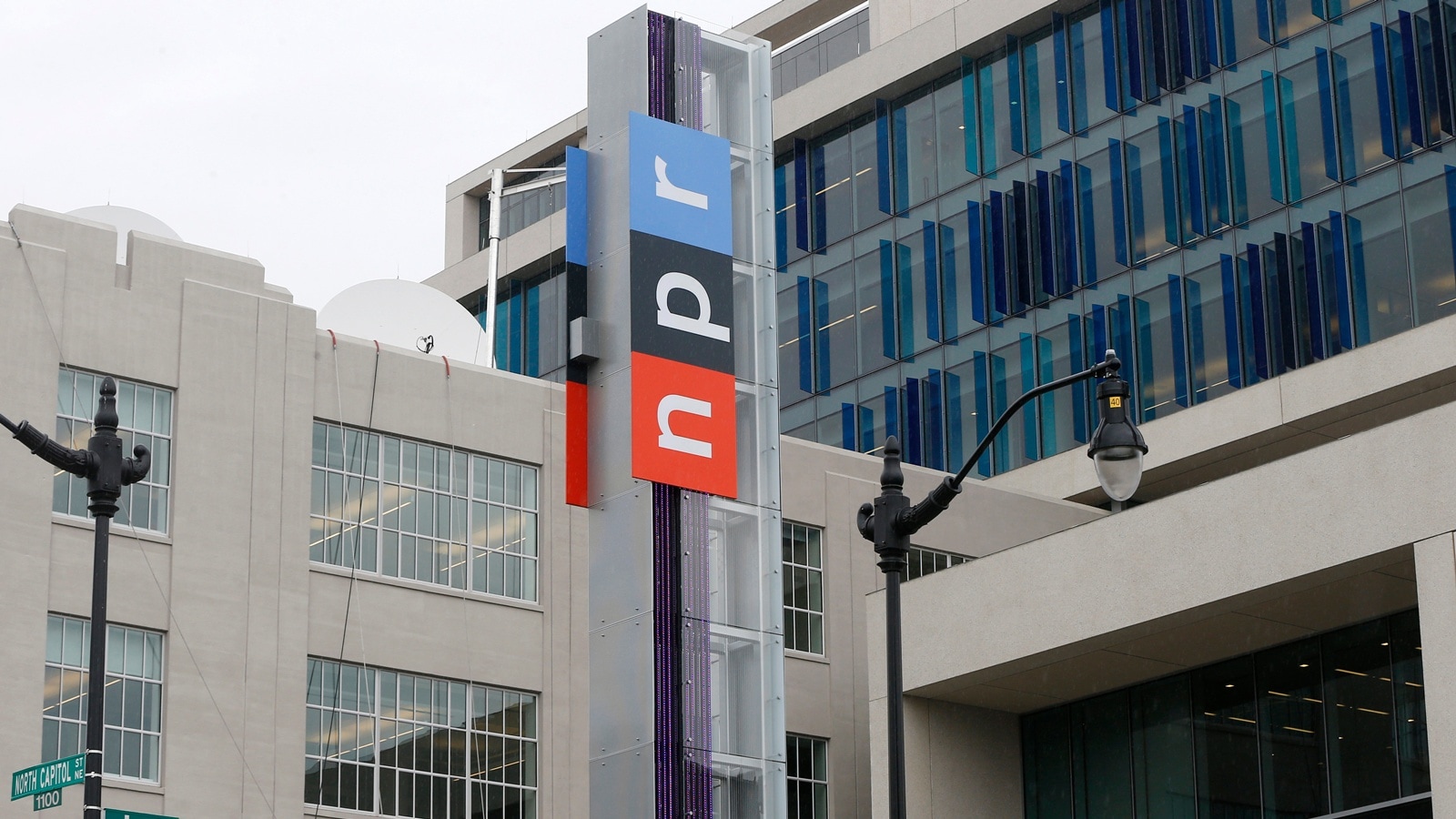
The federal judiciary just handed the White House a sharp reminder that the power of the purse does not override the Bill of Rights. A federal judge has issued a preliminary injunction blocking an executive order aimed at stripping funding from National Public Radio (NPR) and the Public Broadcasting Service (PBS), ruling that the administration’s attempt to defund these organizations based on their editorial content is a clear violation of the First Amendment. This is not a simple budgetary dispute; it is a fundamental clash between executive overreach and the constitutional protections afforded to the press.
While the administration argued that the move was a necessary measure to ensure fiscal responsibility and "neutrality" in media, the court saw through the political theater. The ruling clarifies that while the government has broad discretion over how it spends taxpayer money, it cannot use that power as a weapon to punish specific viewpoints or stifle reporting it finds inconvenient. This decision secures the immediate financial future of nearly 1,500 public radio and television stations across the country, many of which serve rural communities where private media outlets have long since retreated.
The Legal Firewall Against Viewpoint Discrimination
The core of the judge’s ruling rests on the principle of viewpoint discrimination. Under the First Amendment, the government is prohibited from favoring one side of a public debate over another, or penalizing a speaker because of the message they convey. The executive order specifically targeted NPR and PBS following a series of critical reports regarding the administration’s domestic policies. By singling these entities out for financial termination, the administration moved beyond standard budget adjustments and into the territory of unconstitutional retaliation.
The government’s defense relied heavily on the "government speech" doctrine, which suggests that when the government funds a program, it has the right to control the message. However, the court rejected this application. Public broadcasting was specifically designed by the Public Broadcasting Act of 1967 to be a "private" entity supported by public funds, intentionally insulated from political interference. The judge noted that if the government were allowed to pull funding every time a reporter asked a difficult question, the concept of a free press would become a hollow shell.
This legal barrier is significant because it sets a high bar for future administrations. It establishes that "content-neutrality" is the mandatory standard for federal grants. If the White House wants to cut funding for the Corporation for Public Broadcasting (CPB), it must do so through a general legislative process that addresses the agency as a whole, rather than using executive fiat to pick and choose which journalists are allowed to survive.
The Economic Reality of Public Media Subsidy
To understand why this court victory matters, one has to look at the ledger. Most critics of public media claim that NPR and PBS are "government-funded" behemoths that compete unfairly with private enterprise. The reality is far more precarious. Federal funding, distributed through the CPB, accounts for roughly 15% of the total revenue for the public broadcasting system. However, that percentage is not distributed evenly.
While large stations in major markets like New York or Los Angeles might only rely on federal dollars for 5% of their budget, small-market stations in the Midwest and Appalachia often see federal grants making up 40% to 50% of their operating costs. For these stations, the executive order was an extinction event.
The Rural Information Desert
If the funding cuts had been allowed to stand, the primary victims would not have been the high-profile anchors in Washington, but the listeners in "information deserts."
- Emergency Alerts: Many rural PBS stations maintain the infrastructure for the Emergency Alert System (EAS) in regions where cellular coverage is spotty.
- Educational Programming: PBS remains the largest provider of free, non-commercial educational content for preschoolers in the United States.
- Local Journalism: In hundreds of counties, the local NPR affiliate is the only remaining newsroom covering school board meetings or state legislature developments.
The administration’s attempt to "marketize" these services ignores the fact that there is no market incentive to provide deep-dive local news in a town of 5,000 people. Private media conglomerates have spent the last two decades stripping these markets of their local newspapers and radio stations to maximize shareholder returns. Public media fills the void left by the collapse of the traditional local news business model.
Political Neutrality and the Myth of Objectivity
A recurring theme in the administration’s rhetoric is the "bias" of public media. It is a potent political talking point that resonates with a base of voters who feel alienated by mainstream media. However, in a courtroom, "bias" is a subjective grievance, not a legal justification for breaking a contract or violating the Constitution.
The judge’s opinion noted that the administration failed to provide a concrete, objective metric for what constitutes "neutrality." If the standard for receiving federal funds is "praising the current administration," then the funds are no longer a public service—they are a propaganda budget. The Public Broadcasting Act explicitly mandates "strict adherence to objectivity and balance in all programs or series of programs of a controversial nature," but it grants the power of oversight to the CPB’s bipartisan board, not to the Oval Office.
The irony of the defunding effort is that it would likely have the opposite of its intended effect. Stripping federal funds forces public stations to become even more dependent on large private donors and foundations, which often have their own specific ideological leanings. Federal funding acts as a buffer, a "floor" that allows stations to maintain a level of independence from both corporate and political masters.
The Shadow of the 1967 Public Broadcasting Act
We must look back at the origins of this system to see why the current executive order was so legally fragile. When President Lyndon B. Johnson signed the Public Broadcasting Act, he spoke of a "free library of the airwaves." The legislative intent was to create a system that was independent and decentralized.
The administration tried to argue that the President has the authority to redirect funds under the guise of executive efficiency. The court, however, pointed to the specific language of the 1967 Act, which established the CPB as a non-profit corporation, not a government agency. This distinction is vital. Because the CPB is not an "agency" in the traditional sense, the President cannot simply issue a memo to change its mission or withhold its congressionally appropriated funds. This is a separation of powers issue as much as it is a free speech issue.
The executive branch attempted to bypass the Congressional power of the purse. Congress had already appropriated the funds for the fiscal year. By attempting to block those funds from being distributed, the White House was essentially trying to veto a law that had already been passed and signed, without going through the legislative process.
The Long Road of the Preliminary Injunction
It is important to recognize that a preliminary injunction is not a final ruling. It is a temporary hold. The judge issued this because the plaintiffs (a coalition of public media organizations and free speech advocates) demonstrated a "likelihood of success on the merits" and showed that "irreparable harm" would occur if the funding were cut immediately.
The government will almost certainly appeal this to a higher court. This sets the stage for a protracted legal battle that could eventually reach the Supreme Court. The stakes extend far beyond the $500 million or so that the CPB receives annually. This case will define the limits of how the government can interact with independent organizations that receive federal subsidies.
If the government wins on appeal, it would set a precedent where federal grants in the arts, sciences, and humanities could be rescinded based on the political leanings of the recipients. A research university could lose funding because a professor published a study the President disliked. An arts program could be shuttered because a play was deemed too critical of the state.
Strategic Failure of the Defunding Campaign
Beyond the legalities, the attempt to defund NPR and PBS by executive order was a tactical blunder. It galvanized a broad coalition of supporters, ranging from free-speech libertarians to rural educators. It also turned a budget line item into a national cause célèbre, likely driving up private donations for the very organizations the administration sought to weaken.
The administration’s strategy focused on the perceived "eliteness" of public media, but they miscalculated the deep-rooted loyalty people have to their local affiliates. The "Big Bird" defense is a cliché for a reason—it works. When you threaten to pull the plug on the organization that provides the only reliable weather and news to a farmer in the Dakotas or the only educational TV to a child in the inner city, you aren't just fighting "the media." You are fighting a public utility.
Future Proofing Public Media
This ruling provides a temporary reprieve, but it also exposes the vulnerability of the current funding model. As long as public media relies on a discretionary federal appropriation, it will always be a target for political grandstanding. There have been long-standing calls to move toward a permanent trust fund model, similar to those used in several European and Commonwealth countries, where funding is derived from a protected tax or an endowment that politicians cannot touch.
Until such a structural change occurs, the courts remain the final line of defense. This injunction reinforces the idea that the government cannot use money as a leash to pull the press into line. The First Amendment does not just protect the right to speak; it protects the right to operate without the fear that the state will bankrupt you for your reporting.
Analyze the language of the court's decision, and you will see a profound concern for the "chilling effect" of the executive order. If journalists have to check their scripts against the current administration's platform to ensure their station can pay the electricity bill next month, the press is no longer free. The judge’s refusal to allow this order to stand is a signal that the constitutional architecture of the United States still has some structural integrity.
The administration’s next move will be to challenge the injunction in the appellate court, arguing that the executive has broader authority over "discretionary" spending than the lower court allowed. This will bring the debate back to the fundamental question of whether federal money is a gift that can be snatched back at will, or a public investment that, once committed, is subject to the constraints of the Bill of Rights. For now, the microphones stay on and the cameras keep rolling, but the legal war is only beginning.
Review the specific stations in your district and ask their management about the percentage of their budget that comes from federal grants; you will likely find that the "defund" movement is an attack on your own local infrastructure.



