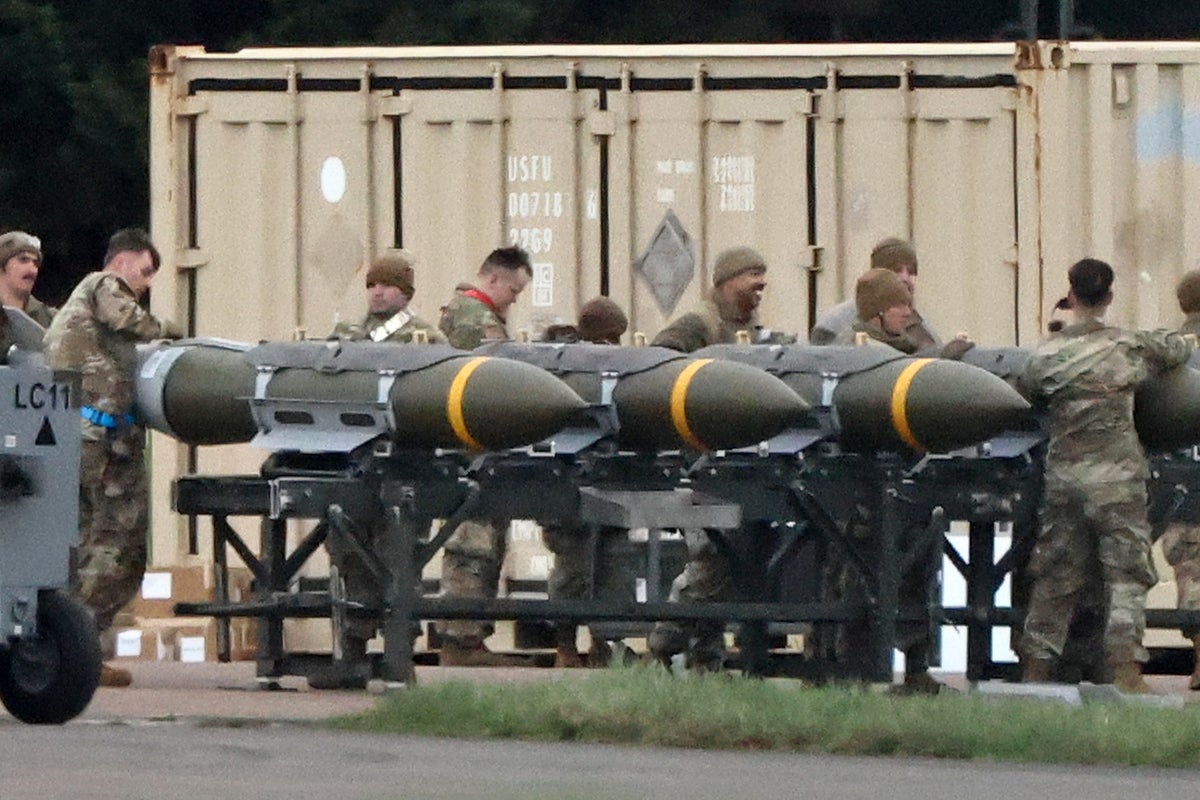
The duration of modern geopolitical conflict is not dictated by battlefield attrition alone but by the intersection of sovereign debt capacity, currency hegemony, and the strategic deployment of frozen assets. When Treasury Secretary Scott Bessent asserts that the United States possesses "plenty of money" to fund a prolonged engagement involving Iran, he is not referencing a static vault of gold. He is describing a dynamic fiscal architecture capable of absorbing massive shocks through the unique mechanics of the U.S. dollar’s role as the global reserve currency. To understand why this conflict may not end soon, one must deconstruct the three pillars of American war-financing: the elasticity of the Treasury market, the weaponization of the global financial plumbing, and the transition from "tax-and-spend" to "debt-and-monetize" military procurement.
The Triad of Sustained Military Liquidity
Funding a modern war requires three distinct types of capital: immediate liquidity for operational deployment, long-term credit for industrial replenishment, and geopolitical leverage to offset the costs onto adversaries. You might also find this similar coverage useful: Strategic Asymmetry and the Kinetic Deconstruction of Iranian Integrated Air Defense.
1. Reserve Currency Elasticity
The primary constraint on any nation’s ability to wage war is the risk of hyperinflation or currency collapse. Most nations must sell their currency to buy the foreign exchange (FOREX) needed for military imports. The U.S. operates under a different constraint. Because the dollar serves as the primary medium for global trade, the Treasury can issue debt that is structurally absorbed by global central banks and private institutional investors. This creates a "synthetic subsidy" where the world effectively finances U.S. defense spending by holding low-yield Treasury bonds as a safety asset.
2. The Defense Industrial Base (DIB) Multiplier
"Funding the war" is often a misnomer for domestic industrial investment. A significant portion of the capital allocated to Iranian-related theater operations does not leave the U.S. domestic economy. Instead, it circulates through the Defense Industrial Base. As discussed in latest coverage by BBC News, the implications are significant.
- Replacement Cost Dynamics: Appropriations are used to purchase new-generation hardware to replace the older munitions sent to allies or used in theater.
- R&D Acceleration: Conflict serves as a real-world testing ground, allowing the Treasury to justify massive capital infusions into private-sector aerospace and defense firms, effectively functioning as a state-sponsored industrial policy.
3. Asset Seizure and Reparation Arbitrage
A new frontier in war finance involves the transition from sanctioning assets to liquidating them. The precedent set with Russian sovereign assets provides a blueprint for Iranian engagement. By utilizing frozen Iranian or proxy-linked capital to offset the costs of regional "containment," the U.S. Treasury can reduce the net fiscal burden on the American taxpayer. This transforms frozen accounts from passive legal entities into active strategic tools.
The Cost Function of Regional Containment
Traditional analysis often fails to distinguish between the Cost of Conflict and the Cost of Inaction. The Treasury’s confidence in funding an Iranian engagement stems from a comparative analysis of these two variables.
The cost of a direct or proxy war with Iran is measured through the Volatility Risk Premium in the energy markets. Iran’s proximity to the Strait of Hormuz—a transit point for 20% of the world's oil—means that the true fiscal "cost" is not just the price of Tomahawk missiles, but the potential inflationary spike caused by a maritime blockade. If the U.S. Treasury can fund a "controlled" conflict that prevents a total market shutdown, the expenditure is viewed as a defensive investment in global price stability.
The Mechanism of Modern Debt Servicing
Critics point to the $34 trillion national debt as a barrier to war. However, the Treasury views debt through the lens of Debt-to-GDP sustainability and the Interest-to-Revenue ratio. As long as the U.S. can maintain its role as the ultimate "safe haven," it can refinance its debt even during periods of rising interest rates. In a wartime scenario, "flight to quality" dynamics often drive investors back into Treasuries, paradoxically lowering the cost of borrowing exactly when the government needs to spend the most.
Strategic Bottlenecks: The Limits of "Plenty of Money"
While the Treasury may have the financial capacity, money is not a substitute for physical manufacturing throughput. The "Plenty of Money" doctrine faces three non-monetary bottlenecks that could undermine a prolonged engagement:
- Lead-Time Delays: You cannot print a 155mm artillery shell or a SPY-6 radar system. The gap between an appropriation bill and a delivered weapon system is currently measured in years, not months. Capital is abundant, but the industrial capacity to convert that capital into kinetic force is currently near its ceiling.
- Labor Specialization: The Defense Industrial Base requires highly specialized engineering and manufacturing talent. Increasing "funding" without a corresponding increase in the technical workforce leads to wage inflation within the defense sector rather than increased output.
- Critical Mineral Dependency: War with Iran, or its regional proxies, requires a supply chain that often routes through hostile or neutral territories. Financial liquidity cannot always solve the problem of a blocked supply of cobalt, lithium, or high-grade semiconductors.
The Asymmetric Financial War
Iran’s strategy is built on Fiscal Exhaustion. They do not need to win a conventional battle; they only need to make the "Cost per Intercept" unsustainable for the U.S. and its allies.
- The Drone-to-Missile Ratio: If a proxy launches a drone costing $20,000 and the U.S. intercepts it with a missile costing $2 million, the fiscal delta is 100:1.
- The Treasury Counter-Strategy: To defeat this, the Treasury and the Department of Defense are shifting toward "Cost-Imposing Strategies." This includes the development of directed energy weapons (lasers) where the cost per shot is measured in cents, and the aggressive use of secondary sanctions to bankrupt the proxy networks before they can launch their assets.
The statement that the U.S. has "plenty of money" is an invitation to a war of attrition. It signals to Tehran that the U.S. is prepared to utilize its deep capital markets to outlast any regional disruption. This is not merely an observation of bank balances; it is a declaration of intent to use the dollar as a weapon of endurance.
Structural Realities of Global Oil Markets
The Treasury’s confidence also hinges on the decoupling of U.S. energy needs from Middle Eastern stability. Because the U.S. is now a net exporter of petroleum products, the fiscal impact of an Iranian conflict is vastly different than it was in 1979 or 2003.
- Positive Carry for Domestic Producers: High oil prices, while painful at the pump, increase the tax revenue from domestic energy producers and improve the U.S. trade balance.
- Strategic Petroleum Reserve (SPR) as a Fiscal Buffer: The SPR acts as a non-cash asset that can be deployed to dampen the inflationary effects of war, allowing the Treasury to maintain its spending trajectory without immediate political backlash from rising energy costs.
Evaluating the Risks of Monetary Overreach
There is no silver bullet in war finance. The primary risk of the "Plenty of Money" approach is the acceleration of De-dollarization. If the U.S. uses its financial dominance too aggressively—either through massive debt issuance or the weaponization of the SWIFT system—competitors like China and the BRICS nations have a higher incentive to develop alternative settlement systems.
The Treasury must balance the need to fund a war today with the need to ensure the dollar remains the world's primary asset tomorrow. If the cost of the war with Iran is the loss of the dollar’s reserve status, then the "plenty of money" used to fund it becomes the very instrument of long-term economic decline.
The Strategic Playbook
To navigate a prolonged conflict with Iran, the U.S. must pivot from a purely fiscal strategy to an integrated Macro-Kinetic Framework. This requires:
- Aggressive Reshoring of the Munitions Supply Chain: Financial appropriations must be tied to multi-year procurement contracts that provide private industry the "demand signal" needed to build new factories.
- Expansion of the Sanctions Perimeter: Moving beyond Iranian entities to target the "shadow fleet" of tankers and the third-party financial institutions in Southeast Asia and the UAE that facilitate Iranian oil sales.
- Debt Duration Management: The Treasury should lock in long-term financing now to hedge against the inflationary pressures of a widening conflict, ensuring that the cost of servicing the "War Debt" does not crowd out essential domestic spending.
The conflict will not end soon because the U.S. has the unique ability to turn its national debt into a strategic asset. By maintaining the liquidity of the Treasury market and the dominance of the dollar, the U.S. can sustain a high-intensity engagement long after its adversaries have exhausted their conventional reserves. The bottleneck is not the wallet; it is the factory floor.
You should now analyze the current capacity utilization rates of the major aerospace prime contractors to determine if the "Plenty of Money" doctrine can actually be converted into a "Plenty of Hardware" reality before the current stockpiles reach critical depletion levels.