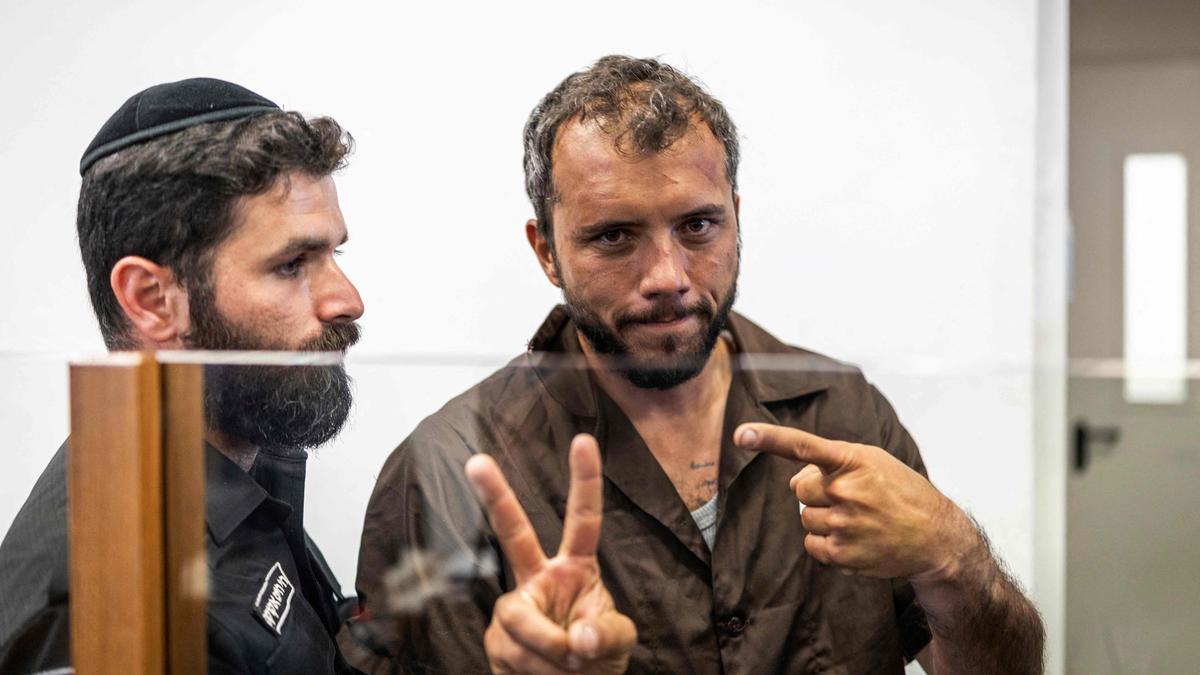
The headlines are predictable. They focus on the ticking clock of a detention hearing, the sterile walls of a courtroom, and the supposed "crackdown" on activism. Most outlets treat the extension of detention for Gaza flotilla activists as a simple story of state overreach versus humanitarian intent. They are looking at the wrong map.
The detention of activists isn't a bug in the system. It is the system functioning exactly as it must when the high seas become a theater for political chicken. Meanwhile, you can explore related events here: Mali Doesn't Have Traitors It Has A Business Model.
The Sovereignty Myth
The lazy consensus suggests that because these vessels operate in international waters or carry "aid," they should be immune to the domestic legal machinery of a coastal state. This ignores the reality of maritime security. When a vessel ignores naval directives in a conflict zone, it isn't just "protesting." it is creating a kinetic variable that a state’s defense apparatus cannot ignore.
Courts extend detentions not because they are "tools of the regime," but because the evidentiary trail of maritime interception is notoriously messy. Unlike a street protest where you have 4k bodycam footage from ten angles, naval boardings happen in high-stress, low-visibility environments where the line between "peaceful resistance" and "active obstruction" blurs. To understand the bigger picture, we recommend the excellent analysis by Reuters.
Why the 24-Hour Rule Fails at Sea
Critics point to the speed of these hearings as proof of a kangaroo court. They want immediate releases. But anyone who has worked in maritime law or regional security knows that the first 48 hours are purely about establishing identity and intent.
In many of these flotilla cases, activists refuse to cooperate with basic processing. They withhold passports. They use pseudonyms. They claim status as "citizens of the world."
You cannot have a fair legal process when one side refuses to acknowledge the existence of the court’s jurisdiction until it suits their defense. The extension of detention is often a direct result of the activists’ own non-compliance strategy. If you don't tell the magistrate who you are, the magistrate cannot let you go. It’s not a conspiracy; it’s administrative logic.
The Aid vs. Agitprop Fallacy
We need to stop pretending these missions are about the cargo. If the goal was strictly the delivery of calories and medicine, there are established, de-conflicted channels through third-party monitors.
These activists choose the path of maximum friction. That is their right, but they must then accept the friction. The court’s role is to determine if the actions taken on deck crossed from symbolic protest into criminal interference with naval operations.
I have watched organizations burn through hundreds of thousands in legal fees defending "volunteers" who were told exactly what would happen the moment they crossed the maritime exclusion zone. The organizers want the detention. They want the grainy photos of activists in handcuffs. The court is simply providing the stage for the play the activists wrote.
The Security Dilemma
Let’s look at the "People Also Ask" questions that usually pop up: "Is it legal to detain people in international waters?"
The brutal answer? Yes, if the state can prove the vessel was intending to breach a documented blockade. International law isn't a suicide pact. Under the San Remo Manual on International Law Applicable to Armed Conflicts at Sea, a blockade is a legitimate tool if it meets specific criteria. If the blockade is legal, then stopping a ship intending to break it is also legal.
The court isn't debating the morality of the blockade; it is debating whether the individuals in custody took overt acts to bypass it.
The Cost of Premature Release
The risk of a "false negative"—releasing someone who actually intended to facilitate the smuggling of dual-use materials—outweighs the "false positive" of a few extra days in a holding cell.
Imagine a scenario where a court, under intense media pressure, orders the immediate release of all participants within six hours of docking. No background checks. No verification of the ship’s manifest. No interrogation regarding the funding of the charter. You have essentially signaled to every bad actor in the Mediterranean that "activism" is a perfect cloak for logistics.
The Tactical Utility of the Courtroom
For the state, the courtroom is a pressure valve. It moves the conflict from the splashing waves of the Mediterranean to a carpeted room with air conditioning. It forces the activists to trade their megaphones for motions and affidavits.
For the activists, the courtroom is a megaphone of a different kind.
The "extension" of detention is the period where both sides trade their most valuable commodity: time. The state wants time to scrub data from seized laptops. The defense wants time to get the UN to issue a statement.
The Hard Truth About Maritime Activism
If you board a ship to break a blockade, you are engaging in a paramilitary maneuver, regardless of how many "Peace" flags you fly.
The legal system's job isn't to validate your feelings or your cause. Its job is to process the person in front of the bench according to the law of the land. When the court extends detention, it is signaling that the case is complex, the participants are non-cooperative, or the evidence requires deeper scrutiny.
Stop looking for a villain in a black robe. Start looking at the calculated risks taken by people who knew the jail cell was the destination before they ever left the dock.
The detention isn't a violation of the process. The detention is the process.
Stop expecting the law to act as your PR firm. If you play at the edge of a conflict zone, expect to be treated like a participant, not a tourist.