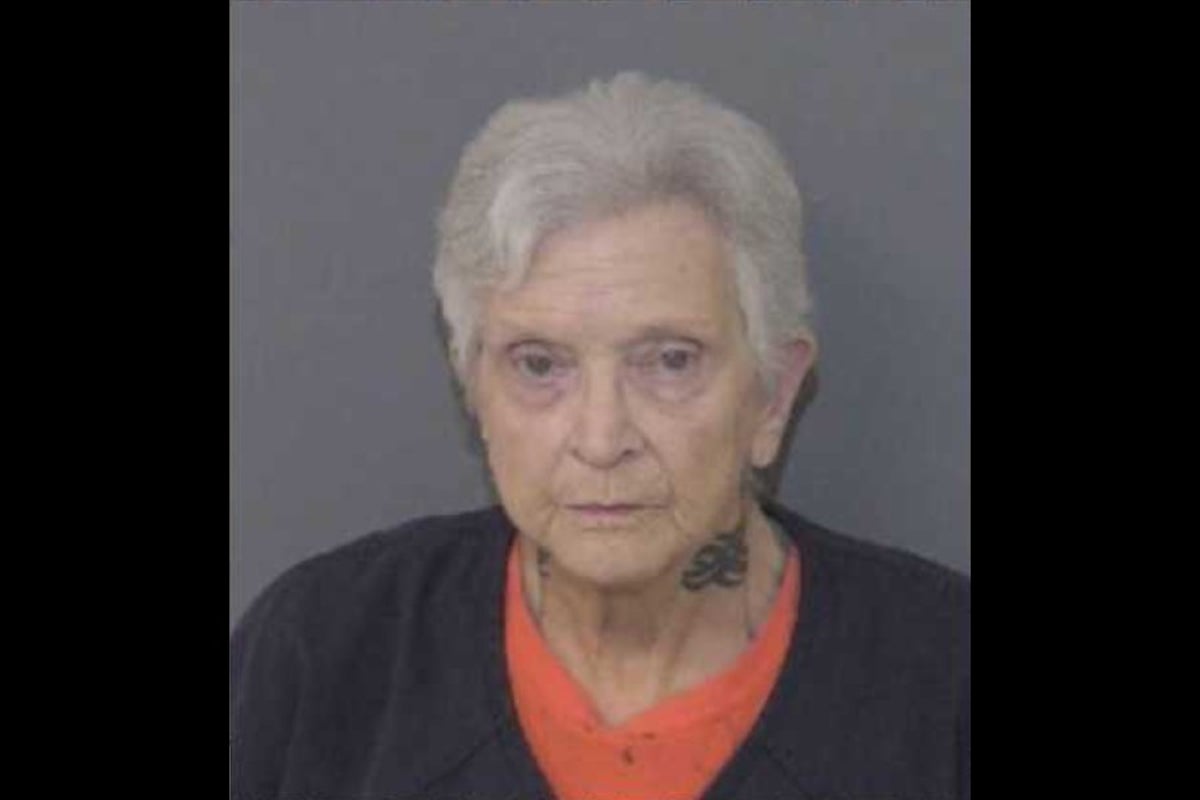
The media loves a caricature. When a 74-year-old woman is accused of killing her husband and scrubbing the crime scene, the tabloids trip over themselves to paint a picture of a "diabolical mastermind" or a "shattered grandmother." They fixate on the bleach bottles and the frantic digital footprints. They lean into the shock value of age, as if the elderly are biologically incapable of violence or tactical thinking.
This narrative is lazy. It’s a comfort blanket for a public that wants to believe murder is an aberration committed by monsters who are easily spotted. The reality is far more clinical and much more disturbing. We aren't looking at a freak occurrence; we are looking at the inevitable failure of the "Forensic Awareness" era.
The Myth of the Amateur Clean-Up
Most reporting on domestic homicides involving elderly suspects focuses on the supposed "clumsiness" of the cover-up. They point to the "failed" attempt to hide evidence as proof of a fading mind or a heat-of-the-moment panic.
This is a fundamental misunderstanding of criminal psychology.
In forensic circles, we see this constantly: the suspect isn't trying to beat a state-of-the-art lab; they are trying to beat the initial visual inspection. When a spouse of five decades decides to end a life, they aren't competing with CSI. They are competing with the first responding officer’s bias. For years, the elderly have benefited from a "grandparent pass" where police overlook bruising or odd smells because they cannot reconcile the suspect's age with the brutality of the act.
The "hide the evidence" trope in these news stories ignores the fact that modern forensics has made "hiding" evidence virtually impossible. If you use bleach, the luminol will find the reaction. If you move a body, the lividity won't match the position. The real story isn't that she tried to hide it and failed; it’s that our legal system and media are still shocked when the demographic least expected to kill actually follows the basic human instinct of self-preservation.
The Weaponization of Invisible Labor
Let’s talk about the bleach. The media frames the cleaning of a crime scene as a sinister, calculated act. While legally true, it ignores the sociopolitical reality of these households. For fifty years, women of that generation have been the primary labor force for sanitation and maintenance within the home.
When a crime occurs in a domestic space, the "cleaning" isn't just a cover-up; it is a conditioned response to chaos. I’ve reviewed cases where suspects began vacuuming around a body not out of a plan to escape justice, but because their entire identity was built on the maintenance of order. By focusing only on the "murderer" aspect, we miss the "housekeeper" pathology. The "evidence" isn't just DNA—it's a lifetime of domestic expectations manifesting at the worst possible moment.
The Data of Late-Life Lethality
The public assumes domestic violence is a young person’s game. The data suggests otherwise. As the population ages, "Geriatric Homicide-Suicide" and "Late-Onset Intimate Partner Violence" are becoming specialized fields.
- Fact: Caregiver burnout is a lethal catalyst that the courts are ill-equipped to handle.
- Fact: Cognitive decline can strip away the impulse control that keeps a volatile marriage from becoming a crime scene.
- Fact: The elderly are often more successful at "hiding" crimes because their victims—usually equally elderly spouses—are already expected to die.
The "shocking" nature of a 74-year-old suspect is a failure of our own observation. We ignore the simmering tensions in aging households because it’s "sad," and then we act surprised when the pressure cooker explodes.
Digital Footprints and the Illusion of Privacy
The competitor's piece likely mentions "incriminating Google searches" or "cell phone pings." This is the "lazy consensus" of modern journalism: the idea that technology caught the killer.
Technology doesn't catch killers. Arrogance does.
We live in an age where every person carries a tracking beacon in their pocket, yet we still see suspects—regardless of age—conducting "How to dispose of a body" searches on their personal devices. This isn't a lack of tech-savviness. It’s a psychological phenomenon known as "Cognitive Overload." Under the stress of a lethal event, the brain reverts to the most familiar tool for problem-solving. For a 74-year-old in 2026, that tool is the smartphone they've used for a decade.
The "contrarian" truth? The digital evidence isn't the "gotcha" the media thinks it is. It's an indictment of our collective stupidity. We have traded privacy for convenience so thoroughly that we've forgotten that the internet is a permanent record, not a private advisor.
Stop Looking for a Motive and Start Looking at the System
We ask "Why did she do it?" as if there’s a single, satisfying answer. Was it money? Was it an affair? Was it long-term abuse?
The obsession with motive is a legal necessity but a narrative distraction. In many of these late-life cases, the motive is "The End." The realization that there are more years behind than ahead, and the current situation has become intolerable.
We want a "Black Widow" story because it’s entertaining. We don't want the story of a social safety net that fails the elderly, a medical system that ignores mental health in seniors, and a culture that renders old people invisible until they pull a trigger or swing a hammer.
The court will look at the forensics. The neighbors will look at the police tape. But if you want to understand the "74-year-old murderer," stop looking at the crime scene and start looking at the fifty years of silence that preceded it.
The Forensic Futility
If you are ever in a position where you need to "hide evidence," you have already lost. The minute a human heart stops beating in a residential setting, a thousand chemical, biological, and digital timers start ticking.
- Microbial Transfer: You cannot touch a surface without leaving a signature.
- Digital Echoes: Your Wi-Fi router knows when you moved from the kitchen to the bedroom.
- Linguistic Patterns: Your "frantic" 911 call is being analyzed by software that detects the specific vocal tremors of a staged performance.
The media’s focus on the "failed cover-up" is essentially mocking the suspect for not being a professional hitman. It’s a grotesque form of entertainment that ignores the sheer physical and mental impossibility of erasing a human life in the 21st century.
The Cold Reality
The 74-year-old woman in the headlines isn't an anomaly. She is a mirror. She reflects our discomfort with aging, our ignorance of domestic labor as a psychological trigger, and our naive belief that we are "smarter" than the criminals we read about.
We aren't smarter. We just haven't been pushed to the brink yet.
The next time you see a headline about an "unlikely" killer, remember: the only thing unlikely about it is that they got caught so quickly. For every one that makes the news because they used too much bleach, there is another who understood the one thing the 74-year-old forgot:
The best way to hide a murder isn't to clean the floor. It's to make sure nobody cares enough to look at it in the first place.
Dispose of the "grandparent" myth. It’s getting people killed.