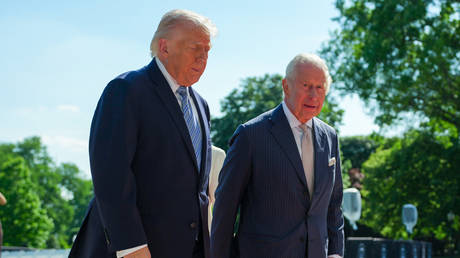
State visits usually operate on the logic of a high-stakes trade show. There is a product to sell—national prestige, soft power, or a fresh trade memorandum—and a carefully curated audience designed to buy it. When King Charles III sets foot on American soil, the product is an ancient institution attempting to remain relevant in a world that has largely moved on from the mechanics of hereditary rule. The primary goal of such a visit is to project stability and continuity, yet the underlying reality is a frantic attempt to patch over the structural rot within the Commonwealth and the shrinking geopolitical footprint of a post-Brexit Britain.
The spectacle serves as a distraction. While the cameras focus on the velvet ropes and the choreographed handshakes in Washington or New York, the actual machinery of the British state is grinding through a period of profound uncertainty. This isn't just about a monarch visiting a former colony. It is about a struggling mid-sized power using its most famous export—the Royal Family—to secure a seat at the table with a superpower that views it with increasing indifference. For another look, see: this related article.
The High Cost of Soft Power
To understand why these tours happen, you have to follow the money and the diplomatic desperation. The United Kingdom no longer possesses the industrial might or the military reach it held a century ago. What it has left is "brand," and the King is the CEO of that brand.
A royal visit to the United States is a calculated business maneuver. It aims to grease the wheels for the Atlantic Declaration and subsequent trade mini-deals that have replaced the hoped-for comprehensive free trade agreement. By providing the American political elite with the pomp they secretly crave, the British government hopes to gain leverage in sectors like defense technology, artificial intelligence regulation, and green energy subsidies. Further coverage on this trend has been published by Al Jazeera.
However, the return on investment is shrinking. In the past, a royal visit could paralyze a city and dominate the news cycle for a week. Today, the King competes with Silicon Valley scandals, domestic political volatility, and a relentless 24-hour digital churn. The "Royal Effect" is hitting a ceiling of diminishing returns.
Diplomacy as a Performance Art
The logistics of a US tour are staggering. It requires months of coordination between the Foreign, Commonwealth & Development Office (FCDO) and the State Department. Every stop is vetted for "optical safety." The King cannot be seen near anything too controversial, yet he must appear engaged with modern American struggles. This creates a sanitized, hollow version of diplomacy.
When the King speaks about climate change or urban renewal, he is threading a needle. He must sound like a global leader without overstepping the constitutional boundaries that forbid him from meddling in politics. This leaves him with a script of platitudes that often rings hollow to an American public dealing with actual economic precarity.
The Commonwealth Shadow
While the King tries to charm Americans, his real headache lies back in the Caribbean and across the African continent. The "zombie" element of the modern British empire isn't found in the halls of Buckingham Palace, but in the crumbling consensus of the Commonwealth.
For many nations, the transition from Queen Elizabeth II to King Charles III provided the perfect psychological break to reconsider their ties to the Monarchy. We are seeing a slow-motion exodus.
- Barbados became a republic in 2021.
- Jamaica has signaled a clear intent to follow suit.
- The Bahamas and Belize are navigating intense internal debates about reparations and formal apologies for the transatlantic slave trade.
The US visit is partly a move to show these wavering nations that the King still has "clout" on the world stage. If he can command the attention of the White House, the logic goes, then surely the Crown still holds value for a small island nation in the Pacific or the Caribbean. It is a projection of strength intended for an audience that isn't even in the room.
The Reparations Trap
The King cannot escape the history he inherits. In the United States, a country currently embroiled in its own deep reckoning with racial history and systemic inequality, the presence of a man wearing a crown signifies something very different than it did forty years ago.
Investigative looks into the Duchy of Lancaster and the Duchy of Cornwall reveal vast wealth held in opaque trusts, much of it historically linked to the expansion of an empire that profited from exploitation. When the King visits an American community center or a tech hub, the question of where that foundational wealth came from sits like an uninvited guest at the table. To ignore it makes the King look out of touch; to address it directly risks alienating the conservative base back in England that views any apology as a sign of weakness.
The Architecture of a Modern Photo Op
Watch the way these events are framed. You will see the King in high-contrast environments. He will be pictured with "real people"—small business owners, students, or environmental activists. This is a deliberate attempt to humanize an institution that is, by definition, superhuman and detached.
Behind the scenes, the "Men in Grey Suits" (the palace advisors) are negotiating every camera angle. They want to avoid any image that looks like a supplicant asking for trade favors. They want the King to look like a peer to the President, despite the vast disparity in actual power.
The reality of the "Special Relationship" is that it has always been a one-way street. The US uses the UK as a reliable proxy in European and intelligence matters, while the UK uses the US as an anchor for its global relevance. The King is the gilded anchor chain.
The Economic Reality Check
Let’s look at the hard numbers that the pageantry tries to hide.
- Trade Gaps: Post-Brexit, the UK's growth has lagged behind its G7 peers.
- Inflation: Living standards in Britain have seen the sharpest decline in generations.
- Investment: Foreign direct investment into the UK has become increasingly jittery.
A royal visit doesn't fix a broken supply chain. It doesn't lower the price of natural gas in the Midlands. It is a high-cost marketing campaign for a country that is currently struggling to define its post-EU identity.
Wealth, Transparency, and the Public Purse
One of the most persistent criticisms of the Monarchy—and a point of friction during international tours—is the lack of transparency regarding the King's private fortune. While the Sovereign Grant covers official duties, the private income from the Duchies remains largely shielded from the kind of scrutiny an American CEO or politician would face.
During a US visit, this opulence is put on display against a backdrop of American inequality. It creates a jarring contrast. The King travels with a massive entourage, utilizing private air travel and high-security motorcades, often while preaching a message of sustainability and austerity.
This hypocrisy isn't lost on the younger demographic. Gen Z and Millennial audiences in both the UK and the US are increasingly skeptical of inherited status. To them, the King isn't a symbol of national unity; he is the ultimate "nepo baby." This shift in perception is the greatest long-term threat to the House of Windsor. If the "magic" of the monarchy dies, all that remains is a very expensive family with an enormous real estate portfolio.
The Media’s Complicity
The press plays a vital role in maintaining the illusion. Royal correspondents are often dependent on palace access for their livelihoods. This creates a "soft touch" in much of the coverage. You will see endless stories about the Queen’s jewelry or the King’s penchant for talking to plants, but very little deep-dive reporting on the lobbying efforts the Palace exerts on British legislation via "King’s Consent."
In the US, the media treats the royals like Hollywood celebrities rather than political figures. This allows the King to bypass the hard-hitting interviews that an actual head of state would have to endure. He gets the prestige of a leader with the protection of a movie star.
The Succession Crisis of Identity
Charles is not Elizabeth. The late Queen benefited from a multi-decade reservoir of nostalgia and a personal brand of "silence as strength." Charles, having spent decades being vocal about his opinions, does not have that luxury. He is a known quantity, and that makes him vulnerable.
The American tour is a test of whether the "King Charles" brand can survive without the protective aura of his mother. Early indications suggest it is a struggle. The crowds are smaller. The social media engagement is more cynical. The protesters, once a rarity, are now a standard fixture, holding "Not My King" signs that are impossible for the cameras to completely crop out.
The Geopolitical Pivot
Britain is currently trying to "tilt" toward the Indo-Pacific. This requires American approval and cooperation. The King’s visit to the US is a silent nod to AUKUS and other military alignments. He is there to remind the American defense establishment that Britain is still a "top tier" ally.
But as the US focuses more on the rivalry with China, the value of a ceremonial British monarch decreases. Washington is interested in nuclear submarines and semiconductor chains, not the Order of the Garter. The King is essentially a salesman for a company whose main factory is undergoing a messy restructuring.
The End of the Spectacle
We are witnessing the final stages of a specific type of global theater. The idea that a single family can represent the soul of a diverse, modern nation—and then exported that soul to foreign capitals for diplomatic leverage—is reaching its expiration date.
The "reek of corruption" often cited by critics isn't necessarily about suitcases of cash. It is the systemic corruption of the idea of meritocracy. It is the insistence that the theater must go on, even when the audience has left the building and the actors are tired.
The King’s visit to the US isn't a sign of a thriving empire. It is the desperate, polished performance of an institution that knows its influence is tied to a past that no longer exists.
Stop looking at the crown. Look at the cracks in the floorboards beneath the throne. The visit is a masterclass in stage management, but even the best production can't hide a failing script forever. The British state is at a crossroads, and no amount of royal stardust can change the direction of the wind.
The true measure of this tour won't be found in the headlines of the New York Times or the guest list of a state dinner. It will be found in the silence that follows once the motorcade heads back to the airport. In that silence, the reality remains: a nation searching for a purpose, led by a man whose primary job is to pretend that nothing has changed.
The era of the "Imperial Tour" is dead. What we have now is a frantic, expensive reenactment.
Maintain a skeptical eye on the next round of "historic" photos. They are the marketing materials of a firm that is terrified of the upcoming audit.



