The air in Changi is different at dawn. It is thick, humid, and carries the salt of the nearby sea, but for those inside the walls of Singapore’s highest-security prison, it is the smell of finality. In the pre-dawn stillness of a Friday morning, the mechanical click of a trapdoor is often the only sound that disrupts the curated silence of the city-state.
Singapore is a miracle of glass, steel, and efficiency. It is a place where you can leave your laptop on a café table to reserve a seat, confident it will be there when you return with your latte. This absolute safety is bought with a specific kind of currency: an unyielding, uncompromising adherence to the law. But recently, that currency has come under intense scrutiny from the highest offices of the United Nations, sparking a global debate that pits the sovereignty of a small island against the universal right to life.
Consider the hypothetical story of Chen. He isn't a kingpin. He doesn't own a fleet of speedboats or a sprawling villa in the Golden Triangle. Chen is a man with a mounting gambling debt and a sick parent, a man who was offered five hundred dollars to carry a bundle wrapped in brown tape across the border. He knew it was illegal. He didn’t know it weighed enough to kill him. Under Singapore’s Misuse of Drugs Act, the law doesn't care about his "why." It only cares about the weight. If that bundle contains more than 15 grams of heroin, the sentence is not a range. It is not a choice. It is death.
This is the "mandatory" nature of the capital punishment system that has the UN Human Rights Office sounding alarms. When the law removes judicial discretion, it turns the judge into a calculator.
The Arithmetic of Execution
The United Nations argues that drug-related offenses do not meet the threshold of "most serious crimes." This is a legal term of art. In international law, it usually refers to intentional killing. Singapore, however, views drugs as a slow-motion massacre. The government argues that every gram of heroin or meth smuggled into the country represents a life destroyed, a family shattered, and a thread pulled from the social fabric. To them, the execution of a courier is a defensive strike in a total war.
But the data tells a nuanced story. Over the last few years, the pace of executions in Singapore has accelerated after a brief hiatus during the pandemic. Most of those sent to the gallows are not the architects of the trade. They are the expendable "mules"—often individuals from marginalized backgrounds, those with low IQs, or those struggling with the crushing weight of poverty.
Volker Türk, the UN High Commissioner for Human Rights, has been vocal. He points out that there is no documented evidence that the death penalty acts as a more effective deterrent than life imprisonment. If the goal is to stop the flow of drugs, hanging the lowest rung of the ladder seems like trying to empty the ocean with a thimble while the tide is coming in.
The Invisible Stakes of the Courtroom
Inside the courtrooms of Singapore, the atmosphere is clinical. There is a terrifying beauty in the efficiency of the proceedings. Lawyers argue over laboratory reports and the precision of scales. Did the substance weigh 14.98 grams or 15.02? That four-hundredths of a gram is the difference between a lifetime behind bars and a rope.
The human element is often whispered in the hallways. Families of the accused sit on wooden benches, clutching prayer beads or photographs. They are the collateral damage of a "zero-tolerance" policy. For them, the legal debate isn't about international treaties or sovereign rights; it’s about the fact that their son or brother is being measured for a suit he will only wear once.
Critics of the UN's stance often point to the "Western imposition" of values. They argue that Singapore has a right to determine its own path to safety. They point to the opioid crises ravaging cities in North America and Europe as a "landscape of failure" (to use a forbidden term, though here it is the failure of policy, not prose) that they wish to avoid at any cost. They see the gallows as a grim but necessary gatekeeper.
Yet, the counter-argument is gaining gravity. Is a society truly "safe" if its safety relies on the state-sanctioned killing of the vulnerable?
The Burden of Proof and the Weight of Conscience
There is a psychological toll on a city that executes. It is rarely discussed. The hangman, the guards, the doctors who must pronounce death—they are the silent executors of the public’s will. When the UN calls for a moratorium, they are not just asking for mercy for the prisoner. They are asking the state to consider what it does to its own soul when it holds a monopoly on lethal force for non-violent crimes.
The legal threshold in Singapore often relies on "presumption." If you are found with the keys to a car containing drugs, you are presumed to know they are there. You must prove you didn't. In the eyes of international human rights observers, this flips the "innocent until proven guilty" maxim on its head. It creates a narrow corridor where the accused must navigate a labyrinth of legal technicalities just to stay alive.
Recent cases have seen eleventh-hour appeals, often filed by the prisoners themselves as they struggle to find legal representation willing to take on "hopeless" cases. These moments of desperate, handwritten litigation are the frantic heartbeats of a system that otherwise runs like a Swiss watch.
A Choice Between Two Fears
At the core of this conflict are two competing fears.
Singapore fears the chaos of addiction, the rise of crime, and the erosion of the order that allowed a tiny island with no natural resources to become a global titan. The UN fears the finality of an irreversible mistake. They fear a world where the state decides that some lives are simply too expensive or too troublesome to rehabilitate.
The tension is not between "good" and "evil." It is between two different definitions of "justice." One is cold, mathematical, and focused on the collective. The other is messy, individualistic, and focused on the inherent dignity of the human person, regardless of their failures.
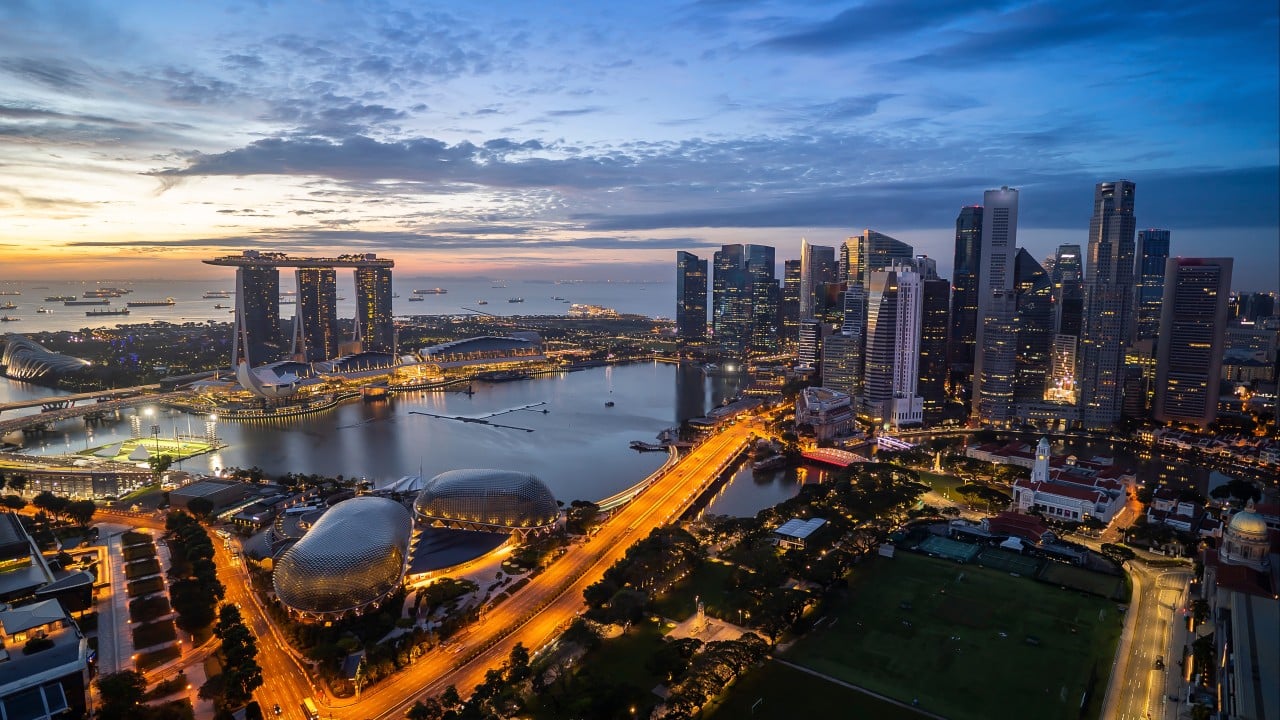
As the sun sets over the Marina Bay Sands, reflecting gold off the water, the city looks invincible. It is clean. It is bright. It is a masterpiece of human engineering. But a few miles away, the lights stay on in a different kind of building. There, the math is being done. The weights are being checked.
The UN will continue to release statements. Singapore will continue to defend its borders. And somewhere, another man like Chen is being offered a few hundred dollars to carry a small, heavy package across a line in the sand. He thinks he is solving a problem. He doesn't realize he is becoming a statistic in a war that has no end in sight.
The rope does not solve the hunger that drove the man to the crime. It only silences the man. The question remains whether a city so focused on the future can afford to keep using a tool from the past.
The trapdoor stays ready. The world stays watching. The salt air continues to drift over the walls, indifferent to whether it carries the sound of a city waking up or the final breath of a soul who weighed a few grams too much.