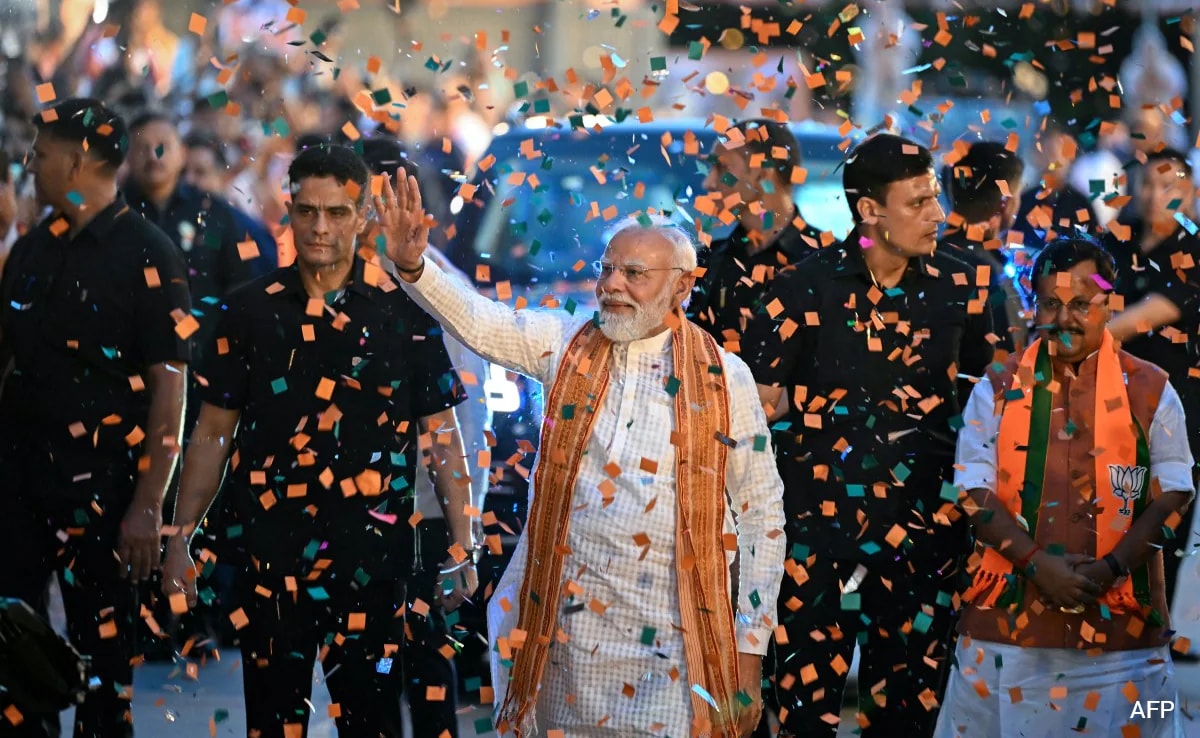
The 2021 West Bengal assembly election serves as a high-fidelity case study in how international media outlets execute narrative arbitrage—the practice of selecting specific local outcomes to validate pre-existing global geopolitical theses. While domestic Indian media focused on ground-level caste arithmetic and localized anti-incumbency, the global press filtered the results through a binary lens: the perceived check on right-wing populism versus the resilience of regional identity. This divergence is not accidental; it is a structural byproduct of how foreign bureaus weigh the strategic importance of Indian internal politics against their own domestic audience's ideological appetite.
The Tripartite Framework of International Coverage
To understand the international reaction to the Bharatiya Janata Party's (BJP) performance in West Bengal, one must categorize the reportage into three distinct analytical pillars. These pillars define the scope and tone of the coverage, moving beyond mere reporting into the territory of strategic interpretation. Meanwhile, you can explore related stories here: The Weight of Nine Sunsets.
1. The Populist Containment Hypothesis
Western outlets, specifically The New York Times and The Guardian, framed the Trinamool Congress (TMC) victory primarily as a firewall against the global rise of "nationalist populism." In this logic, West Bengal was not a state election but a data point in a global trendline. The narrative focused on the "stalling" of the BJP's momentum. This framework ignores the statistical reality that the BJP's seat share increased from 3 in 2016 to 77 in 2021. By prioritizing the "loss" of the binary win/loss outcome over the "gain" of the longitudinal growth, these outlets optimized for a narrative of populist retreat.
2. The Federal Friction Model
Outlets like the BBC and Al Jazeera utilized a structural lens, viewing the election as a stress test for Indian federalism. Their reporting centered on the friction between "Center" and "State." This model posits that India’s diversity functions as a natural democratic stabilizer. The cause-and-effect relationship highlighted here is the rejection of "homogenization" by a culturally distinct periphery. This analysis carries weight because it identifies the linguistic and cultural sub-nationalism of Bengal as a potent counter-variable to the BJP’s pan-Indian ideological thrust. To explore the complete picture, we recommend the recent article by NBC News.
3. The Regional Rivalry Projection
Media in neighboring Pakistan and Bangladesh viewed the election through the lens of regional security and cross-border sentiment. For Dawn and The Daily Star, the West Bengal result was quantified by its impact on the "NRC-CAA" (National Register of Citizens and Citizenship Amendment Act) rhetoric. The logic applied here is transactional: a BJP victory would have signaled an escalation in border-related rhetoric, whereas the TMC’s retention of power suggested a continuation of the status quo in cross-border social dynamics.
Quantifying the Information Gap
The primary failure of international coverage lies in the omission of the "sub-critical" variables that actually drive Indian elections. To provide a rigorous analysis, we must examine the mechanisms that foreign observers typically overlook due to their preference for macro-narratives.
The Welfare-Incentive Loop
International media often characterizes electoral success as a result of "charisma" or "ideology." Data suggests a more mechanical cause: the efficacy of the "Dwar-e-Sarkar" (Government at your doorstep) initiative. This program reduced the friction between state policy and the end-user, creating a direct feedback loop of voter loyalty. When the TMC neutralized the BJP's "double-engine growth" argument, they did so by demonstrating a functioning "single-engine" welfare delivery system at the hyper-local level.
The Gender-Based Voting Delta
A critical blind spot in the "International Media" narrative was the quantification of the female vote. While global outlets discussed "women's safety" in abstract terms, they failed to map the specific financial incentives—such as the Kanyashree and Rupashree schemes—that created a distinct electoral bloc. The gendered voting pattern in West Bengal suggests that economic agency at the household level often overrides broader ideological shifts.
The Logic of Misinterpretation: Why Global Outlets Missed the Nuance
The discrepancy between ground reality and global reportage is a function of three systemic bottlenecks:
- The Bureau Hub Constraint: Most foreign correspondents are based in New Delhi. This creates a "Delhi-centric" bias where regional elections are viewed as referendums on the central government rather than independent political ecosystems with their own historical gravity.
- The Language Barrier in Data: Local vernacular media in Bengal captured a shift in the "Matua" community vote and the fragmentation of the Left-Front’s core base. These granular shifts are often lost in translation when international outlets rely on English-language secondary sources or urban-centric interviews.
- The Narrative Sunk-Cost: Once a publication has branded a political movement as "unstoppable" or "in decline," the incentive to report contradictory data points diminishes. The West Bengal results were forced into these pre-existing templates to maintain editorial consistency.
Strategic Divergence: The US vs. The UK vs. Regional Neighbors
The "International Media" is not a monolith. By applying a geographic filter, we see distinct strategic priorities:
- United States (NYT, Washington Post): Focused on the implications for "Democratic Backsliding." The election was framed as a litmus test for the health of Indian institutions. The underlying concern for US media is often how India’s internal stability affects its role as a counterweight to China in the Indo-Pacific.
- United Kingdom (The Guardian, The Economist): Leaned heavily into the "Identity Politics" and "Post-Colonial" frameworks. They analyzed the election through the lens of "Bengali Bhadralok" culture versus the "Hindi-Heartland" influence, treating it as a clash of civilizations within a single nation-state.
- Middle East (Al Jazeera): Prioritized the "Minority Safety" metric. Their coverage was almost exclusively focused on the polarization of the electorate and the potential for post-poll violence, viewing the election through a human rights lens rather than a political strategy lens.
The Mechanism of Post-Poll Violence Narrative
A significant portion of the international coverage post-election focused on reports of violence. This is where the "Trustworthiness" of the reportage becomes complex. Local reports indicated widespread clashes, but the international media struggled to categorize this. Some viewed it as "the price of a hard-fought democracy," while others saw it as a "systemic breakdown."
The failure here was the lack of historical context. Political violence in West Bengal is a structural legacy that predates the current players, rooted in the land-reform movements and the cadre-based politics of the CPM era. By treating the 2021 violence as a novel phenomenon tied specifically to the BJP-TMC rivalry, international media misdiagnosed a chronic systemic issue as an acute political symptom.
Technical Definitions in Political Analysis
To elevate this analysis, we must define the terms often used loosely in the referenced coverage:
- Political Homogenization: The attempt to apply a singular ideological or cultural identity across diverse federal units. The Bengal result suggests a high "Resistance Coefficient" to this process.
- Incumbency Elasticity: The degree to which a sitting government can withstand negative sentiment through tactical welfare shifts. The TMC demonstrated high elasticity by rebranding their leadership in the final six months of the campaign.
- The Polarized Equilibrium: A state where both major parties successfully consolidate their core bases, leaving the "swing" to be determined by a small, often marginalized, demographic (in this case, the rural female voter).
The Cost Function of Narrative Bias
When international media outlets oversimplify complex regional elections, they incur a "Credibility Cost." For the Indian diaspora and local observers, the delta between reported narrative and lived experience creates a vacuum. This vacuum is increasingly filled by hyper-local digital platforms that bypass traditional media hierarchies.
The strategic consequence for the BJP was not just the loss of a state, but the exposure of a ceiling in their "Expansionist Algorithm." For the TMC, the victory provided a blueprint for "Regional Resistance," which requires a blend of cultural sub-nationalism and aggressive welfare delivery.
The international media's obsession with the "Big Picture" meant they missed the "Small Gears." The 2021 West Bengal election was not a referendum on India’s soul; it was a high-stakes competition over who could better navigate the specific socio-economic anxieties of the Bengali voter.
The immediate strategic play for any analyst observing Indian politics through a global lens is to discount the "Populist Containment" narrative by at least 30%. Instead, pivot focus toward the "Federal Friction" model. The real story is the emerging "Coalition of Regions" where state leaders use cultural identity as a defensive moat against centralized political maneuvers. Monitor the transferability of the "Bengal Model"—cultural sub-nationalism plus direct cash transfer—to other states like Telangana and Tamil Nadu to predict the next point of failure for centralized political expansion.