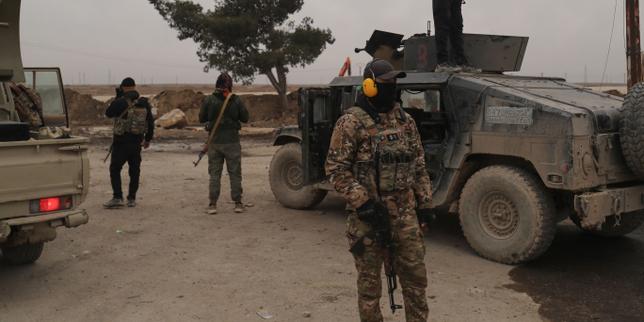
The reclamation of former United States military outposts by the Syrian Arab Army (SAA) and Russian Federation forces represents a fundamental shift in the Levant’s security architecture. This transition is not merely a symbolic change of flags; it is a rapid reconfiguration of the logistical and tactical "bottlenecks" that previously dictated the limits of regional power projection. The collapse of the American buffer zone has forced a transition from a low-intensity containment strategy to a high-stakes territorial consolidation phase.
The Tri-Vector Model of Territorial Succession
The "reoccupation" of these bases follows a predictable three-part logic. When a hegemon exits a fortified position, the resulting power vacuum is governed by the speed of logistical mobilization, the existing infrastructure of the successor, and the political constraints of the remaining regional actors.
1. The Infrastructure Value Chain
Military bases are not monolithic assets. Their value to the SAA and Russian forces is determined by three specific variables:
- Aviation Readiness: Facilities like the Tabqa Airbase or the Sarrin complex provide immediate runways and hangars, allowing for the deployment of Mil Mi-8 and Mi-35 attack helicopters. This extends the SAA’s operational radius into the eastern desert without the need for vulnerable forward-operating fuel convoys.
- Signal Intelligence (SIGINT) Hardpoints: Former American positions were often selected for their elevation and line-of-sight advantages over key transit corridors. By occupying these heights, Syrian and Russian intelligence units inherit a pre-vetted network of observation points that monitor both Turkish-backed militias to the north and insurgent remnants to the south.
- Hardened Fortifications: The presence of T-walls, reinforced bunkers, and established perimeter defenses reduces the "time-to-security" for arriving troops. Instead of weeks spent digging in, units are combat-effective within hours of arrival.
2. Logistical Continuity and Supply Line Integration
The M4 Highway serves as the central nervous system of Northern Syria. The bases located along this axis—specifically those near Manbij and Kobani—act as "force multipliers" for the SAA. Under American control, these sites were obstacles that segmented Syrian territory. Under SAA control, they become nodes that link the Mediterranean coast directly to the Iraqi border. This integration lowers the cost of moving heavy armor and supplies, creating a continuous front rather than a series of isolated pockets.
3. Diplomatic Friction as a Strategic Asset
The occupation of these sites by Russian military police creates a physical "tripwire" mechanism. Any attempt by external actors—specifically Turkish or Turkish-aligned forces—to advance further into Syrian territory now carries the risk of direct kinetic engagement with a nuclear-armed power. This creates a state of "frozen conflict" where the SAA can re-establish administrative control under the umbrella of Russian diplomatic protection.
The Mechanism of the Power Vacuum
The withdrawal of American forces triggered a "cascading surrender" of territorial influence. This process is best understood through the lens of political-military equilibrium.
The previous status quo relied on the presence of a superior kinetic force (the U.S.) to deter the SAA from crossing the Euphrates. Once that deterrent was removed, the SAA did not need to win a war to reclaim these bases; they simply needed to outpace the local militias in a race for physical occupancy. This is a classic example of Asymmetric Territorial Reclaiming, where the weaker state actor regains ground not through military victory, but through the strategic exhaustion and exit of a global superpower.
The second variable in this vacuum is the Kurdish-led Syrian Democratic Forces (SDF). Faced with the threat of a Turkish ground offensive, the SDF’s internal cost-benefit analysis shifted. The "lesser of two evils" logic dictated a rapid handover of territory to the Syrian government. This resulted in a series of negotiated entries where the SAA occupied bases like those in Tel Tamer and Ain Issa without firing a single shot. This represents a transfer of custody rather than a conquest.
The Economic Implications of Territorial Recapture
Control over these military installations is inseparable from control over Syria’s primary economic engines. The bases in the northeast are the sentinels of the country’s agricultural and hydrocarbon wealth.
- Hydrocarbon Extraction: The Al-Omar oil fields and the Conoco gas plant remain the ultimate prizes. While some reports suggest the SAA has bypassed these specific high-density zones, the surrounding base network creates a "siege logic." By controlling the roads leading in and out of the oil-rich regions, the Syrian government can effectively tax or block the flow of resources, even if they do not physically hold the wellheads.
- Agricultural Autonomy: The Al-Jazira region is the breadbasket of Syria. Reclaiming bases in this area allows the central government to re-establish the procurement networks for wheat. This reduces the state’s reliance on expensive Russian imports and stabilizes the internal food supply, which is a critical pillar of long-term regime survival.
Risks of Overextension and the Insurgency Trap
While the SAA’s return to these bases is a tactical victory, it introduces significant operational risks. The "Cost Function of Occupation" increases as the SAA spreads its thinned ranks across a vast, hostile geography.
The first limitation is manpower. The SAA has historically struggled with desertion and fatigue. Occupying dozens of former American bases requires thousands of troops who must be fed, rotated, and protected. This creates a "static target" problem. While American forces used high-tech surveillance and air superiority to protect these bases, the SAA relies on man-portable air-defense systems (MANPADS) and traditional sentry duty. This makes them vulnerable to hit-and-run attacks from Islamic State (IS) sleeper cells that still operate in the Badia desert.
The second bottleneck is the maintenance of foreign infrastructure. American bases were built to accommodate specific logistical requirements—high-voltage generators, satellite communications, and specialized fuel storage. The SAA and Russian forces must either retrofit these sites to work with Soviet-era hardware or leave parts of the base's capabilities dormant. This mismatch in technology leads to "infrastructure decay," where the base’s utility diminishes over time if not properly integrated into the domestic supply chain.
The Geopolitical Chessboard: Russia vs. Iran vs. The West
The SAA's move into these bases is also a theatre for internal competition between its primary backers.
Russia’s strategy focuses on "Stabilization via Institutionalism." They prefer the SAA to hold these bases because it strengthens the Syrian State as a legal entity, which in turn legitimizes Russia's presence. Conversely, Iranian-backed militias often operate in the shadows of these bases. Iran’s interest lies in "Strategic Depth," using these locations to secure the land bridge from Tehran to Beirut.
The interplay between these two agendas determines which bases are modernized and which are used as mere storage depots. Bases with large runways are prioritized by Russia (Hmeimim-style expansion), while smaller outposts near the Iraqi border are often co-opted by Iranian-aligned elements to facilitate the movement of personnel and hardware.
The Tactical Playbook for Future Consolidation
To maintain control over these newly acquired assets, the Syrian military command must shift from a posture of reactive occupation to proactive regional administration.
- The Border-Centric Pivot: Prioritize bases within 20 kilometers of the Turkish border. These serve as the primary leverage points in future negotiations with Ankara. If these bases fall, the entire northern security belt collapses.
- Hardening of the M4 Corridor: The M4 highway must be treated as a military asset rather than a civilian road. This requires the establishment of "Rapid Response Hubs" at intervals of 50 kilometers, using former U.S. bases as the anchors for these teams.
- Intelligence Integration: The SAA must move beyond physical presence and begin the "Social Occupation" of these areas—re-establishing local intelligence networks (Mukhabarat) that were dismantled during the decade of conflict. Territorial control is an illusion if the local population remains loyal to decentralized militia structures.
The exit of American forces has not brought peace; it has simply changed the players and the rules of engagement. The SAA’s ability to hold these bases will depend less on their military might and more on their ability to manage the delicate friction between Russian air power, Iranian ground ambition, and Turkish territorial anxiety. The physical structures are now in Damascus's hands, but the sovereignty over the ground beneath them remains a contested variable.