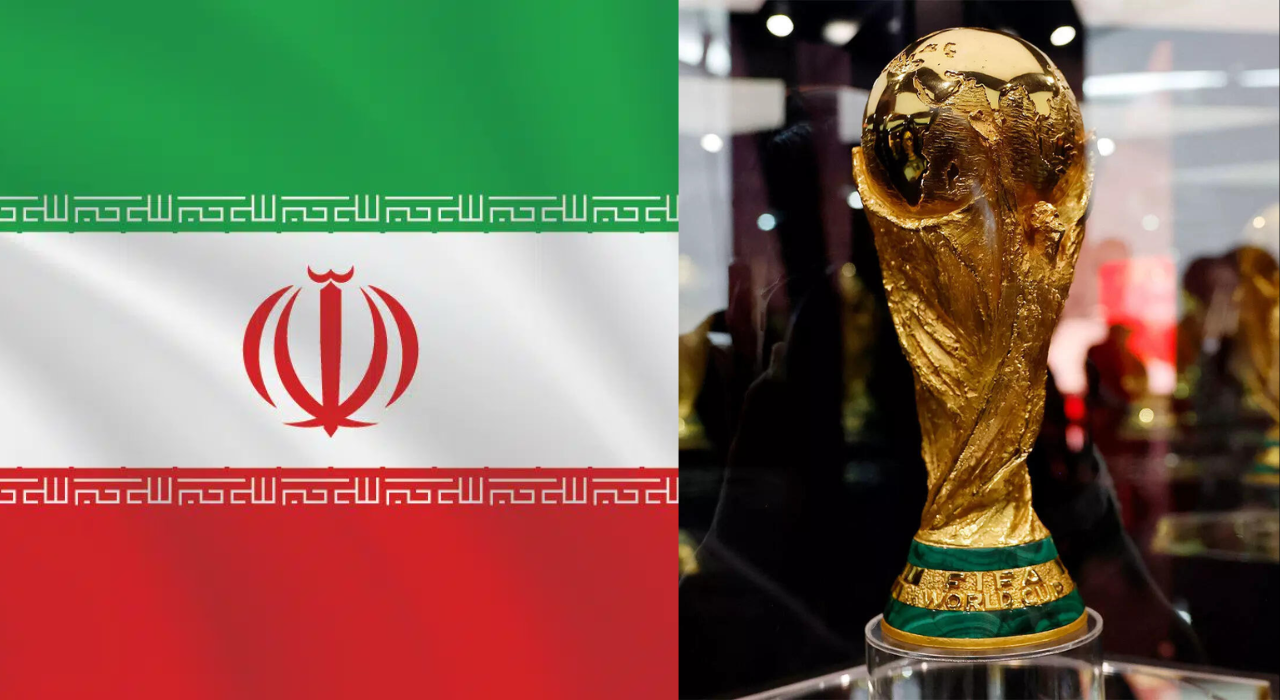
The participation of the Iranian National Team in the 2026 FIFA World Cup is not a matter of sporting merit alone but a convergence of three distinct regulatory and political vectors: FIFA’s internal governance statutes, international diplomatic pressure, and the internal domestic stability of the Islamic Republic. While FIFA President Gianni Infantino has signaled an expectation of Iran’s presence, such statements serve as diplomatic placeholders rather than legal guarantees. The friction between FIFA's "neutrality" principle (Statute 4) and its "human rights" commitment (Statute 3) creates a volatile environment where participation remains contingent on the absence of specific legal triggers.
The Tri-Pillar Framework of FIFA Eligibility
To understand the probability of Iran’s presence in North America, one must analyze the three specific pillars that dictate a member association’s standing. Any breach in these pillars creates the legal mechanism for suspension or expulsion.
1. The Autonomy of the Member Association (Pillar of Non-Interference)
FIFA Statute 19 mandates that all member associations must manage their affairs independently and without influence from third parties. In the Iranian context, the relationship between the Football Federation of the Islamic Republic of Iran (FFIRI) and the Ministry of Sports and Youth is a recurring point of failure.
- The Government Oversight Variable: If the Iranian government dissolves the FFIRI board or dictates personnel changes, FIFA is legally obligated to suspend the federation. This happened in 2006 and remains a structural risk.
- The Judicial Bypass: When domestic courts or political bodies override the federation’s statutes, it triggers an automatic review by the FIFA Council.
2. Universal Access and Discriminatory Barriers
Article 4 of the FIFA Statutes prohibits discrimination of any kind against a group of people on the basis of gender, among other factors. The long-standing restriction on Iranian women entering stadiums is the primary "breach point" for international legal challenges.
- The Tokenism Trap: The Iranian government often permits a limited number of women into specific high-profile matches to satisfy FIFA inspectors. However, a failure to institutionalize this access across the domestic league (the Persian Gulf Pro League) creates a documented history of non-compliance.
- The "Protocol vs. Statute" Conflict: FIFA’s current strategy is one of "constructive engagement," preferring incremental change over the nuclear option of a ban. However, if the exclusion of women results in high-profile civil unrest or violence—as seen in the 2022 incident in Mashhad where women were pepper-sprayed outside a stadium—the pressure on FIFA to enforce Article 4 becomes a liability for the organization’s brand partners.
3. Geopolitical Sanctions and Visa Reciprocity
The 2026 World Cup is hosted by the United States, Canada, and Mexico. This introduces a logistical complexity that FIFA has rarely faced on this scale: the intersection of sports hosting with U.S. Department of State sanctions.
- Visa Issuance as a De Facto Ban: While FIFA requires host nations to guarantee entry for all qualified teams, the U.S. government maintains sovereign control over its borders. If members of the Iranian delegation are identified as affiliated with sanctioned entities (such as the IRGC), the U.S. may deny visas. This creates a secondary mechanism of exclusion that exists outside of FIFA’s internal judicial system.
Quantifying the Probability of Suspension
The likelihood of Iran being barred from the 2026 cycle can be modeled through the "Pressure-Response Function."
The function operates on the following logic:
$$P(s) = \frac{D + E}{I}$$
Where:
- $P(s)$ is the probability of suspension.
- $D$ is the intensity of domestic civil unrest linked to the national team.
- $E$ is the external pressure from UEFA-member FAs (who hold significant voting power).
- $I$ is FIFA’s institutional desire for a "politics-free" tournament.
Historically, FIFA has only suspended teams when $D + E$ significantly outweighs $I$. In the case of Russia (2022), the $E$ variable reached a critical mass because European teams refused to play them. Unless a similar boycott is initiated by Iran’s potential opponents in the Asian Football Confederation (AFC) or the global stage, FIFA is unlikely to act unilaterally.
The "Neutrality" Paradox in FIFA Leadership
Gianni Infantino’s rhetoric regarding Iran’s attendance is a calculated move to maintain the expansionist revenue model of the 48-team World Cup. Iran is a top-tier sporting power in Asia; their exclusion would diminish the commercial value of the Asian broadcasting rights and reduce the competitive "floor" of the tournament.
However, this "neutrality" faces a diminishing return. The FFIRI is currently operating under a cloud of scrutiny regarding the treatment of athletes who supported the "Woman, Life, Freedom" protests. If the state uses the national team as a tool for political signaling—or conversely, if the players use the World Cup platform for anti-government protests—the cost of "neutrality" for FIFA increases.
Operational Risks for 2026
- Security Logistics: The 2026 tournament features matches across 16 cities. An Iranian presence necessitates a massive security apparatus to manage potential clashes between pro-government and anti-government diaspora groups in cities like Los Angeles and Toronto, which have the largest Iranian populations outside of Iran.
- Sponsorship Flight: Tier 1 sponsors (Coca-Cola, Adidas, Visa) are sensitive to ESG (Environmental, Social, and Governance) metrics. If Iran’s participation becomes synonymous with human rights violations in the global press, sponsors may demand "distance" from Iranian-hosted or Iran-involved matches, complicating the tournament's commercial layout.
The Judicial Precedent: Why a Ban is Unlikely but Possible
FIFA’s reluctance to ban Iran stems from the "Swiss Association" legal structure. As a private entity under Swiss law, FIFA must prove that a member association has fundamentally breached its contractual obligations.
The defense used by the FFIRI usually centers on the "Third Party Influence" being "consultative" rather than "coercive." As long as the Iranian government maintains a veneer of federation independence, FIFA has the legal cover to avoid a ban. The only historical precedent for a full ban for non-sporting reasons in recent decades (Yugoslavia 1992, Russia 2022) involved active, large-scale armed conflict or UN-level sanctions that made participation physically or legally impossible.
The Strategic Path for Stakeholders
For the 2026 cycle to proceed with Iran included, the FFIRI must navigate a narrow corridor of compliance. The "Green Zone" for their participation requires:
- Uniform Stadium Access: A verifiable, permanent policy allowing women into all domestic and international matches.
- Political Decoupling: A reduction in the visible presence of government officials within the FFIRI hierarchy.
- Visa Pre-Clearance: Early diplomatic coordination with the U.S. State Department to ensure the "sporting delegation" is scrubbed of sanctioned individuals.
The volatility of the Middle Eastern geopolitical theater means that any sudden escalation in regional conflict could immediately move Iran from the "Green Zone" to the "Russia Precedent." In that scenario, FIFA would likely cite "security concerns" rather than "moral failings" as the official reason for suspension, as this provides the strongest legal shield against appeals at the Court of Arbitration for Sport (CAS).
The forecast for Iran’s participation rests not on the words of a FIFA President, but on the FFIRI's ability to remain a "compliant ghost"—a federation that provides the footballing talent FIFA craves without triggering the human rights or autonomy clauses that would force FIFA’s hand. The 2026 World Cup will either be the stage for Iran's greatest sporting generation or the final breaking point for FIFA’s policy of apolitical engagement.
The most probable outcome is a continuation of the status quo: FIFA will issue periodic warnings, the FFIRI will provide marginal concessions on stadium access, and the team will compete under intense global scrutiny, provided no external military or diplomatic "black swan" event occurs before the June 2026 kickoff.