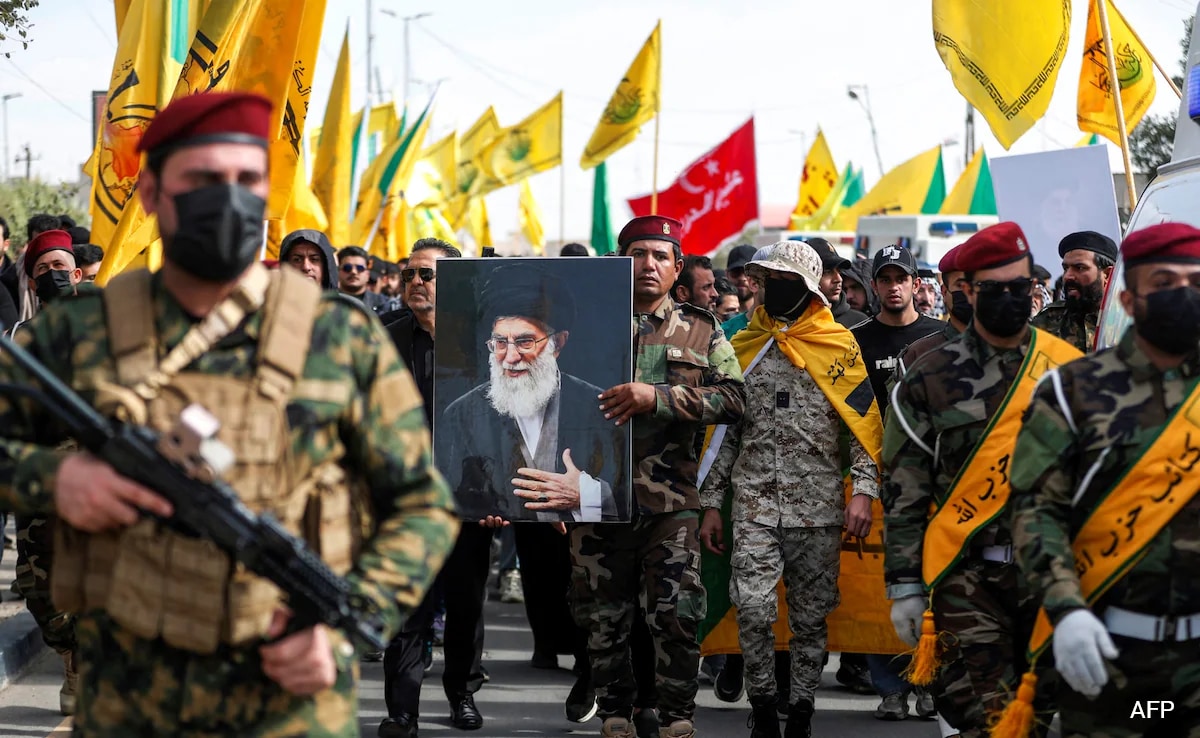
Hezbollah’s recent refusal to engage in negotiations with the Lebanese state regarding the border conflict with Israel—coupled with a demand to cancel high-level meetings—functions not as a diplomatic withdrawal, but as a calculated application of The Strategic Veto. By decoupling its military operations from the sovereign oversight of the Lebanese government, Hezbollah is asserting that the cost of peace is higher than the cost of sustained attrition for all parties involved except itself. This maneuver utilizes a specific tripartite logic: the preservation of the "Unity of Fields" doctrine, the neutralization of domestic Lebanese mediation, and the exploitation of the Israeli internal political friction.
The Architecture of Diplomatic Obstruction
The decision to bypass the Lebanese executive branch signals a fundamental shift in the domestic power balance. Typically, a non-state actor seeks the legitimacy of a sovereign intermediary to provide a "soft landing" for de-escalation. Hezbollah’s rejection of this pathway suggests that the group views the Lebanese state not as a partner or a shield, but as a potential constraint on its operational autonomy.
This obstruction is built upon three structural pillars:
- Sovereignty Displacement: By denying Lebanon the right to negotiate on its behalf, Hezbollah effectively nullifies the validity of UN Resolution 1701. The group is communicating that international law is subordinate to its "Support Front" (Jabhat al-Isnad) status.
- Information Asymmetry: By refusing to come to the table, Hezbollah prevents the baseline assessment of their "bottom line." This creates a vacuum where Israeli intelligence must guess the threshold for ceasefire, forcing Israel into a reactive stance that prioritizes kinetic escalation over diplomatic maneuvering.
- The Attrition Multiplier: Every day a formal negotiation is delayed, the displacement of 60,000+ Israeli citizens in the north becomes more permanent. Hezbollah views this displacement as a quantifiable strategic asset that loses value the moment a formal dialogue begins.
The Cost Function of Continued Conflict
To understand why a rational actor would cancel a meeting that could potentially end a devastating bombardment, one must analyze the internal cost-benefit ratio of the Hezbollah leadership. The group operates under a specialized risk-reward framework where the survival of the organization is prioritized over the physical infrastructure of the Lebanese state.
The Internal Legitimacy Variable
Hezbollah’s primary domestic risk is not Israeli airstrikes, but the perception of domestic weakness. If the group enters negotiations through the Lebanese government, it admits that it is a subordinate element of the state. By maintaining a stance of total rejection, it reinforces its image as an independent regional power. This "prestige-cost" is a non-linear variable; once lost, it cannot be recovered through typical political concessions.
The Iranian Alignment Constraint
Hezbollah’s refusal is rarely a localized decision. The group serves as the primary deterrent against a direct strike on Iranian nuclear facilities. Entering a bilateral negotiation with Israel via Lebanon would effectively "de-link" the Lebanese front from the broader regional conflict. For Hezbollah, the "Cost of De-linking" includes a loss of funding, technical support, and strategic depth provided by the IRGC.
The Mechanism of the "Unity of Fields" Doctrine
The demand to cancel meetings is the tactical application of the "Unity of Fields" (Wahdat al-Sahas) doctrine. This framework stipulates that the conflict in Southern Lebanon cannot be resolved independently of the conflict in Gaza.
Hezbollah’s logic follows a rigid transitive property:
- Variable A: The war in Gaza continues.
- Variable B: Hezbollah must maintain a support front to drain Israeli resources.
- Variable C: Diplomatic negotiations for Lebanon suggest a separate peace.
- Constraint: A cannot equal C.
Therefore, any attempt by the Lebanese state to initiate a separate track is viewed as a betrayal of the ideological mandate. The refusal to negotiate is an enforcement mechanism designed to keep the "Resistance" unified. This creates a bottleneck for international mediators like the United States or France, who are attempting to solve the Lebanese border issue as a localized territorial dispute (the Blue Line) when it is, in reality, a systemic regional variable.
Domestic Political Fragmentation as a Strategic Tool
Hezbollah’s rejection of the Lebanese state’s mediation role exploits the vacuum in the Lebanese presidency. Without a president, the caretaker government lacks the constitutional authority to sign binding international treaties. Hezbollah utilizes this legal ambiguity to its advantage.
The group understands that the Lebanese political class is divided into three ineffective blocs:
- The Compliance Bloc: Those who believe Lebanon must follow Hezbollah’s lead to avoid internal civil strife.
- The Reformist Bloc: Those who want to implement Resolution 1701 but lack the military means to enforce it.
- The Neutralized Executive: A caretaker cabinet that can talk to foreign diplomats but cannot enforce a ceasefire on the ground.
By refusing to engage, Hezbollah ensures that the Reformist Bloc remains marginalized and the Neutralized Executive remains a "delivery boy" for messages that Hezbollah intends to ignore. This paralysis prevents the formation of a unified Lebanese national front that could theoretically pressure Hezbollah to retreat beyond the Litani River.
The Israeli Response Paradox
Israel faces a binary choice that Hezbollah has intentionally narrowed: either accept a perpetual war of attrition or initiate a full-scale ground invasion to force a change in the status quo.
The "Meeting Cancellation" tactic is designed to trigger the Escalation Trap. If Israel responds to the lack of diplomacy with increased force, Hezbollah uses the resulting civilian casualties to justify its refusal to negotiate, citing "Israeli aggression." If Israel does not escalate, the displacement in the north remains unresolved, leading to internal political pressure on the Netanyahu government.
This creates a self-reinforcing loop:
- Hezbollah rejects talks.
- Israel increases targeted assassinations or strikes.
- Hezbollah claims negotiation is impossible under fire.
- The international community pressures Israel for a ceasefire, not Hezbollah.
Logical Failures in Current Diplomatic Frameworks
Western mediation efforts frequently fail because they apply Westphalian logic to a post-Westphalian actor. Traditional diplomacy assumes that every actor has a "price" and that territorial concessions (such as the Shebaa Farms or Point B1) are the primary drivers of conflict.
Hezbollah’s rejection reveals that the territorial dispute is a pretext, not a cause. The primary driver is the maintenance of a state of "controlled instability" that prevents the normalization of Israeli security. When Hezbollah asks Israel to "cancel the meeting," they are signaling that they do not recognize the legitimacy of the conversation itself. This is a rejection of the medium, not just the message.
The structural prose of this conflict indicates that we are moving away from "Conflict Resolution" and toward "Conflict Management." In this environment, the lack of a meeting is a deliberate statement of power. It signifies that Hezbollah believes its current position—even under heavy bombardment—is stronger than any position it would occupy at a negotiation table.
The Strategic Path of Minimum Resistance
The current trajectory suggests that the Lebanese state will remain a bystander in its own defense. To break this cycle, the analytical focus must shift from "convincing" Hezbollah to participate in talks to "altering the environment" that makes their refusal profitable.
This requires a multi-pronged adjustment of the regional pressure points:
- De-linking Gaza via Third-Party Assurances: If a Gaza ceasefire is achieved, Hezbollah’s "Unity of Fields" logic collapses. Without the Gaza pretext, the domestic Lebanese cost for Hezbollah’s continued belligerence increases exponentially.
- The Re-empowerment of the LAF: The Lebanese Armed Forces (LAF) must be positioned not just as a border guard, but as the sole authorized negotiator for Lebanese security. This requires international recognition of the LAF as a distinct political entity from the caretaker government.
- Targeted Economic Attribution: Moving beyond general sanctions toward "Attribution Costs." This involves holding the commercial interests of Hezbollah’s political allies directly responsible for the damage incurred by the rejection of peace talks.
The most probable outcome is not a breakthrough meeting, but a gradual transition into a "Grey Zone" conflict where neither side achieves their stated goals. Israel will continue to strike high-value targets to degrade Hezbollah's middle-management, while Hezbollah will maintain its rejectionist stance to preserve its regional "Support Front" status. The cancellation of the meeting is not a missed opportunity; it is the definitive signal that the era of border diplomacy has ended and the era of strategic attrition has begun.
Military planners must now prepare for a scenario where the "negotiation" happens through kinetic exchanges rather than diplomatic cables. The group’s refusal to sit at the table is the clearest indication yet that they believe the current stalemate serves their long-term survival better than any signed document ever could. The next phase of the conflict will be defined by an attempt to force the opponent back to the table through a series of "unbearable costs"—a high-stakes game of chicken where the Lebanese civilian population is the primary shock absorber.