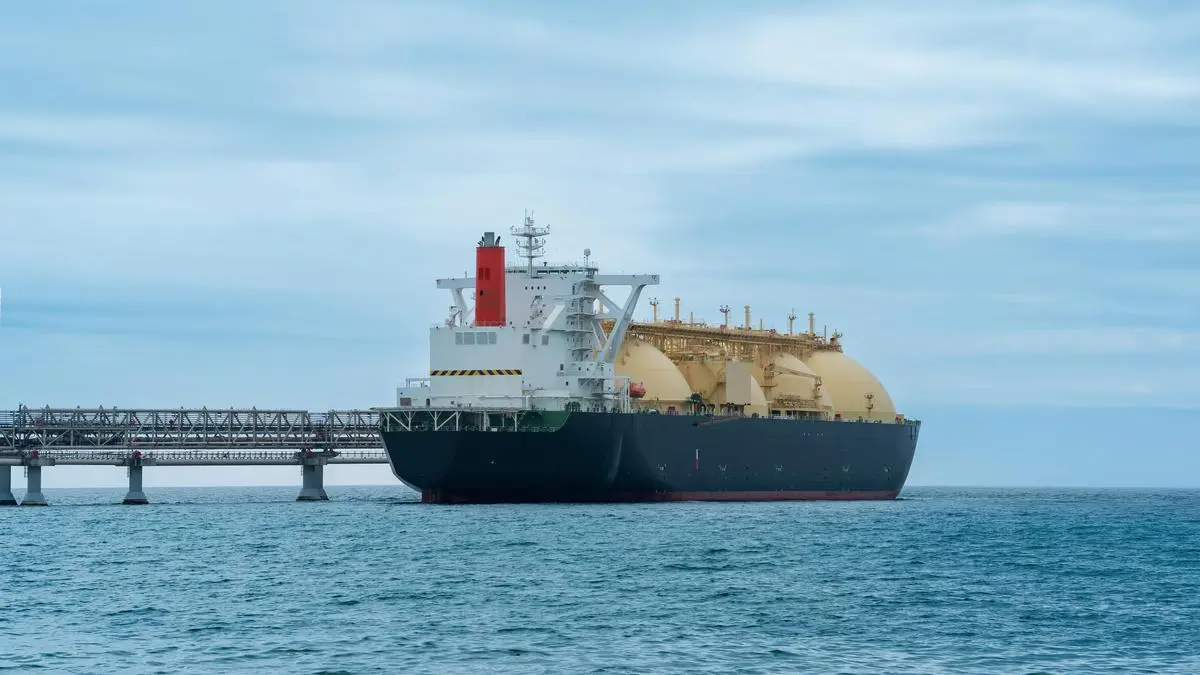
The arrival of the first shipment of Russian Liquified Natural Gas (LNG) from the sanctioned Arctic LNG 2 project at an Indian terminal marks a fundamental shift in global energy logistics. This is not merely a trade route diversion; it represents a high-stakes test of the United States’ ability to enforce maritime sanctions against a sophisticated energy exporter and a major emerging economy. The movement of the vessel Everest Energy highlights a specific friction point between Western financial architecture and the physical reality of energy demand in South Asia.
The Mechanics of Sanctions Evasion and the Shadow Fleet
The Arctic LNG 2 project, located on the Gydan Peninsula, has been a primary target of Office of Foreign Assets Control (OFAC) sanctions. The objective of these sanctions was to "freeze" the project by denying it access to ice-class tankers and international insurance markets. However, the operationalization of a "shadow fleet"—composed of aging vessels with opaque ownership structures—has created a bypass. You might also find this related coverage insightful: The Invisible Trade War Inside Your Medicine Cabinet.
The logistics of this bypass rely on three operational variables:
- Jurisdictional Obscurity: The use of shell companies based in Dubai or Southeast Asia to manage vessel technicalities.
- Ship-to-Ship (STS) Transfers: Minimizing the digital footprint of the cargo by transferring LNG between vessels in international waters, often with Automatic Identification System (AIS) transponders deactivated.
- Insurance Decoupling: Moving away from the "International Group of P&I Clubs" to domestic or non-Western sovereign guarantees.
The Everest Energy voyage demonstrates that while sanctions increase the cost of doing business—via higher insurance premiums and specialized logistical hurdles—they do not yet constitute an absolute physical barrier. As discussed in recent reports by The Wall Street Journal, the implications are significant.
The Indian Energy Calculus: Price Sensitivity vs. Diplomatic Friction
India’s decision to accept these volumes is driven by a structural deficit in domestic gas production and an aggressive mandate to increase the share of natural gas in its energy mix from 6% to 15% by 2030. For New Delhi, the trade-off is calculated through a framework of "Strategic Autonomy."
The Cost-Benefit Function of Discounted LNG
India’s appetite for Russian energy is inversely proportional to the "Sanction Premium." If the discount on Russian LNG relative to the Japan-Korea Marker (JKM) or Brent-linked contracts is wide enough to offset the risk of secondary sanctions, the trade proceeds. The economics are governed by:
- Regasification Capacity: India has expanded its terminal capacity (e.g., Dhamra, Chhara) to handle diversified spot cargoes.
- Fertilizer and Power Demands: Highly price-sensitive sectors that cannot absorb high-cost spot LNG from the US or Qatar without heavy government subsidies.
- Currency Settlement: The utilization of non-dollar payment mechanisms, including the Rupee-Rouble arrangement or third-party currencies like the UAE Dirham, to bypass the SWIFT network.
Structural Bottlenecks in the Arctic Supply Chain
While the first delivery is a symbolic victory for Moscow, the long-term scalability of this route faces severe physical constraints. The Arctic environment imposes a "Seasonality Tax" that cannot be bypassed by shell companies.
The Ice-Class Deficit
Arctic LNG 2 requires specialized ARC7 ice-class tankers to navigate the Northern Sea Route (NSR) during winter months. Sanctions have blocked the delivery of these vessels from South Korean shipyards (Hanwha Ocean). The current shadow fleet largely consists of conventional tankers. This creates a binary operational window:
- Summer/Autumn: Conventional vessels can transit with icebreaker assistance.
- Winter/Spring: Operations are effectively throttled unless Russia can accelerate its domestic Zvezda shipyard production, which remains years behind schedule due to a lack of Western turbines and membrane containment systems.
The Storage Crisis
Unlike crude oil, LNG cannot be stored indefinitely or easily "shut in" without damaging the liquefaction trains. If India or China cannot absorb volumes at the rate of production, and the shadow fleet cannot rotate fast enough, the Arctic LNG 2 facility faces a storage glut that could force a total suspension of the liquefaction process.
The US Response Framework: From Entity Listing to Enforcement
The US State Department has signaled that it will continue to "tighten the screws" on Russian energy exports. However, the enforcement mechanism faces a diplomatic ceiling.
- Secondary Sanctions Risk: Imposing sanctions on Indian state-owned enterprises (like GAIL or Indian Oil) would cause a significant rift in the Quad alliance and the "Friend-shoring" strategy.
- Price Cap Leakage: Similar to the G7 price cap on Russian oil, the LNG sanctions are vulnerable to "service bundling," where the cost of the molecule is kept low on paper while the shipping and insurance fees—paid to related shadow entities—are inflated to market rates.
The current strategy involves "whack-a-mole" entity listing, where the US identifies a specific tanker or management company, only for the vessel to be renamed or re-flagged within weeks.
Comparative Advantage in the Global LNG Market
To understand why Russia is willing to risk these maneuvers, one must look at the competitive landscape. The US is currently the world’s largest LNG exporter, and Qatar is undergoing a massive North Field expansion.
Russia’s strategy is to avoid becoming a "stranded asset" holder. By locking in Indian buyers now, even at a discount, they establish a foothold in a market that will be the primary driver of global gas demand growth over the next two decades. This is a defensive play to prevent a total monoculture of US and Middle Eastern supply in the Indo-Pacific.
Technical Limitations of Regasification
A critical technical hurdle often overlooked is the compatibility of the gas. LNG from different sources has varying caloric values and chemical compositions (Wobbe Index). Indian regasification terminals must calibrate their systems for Russian lean gas versus the richer gases typically sourced from the Middle East. While manageable, this adds an operational layer of complexity to spot-market opportunistic buying.
The Strategic Play for Market Participants
Market observers should anticipate a period of "Volatile Normalization." The arrival of Russian LNG in India will likely trigger a two-tier market:
- The Transparent Market: Dominated by long-term contracts from the US, Qatar, and Australia, adhering to all Western financial norms.
- The Gray Market: A fluctuating volume of sanctioned molecules traded at steep discounts, serving price-sensitive industrial hubs in Asia.
For India, the strategic move is to maintain a diversified portfolio while using the threat of Russian imports as a bargaining chip in price negotiations with traditional suppliers. For the US, the play is to increase the logistical cost of the shadow fleet to the point where the Russian "discount" is entirely consumed by operational inefficiencies.
The cargo on the Everest Energy is a pilot program for a new era of energy friction. It proves that while the West can control the financial pipes, the physical flow of energy will always seek the path of least resistance—and highest demand—regardless of the flag flying on the mast. Russia's pivot to the East is no longer a rhetorical goal; it is a functioning, albeit inefficient, supply chain.
Strategic stakeholders must now account for a global energy system where the "Unity of Market" has fractured. The divergence between Western sanctions policy and Global South energy security needs has created a permanent arbitrage opportunity that will continue to be exploited until the underlying supply-demand imbalance is corrected. The next phase will not be defined by whether the gas flows, but by the sophistication of the financial and maritime architectures built to hide it.