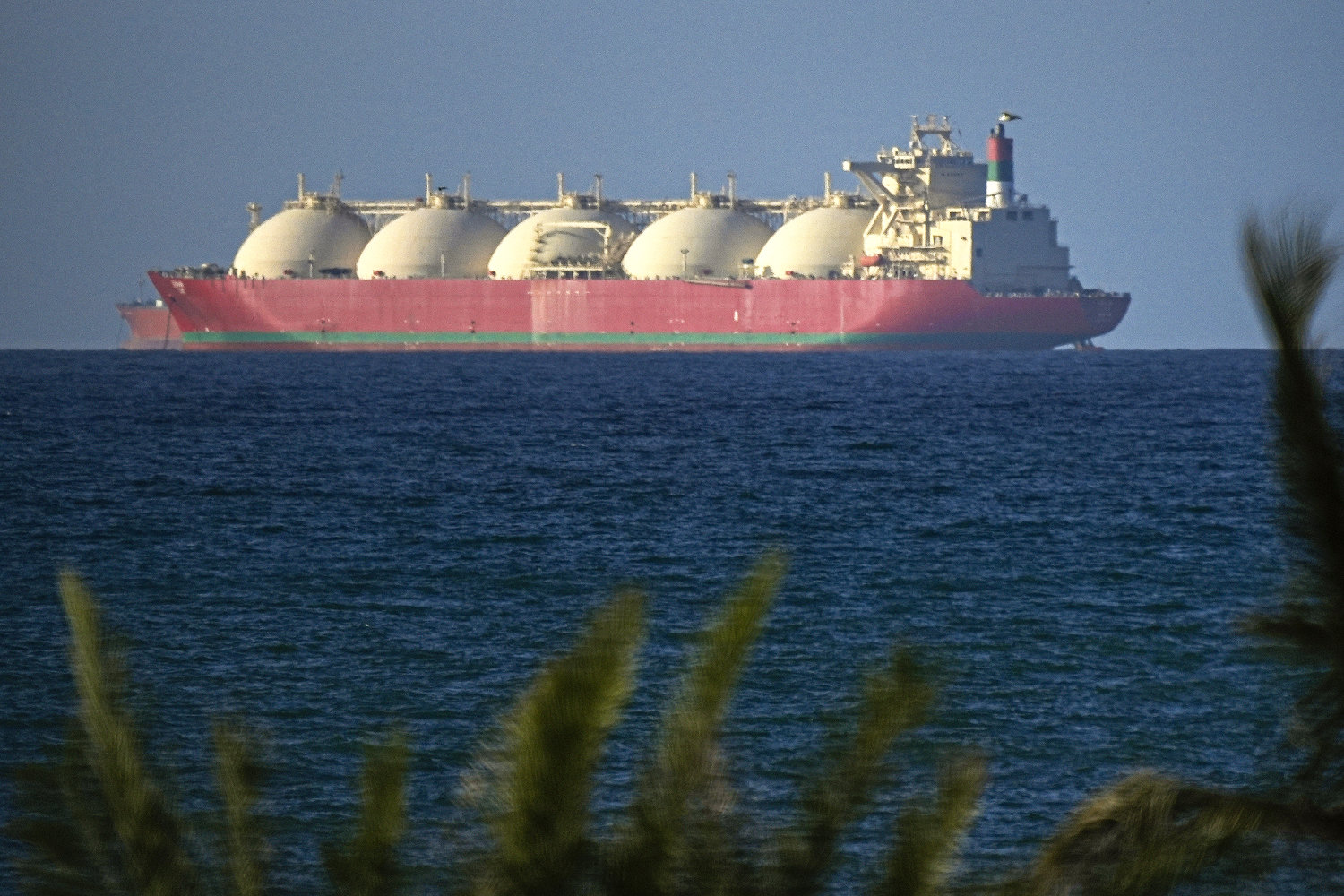
The ink on the ceasefire was supposed to be the signal. For months, the world watched the headlines, waiting for the diplomatic handshake that would ostensibly clear the jagged throat of global commerce. When it finally happened, the markets breathed. Oil prices ticked downward. On paper, the war was over. But if you stand on the sun-bleached decks of a VLCC—a Very Large Crude Carrier—idling in the Gulf of Oman, the silence is not peaceful. It is heavy. It is the sound of an engine that should be churning, but isn't.
Despite the official end of hostilities, the Strait of Hormuz has become a graveyard of momentum.
Captain Elias (a pseudonym for a veteran mariner currently stationed in the region) describes the sensation as "maritime vertigo." He is sitting on enough crude oil to power a small city for a year, yet he is going nowhere. To his left, the jagged Musandam Peninsula of Oman looms like a serrated knife. To his right, the Iranian coast. Between them lies a strip of water just twenty-one miles wide at its narrowest point. Through this choke point passes one-fifth of the world’s liquid energy. Or at least, it’s supposed to.
The Illusion of Peace
The problem with a ceasefire is that it only stops the shooting. It does not stop the fear. In the shipping industry, fear is a line item on a balance sheet. It manifests as insurance premiums that have skyrocketed by 400 percent over the last year. Even with the guns silent, the "War Risk" designation remains. For a vessel carrying two million barrels of oil, that isn't just a hurdle; it’s a wall.
Logistics is a game of cold, hard math, but the variables are now human. Underwriters in London and Tokyo are looking at the Strait and seeing ghosts. They see the limpet mines of yesterday. They see the drone swarms that may or may not be truly grounded. They see the ambiguity of "gray zone" warfare where a ship can be seized for a technicality that feels suspiciously like a political statement.
Consider the reality for a crew from the Philippines or Ukraine. They signed up to move cargo, not to be pawns in a geopolitical chess match. When a ceasefire is announced, the corporate office in Singapore might celebrate, but the sailor on the bridge is still scanning the horizon for fast-attack craft. That psychological friction translates into a physical standstill.
The Choke Point Anatomy
To understand why the traffic hasn't resumed, you have to visualize the Strait not as an open sea, but as a narrow, high-pressure pipe.
The shipping lanes—the Traffic Separation Scheme—are only two miles wide in each direction, separated by a two-mile buffer zone. It is a precision maneuver under the best of circumstances. Now, add the debris of conflict. There are reports of drifting mines, unexploded ordnance, and a heightened presence of naval patrols that, while meant to protect, often complicate navigation with constant "queries" and "challenges" over the radio.
- Insurance Stagnation: Lloyd’s of London doesn't move as fast as a news cycle. Until they see weeks of incident-free passage, the rates stay high.
- Backlog Cascades: It isn't just about the ships in the Strait. It's about the ports in Jebel Ali, the refineries in South Korea, and the gas stations in Ohio. The rhythm is broken.
- Verification Lag: Every vessel must now undergo rigorous security screenings that didn't exist two years ago.
The ceasefire was a flickering light, but the engine of global trade is a massive, cold machine that takes an eternity to warm up.
The Hidden Cost of "Wait and See"
We often talk about the price of a barrel of oil as if it were a static number. In reality, that price includes the cost of the time a ship spends drifting. Every day a tanker sits idle, it loses tens of thousands of dollars in charter hire. These costs don't vanish into the salt air. They are folded into the price of the plastic in your phone, the fuel in your car, and the fertilizer for the food on your table.
The Strait of Hormuz is the world’s carotid artery. A ceasefire is like a surgeon saying the wound has stopped bleeding, but the artery is still clamped. The body—the global economy—is starting to feel the pins and needles of oxygen deprivation.
Elias looks at his radar screen. It’s a mess of green blips. Normally, those blips are moving in a synchronized dance, a steady stream of energy flowing east toward the hungry economies of Asia. Now, the blips are stationary clusters. They look like a traffic jam on a Friday afternoon, but there is no exit ramp.
The "standstill" isn't a lack of desire to move. It’s a lack of trust. Trust is a currency that was spent quickly in the conflict and is being earned back at a fraction of a cent per day. The Iranian coast guard still watches through binoculars. The U.S. Fifth Fleet still glides through the darkness with its transponders off. The tension is palpable, a static electricity that makes the hair on your arms stand up when the wind shifts.
A Different Kind of War
What we are witnessing is the birth of the "Permanent Precaution." The world has realized how fragile this single point of failure truly is. Even with the peace treaty signed, the damage to the concept of "freedom of navigation" is profound. Shipping companies are now actively scouting longer, more expensive routes, or investing in pipelines that bypass the Strait entirely.
The ceasefire is a political victory, but for the people who actually move the world's resources, it's a hollow one. They are trapped in a limbo where the war is over, but the safety is not yet present. It’s a period of "negative peace"—the absence of tension, but not the presence of justice or security.
Elias finishes his coffee. It’s lukewarm and bitter. He watches a seagull land on the railing of his ship, the only thing that seems to move freely between these borders. He wonders how many more "peaceful" days he will spend staring at the same stretch of water, waiting for a signal that may never feel certain enough to justify weighing anchor.
The ships are ready. The oil is there. The world is waiting. But the Strait remains a bottleneck of doubt, a reminder that it is far easier to stop the world than it is to get it moving again.
The sun begins to set over the Gulf, casting long, dark shadows from the motionless tankers. From a distance, they look like islands. Solid, unmoving, and utterly disconnected from the world that so desperately needs what they carry.