The sea does not hold secrets well, but it is very good at hiding them.
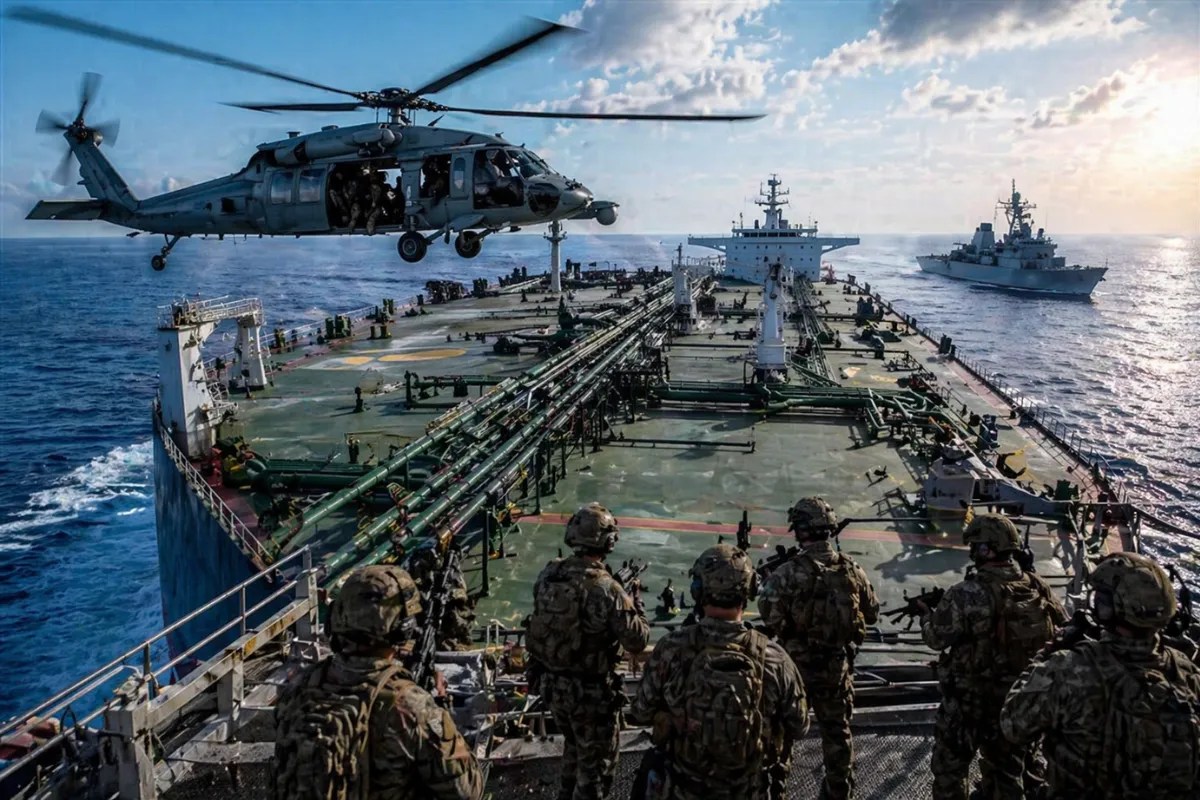
Deep in the turquoise expanse of the Persian Gulf, a massive steel hull displaces millions of gallons of saltwater. It is the Suez Rajan, a tanker carrying nearly a million barrels of crude oil. On paper, it is just a logistical data point. In reality, it is a floating vault, a high-stakes gamble, and the latest casualty in a shadow war fought with satellite pings, legal maneuvers, and naval boarding parties.
For months, this vessel lingered in a state of purgatory. It wasn't just transporting oil; it was transporting defiance. This oil was Iranian. According to international sanctions, it wasn't supposed to be there. It certainly wasn't supposed to be headed toward the hungry refineries of China. But the world’s appetite for energy rarely plays by the rules written in Washington D.C.
Imagine the captain of such a vessel. He stares at the horizon, knowing that his "dark" transponder—the device that tells the world where he is—makes him a ghost. To the satellite trackers, he is invisible. To the U.S. Justice Department, he is a target.
The Digital Smoke and Mirrors
The game of "cat and mouse" on the high seas has evolved far beyond simple smuggling. It is now a digital masquerade. To move sanctioned oil, tankers engage in what maritime experts call "spoofing."
A ship will suddenly disappear from the Automatic Identification System (AIS). While its signal is gone, it pulls alongside another tanker in the middle of the night. Hoses are connected. Thousands of tons of crude are pumped from one belly to another under the cover of darkness. When the ship "reappears" on the map, its cargo has magically changed origin. It is no longer Iranian oil; it is "Middle Eastern blend" or "Malaysian sourced."
But the U.S. has developed its own set of digital eyes.
Using sophisticated synthetic aperture radar (SAR) and infrared imaging, intelligence agencies can see through clouds and darkness. They track the wake of the ships. They measure the depth of the hull in the water to see if the ship is heavy with oil or light with ballast. When the Suez Rajan was flagged, it wasn't because someone saw a flag; it was because the math didn't add up.
The seizure of this vessel by the United States is more than a legal victory. It is a message sent through the vibration of the water. By taking control of the ship and redirecting it toward the Texas coast, the U.S. effectively told the "ghost fleet"—the hundreds of aging tankers used to bypass sanctions—that their invisibility is an illusion.
The Human Cost of a Cold Transaction
We often talk about "seizing assets" as if we are moving pieces on a chessboard. We forget the men on the deck.
The crews of these tankers are often caught in a geopolitical vice. They are sailors from the Philippines, India, or Eastern Europe, working long shifts for a paycheck that supports families thousands of miles away. When a ship is seized, they become the collateral. They are stuck on a floating island of steel, surrounded by armed guards, waiting for diplomats in air-conditioned rooms to decide their fate.
The stakes for them are visceral. If the ship leaks, they are the first to breathe the fumes. If the ship is attacked, they are the ones in the line of fire.
The Suez Rajan incident highlights a terrifying reality: the ships used for these illicit trades are often the "rust buckets" of the sea. Because they operate outside the law, they avoid standard inspections. They are older, more prone to mechanical failure, and often lack the insurance necessary to cover a disaster.
Consider the environmental nightmare of a million barrels of oil spilling into the fragile ecosystem of the South China Sea or the Gulf of Mexico. The "invisible war" isn't just about bank accounts; it's about the very water that sustains us.
The Dragon’s Hunger
Why risk it? Why sail a ghost ship through a gauntlet of American destroyers?
The answer lies in the sheer, unrelenting demand of the Chinese industrial machine. China is the world's largest importer of crude oil. For Beijing, the origin of the oil is often less important than the price and the reliability of the flow. Iranian oil, heavily discounted because of sanctions, is an irresistible bargain.
This creates a friction point that transcends simple trade. It is a test of sovereignty.
When the U.S. seizes a ship destined for China, it isn't just stopping oil; it is challenging China’s right to buy what it wants. It is a direct hit to the Iranian economy, which relies on these back-channel sales to keep its currency from total collapse.
The U.S. Treasury estimates that billions of dollars flow through these shadow networks. This money doesn't just buy bread; it funds proxy wars, missile programs, and the very naval forces that harass tankers in the Strait of Hormuz. By seizing one ship, the U.S. attempts to sever a single artery in a massive, hidden circulatory system.
The Legal Labyrinth
The process of taking a ship isn't as simple as a Hollywood movie. There are no boarding hooks and eye patches. Instead, there are thousands of pages of court filings.
The U.S. uses a legal mechanism called "civil forfeiture." They argue that because the oil is being sold in violation of terrorism-related sanctions, the oil itself is "guilty." The cargo is the defendant. In the case of the Suez Rajan, the U.S. government spent months navigating the legal ownership of the vessel, which was owned by a Greek company but carrying Iranian cargo.
The complexity is the point. The more layers of shell companies and offshore registrations a ship has, the harder it is to pin down who is actually responsible.
This creates a strange, modern form of privateering. Instead of the HMS Endeavour chasing pirates, we have federal prosecutors in Washington chasing digital footprints through the Cayman Islands and the Marshall Islands.
A Fragile Equilibrium
The seizure of the Suez Rajan prompted an almost immediate retaliation. Within days, Iran seized a Marshall Islands-flagged tanker, the Advantage Sweet, in the Gulf of Oman.
This is the "eye for an eye" logic of the Persian Gulf. For every action taken in a courtroom in D.C., there is a reaction in the narrow waters of the Middle East. It is a high-stakes poker game where the chips are massive tankers and the "pot" is the stability of global energy prices.
If you feel the sting of higher gas prices at the pump, you are feeling a ripple from this invisible war. When tensions rise in the Strait of Hormuz, insurance premiums for every ship in the world go up. That cost is passed down to you. The electronics in your pocket, the fruit in your grocery store, and the fuel in your car are all tied to the safety of these sea lanes.
We like to think of our modern world as digital and weightless. We talk about "the cloud" and "virtual currency." But the Suez Rajan reminds us that our world is still built on heavy, physical things. It is built on steel, salt, and the black sludge that powers our lives.
As the tanker finally docked in Texas to offload its forbidden cargo, the "ghost" was finally made flesh. The oil was pumped out, sold, and the proceeds were funneled into a fund for victims of state-sponsored terrorism.
The ship might get a new name. It might get a new coat of paint. But somewhere else in the world, another transponder is being turned off. Another captain is checking his radar in the dark. Another ghost ship is slipping out of port, betting everything on the hope that the sea is big enough to keep one more secret.
The war doesn't end; it just changes coordinates.