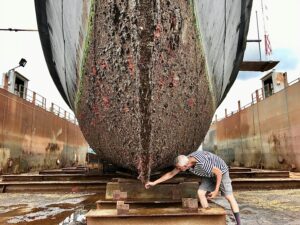
The ocean isn't just a big blue backdrop for your vacation photos. It's the literal engine of global commerce. Over 90% of everything you own probably spent time on a massive vessel before it reached your doorstep. But here's the problem we don't talk about enough. Shipping is messy. It's loud, it's oily, and it drags invasive species across the globe like a biological hitchhiker. For decades, we ignored it because it happened "out there" at sea. That's changing. The Global Environment Facility, or GEF, is currently spearheading a massive push to clean up the industry. It's not just about tiny tweaks. It's a fundamental shift in how we treat the high seas.
The GEF and the Fight for Clean Oceans
Most people think of ocean pollution as plastic straws or oil spills. Those are bad, sure. But the silent killers are often invisible. I'm talking about ballast water and biofouling. When a ship takes on water in one port to stay balanced and dumps it in another thousands of miles away, it’s basically a Trojan horse for invasive species. These tiny organisms can wreck local ecosystems, crash fisheries, and cost billions in damage. Learn more on a related topic: this related article.
The GEF isn't just throwing money at the problem. They're acting as the glue between governments and the private sector. Through initiatives like the GloFouling Partnerships, they're helping developing nations get the tech and the laws they need to stop these biological invasions. It’s hard work. It's unglamorous. But it's the only way to protect biodiversity while keeping the global economy humming.
Stopping the Invasive Species Shuffle
Let's look at the numbers because they're staggering. We're talking about roughly 10 billion tons of ballast water moved around the planet every year. Inside that water? Thousands of species. When a zebra mussel or a toxic algae bloom gets introduced to a new spot, there's often no way to put the genie back in the bottle. Further reporting by USA Today highlights comparable views on this issue.
I’ve seen how these "invaders" can transform a coastline in just a few years. It's devastating for local communities that rely on the sea. The GEF-UNDP-IMO partnership isn't just a long acronym. It's a framework that forces shipping companies to treat their ballast water before it ever touches a new harbor. They're also looking at the hulls of ships. A crusty, barnacle-covered hull creates drag. That drag makes the engine work harder. That means more fuel and more carbon emissions. Cleaning the hull doesn't just save the ecosystem. It saves the shipping company a fortune in fuel. It's a rare win-win.
Why Biofouling is the Next Big Hurdle
Biofouling sounds like a science fiction term, but it’s basically just stuff growing on the bottom of boats. Barnacles, algae, mussels. If you've ever owned a boat, you know the struggle. On a 300-meter container ship, that "stuff" creates enough friction to increase fuel consumption by up to 40%.
The GEF is pushing for new coatings and cleaning technologies that don't just poison the water. Old-school anti-fouling paints used to be packed with tributyltin (TBT), which was great at killing barnacles but also turned out to be a nightmare for every other form of marine life. We're now seeing a move toward ultrasonic cleaners and non-toxic silicone coatings. The GEF provides the seed funding to test these in real-world conditions, which takes the risk off the table for smaller nations.
Cutting Carbon While Saving Fish
The shipping industry emits about 3% of all global greenhouse gases. If shipping were a country, it would be the sixth-largest emitter in the world. We can't reach any climate goals without fixing this. The GEF is deep in the trenches here, supporting the International Maritime Organization’s (IMO) GreenVoyage2050 project.
The goal is clear. We need to cut total annual greenhouse gas emissions from international shipping by at least 50% by 2050 compared to 2008 levels. Some people say that's too slow. Honestly, they might be right. But moving a global industry that relies on massive, long-lived assets isn't like updating an app on your phone. These ships stay in service for 25 to 30 years. The decisions we make today about engine types and fuels—like ammonia, hydrogen, or methanol—will stick with us until 2055.
The Problem With Old Fleets
You can't just flip a switch and make a fleet green. Many developing nations are stuck with older, dirtier ships because they can't afford the upfront cost of the new tech. This is where the GEF's role becomes vital. They provide the financial bridge. By funding pilot projects in places like Asia and Latin America, they show that green shipping isn't just for wealthy European ports.
The Reality of Ocean Governance
The high seas are basically the Wild West. No single country owns them, which makes regulation a nightmare. If you pass a strict law in one port, a ship might just go to another. The GEF works because it operates at the global level. It brings everyone to the table—the guys who build the ships, the guys who sail them, and the governments that regulate the ports.
We're seeing a shift toward "Green Corridors." These are specific trade routes where zero-emission shipping is supported and incentivized. Think of it like an express lane for the planet. If the GEF can help establish these corridors between major hubs, the rest of the industry will have to follow or get left behind.
Practical Steps for an Industry in Transition
If you're in the maritime sector or just care about the health of our oceans, the "wait and see" approach is dead. The regulatory pressure is only going to increase. Here is what actually moves the needle right now.
- Invest in Hull Intelligence. Digital sensors can now tell a captain exactly when a hull is getting dirty. Instead of cleaning on a fixed schedule, you clean when it’s needed. This saves fuel and prevents the spread of species.
- Support Port Electrification. Ships shouldn't be burning dirty bunker fuel while they're parked. Plugging into the grid—"cold ironing"—is a massive win for local air quality.
- Data Transparency. We need to know what's being dumped where. Blockchain and satellite tracking are making it harder for bad actors to hide.
- Regulatory Harmony. Global standards beat a patchwork of local rules every time. Supporting IMO and GEF initiatives ensures a level playing field.
The GEF’s work isn't finished. Not even close. But for the first time in a generation, we have a clear map of how to decouple global trade from ocean destruction. It’s about tech, it’s about money, but mostly it’s about the collective will to stop treating the ocean like a bottomless trash can. Start looking at the labels on your products. Ask your favorite brands how their goods get here. The more we demand clean shipping, the faster the GEF's vision becomes the new standard.
:max_bytes(150000):strip_icc():focal(819x186:821x188)/Murdaugh-Family-e90854a716884d608fb6fd925e18d840.jpg)
