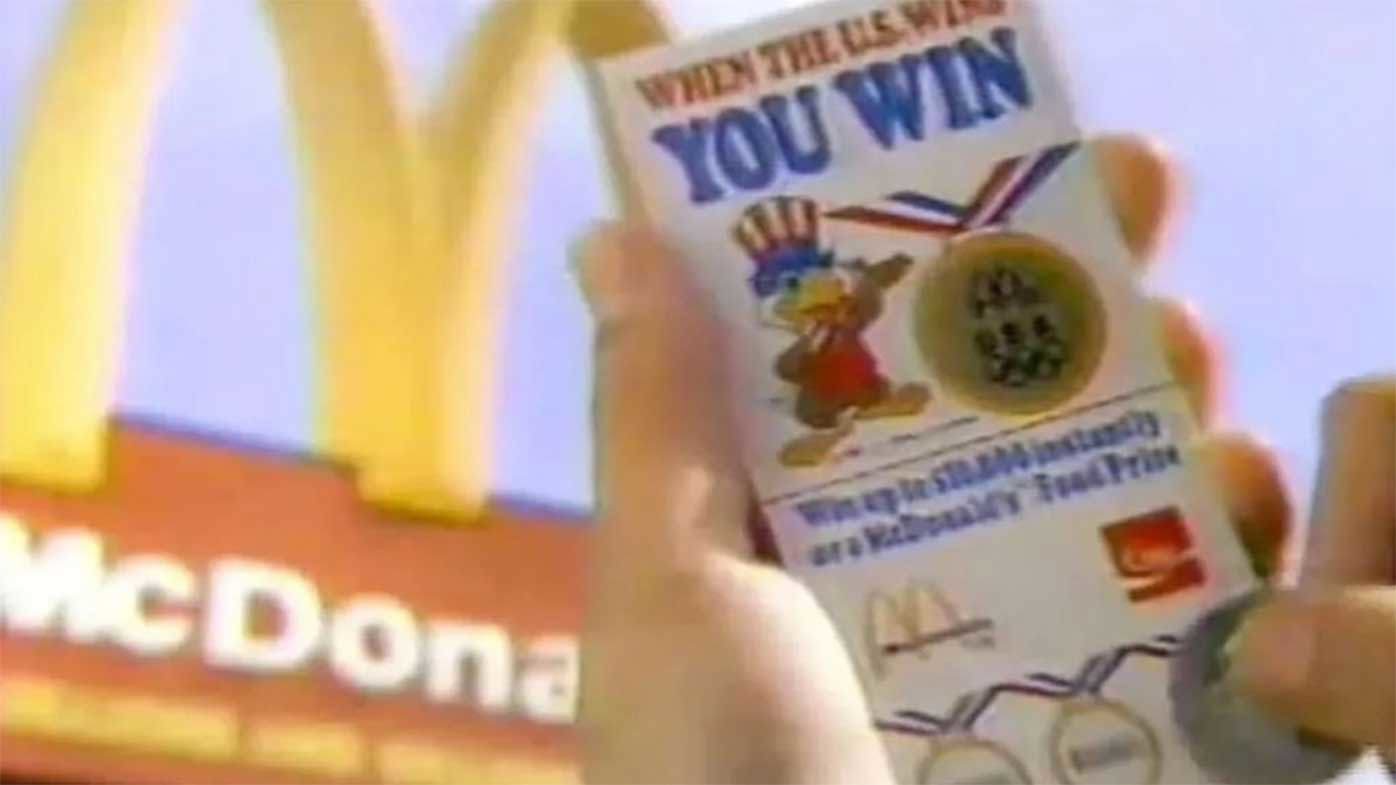
In the summer of 1984, the air in Los Angeles didn't just shimmer with heat; it vibrated with the collective ego of a nation. The United States was hosting the Summer Olympics, and the atmosphere was thick with a particular brand of Cold War bravado. For McDonald’s, the world’s undisputed king of fast food, this wasn't just a sporting event. It was a marketing theater of war. They launched a promotion so simple, so generous, and so inherently American that it seemed impossible to lose: "When the U.S. Wins, You Win."
The premise was straightforward. Customers received a scratch-off card with every purchase. Each card featured an Olympic event. If an American athlete took home the gold in that event, the customer won a Big Mac. A silver medal earned a free order of french fries. A bronze resulted in a soft drink. It was a gamble on national excellence.
But there was a ghost in the machine.
Four years earlier, the United States had boycotted the Moscow Olympics to protest the Soviet invasion of Afghanistan. In 1984, the Soviet Union and its Eastern Bloc allies—the powerhouse machines of the sporting world—returned the favor. They stayed home. This retaliatory boycott turned the medal tally into a massacre. Without the "Red Menace" to provide friction, the American team didn't just win; they dominated with a ferocity that bordered on the absurd.
The Math of a Massacre
Consider a young family sitting in a plastic booth in suburban Ohio. They are peeling back the silver film on a game piece, hoping for a snack. They look at the card: Men’s Gymnastics. In a world where the Soviets are present, that card is a long shot. But in 1984, with the competition sidelined, the U.S. men’s team stormed the podium.
The projections used by McDonald’s executives were based on the 1976 Montreal Games. In those games, the U.S. had won 94 medals, 34 of them gold. It was a respectable, predictable number. It was a number that fit neatly into a corporate budget. But when the dust settled in Los Angeles, the American medal count didn't just creep past those figures. It exploded.
The United States finished the 1984 Games with 174 medals.
Eighty-three of those were gold.
Suddenly, every other customer walking through those glass doors wasn't a patron; they were a debt collector. The "When the U.S. Wins" cards were no longer a fun incentive. They were currency. They were a run on the bank.
The Tipping Point of Generosity
Imagine being a franchise owner in a mid-sized town during that sweltering August. You start the day with a full inventory of beef patties and buns. By noon, the line is out the door and around the block. These aren't people looking to buy a meal. These are people clutching handfuls of winning cards.
The kitchen becomes a frenzied assembly line of free labor. The "ping" of the timer is relentless. For the teenager behind the counter, the Olympics have ceased to be about national pride and have become a grueling marathon of unwrapping cheese slices. The grease in the air feels heavier. The smiles from management grow tighter.
The fundamental problem with the promotion was its lack of a "ceiling." In modern marketing, "while supplies last" is a legal shield. In 1984, McDonald’s had tied its liability to the physical performance of human beings over whom they had no control. They had bet against the American athlete, or at least, they had bet on a level of mediocrity that didn't materialize.
The sheer volume of free food was staggering. Reports from the time suggested that some locations actually ran out of Big Mac buns. Imagine the irony: a global titan of industry, a company that perfected the "just-in-time" supply chain, brought to its knees by its own generosity. They were drowning in their own success.
The Invisible Cost of a Free Lunch
Why does this matter decades later? Because it represents the ultimate collision between the cold logic of a spreadsheet and the messy, unpredictable reality of human achievement.
In a boardroom in Oak Brook, Illinois, the promotion looked like a masterpiece of engagement. It drove foot traffic. It built brand loyalty. It associated the Golden Arches with the gold medal. But the executives had failed to account for the political "Black Swan" event of the Soviet boycott. They had calculated the cost of the burger, but they hadn't calculated the cost of the void left by the missing competition.
The financial hit was rumored to be in the tens of millions—an enormous sum in 1984 dollars. But the damage wasn't just financial. It was a lesson in the fragility of "gamified" retail. When a promotion becomes too successful, it loses its status as a gift and becomes an expectation.
The psychological shift in the customer is subtle but profound. When you buy a burger, you are a customer. When you are handed a free burger because someone else ran a race, you are a winner. But when you are handed your fifth free burger in a week because the entire Eastern Bloc stayed home, you start to feel like the system is broken. The value of the product diminishes. The "specialness" of the Big Mac evaporated under the sheer weight of its ubiquity.
The Echoes of 1984
We see this same tension today in every "unlimited" data plan that gets throttled and every "lifetime" warranty that comes with a mountain of fine print. Companies want the emotional high of a grand promise without the terrifying reality of actually having to fulfill it at scale.
McDonald's survived, of course. They are the ultimate survivors. They leaned into the chaos, accepted the losses, and kept the fryers screaming. But they never ran a promotion quite like that again. They learned that there is a very fine line between a marketing "game-changer" and a mathematical nightmare.
The 1984 debacle serves as a permanent reminder of the danger of ignoring the "human" variable. You can predict the cost of beef. You can predict the cost of labor. You can even predict the weather to some extent. But you cannot predict the exact moment when a geopolitical grudge will turn a simple scratch-off card into a liability that threatens to swallow your profit margins whole.
There is a certain poetry in it. A massive corporation, built on the pillars of consistency and predictability, was undone by the sheer, unbridled excellence of athletes who didn't know they were supposed to be "cost-effective."
The next time you see a "buy one, get one" offer, or a complex rewards app flashing on your phone, remember the summer of 1984. Remember the smell of too many patties on the grill and the sight of a franchise manager looking at a stack of gold-medal cards with the same expression a captain might give a rising tide.
The lesson remains. In the world of business, as in the world of sports, the most dangerous opponent isn't the one across the field. It’s the one you didn't think would show up—or in this case, the one who didn't show up at all.
The Golden Arches still stand, but they are built on the memory of a summer where the price of victory was a very, very expensive lunch.