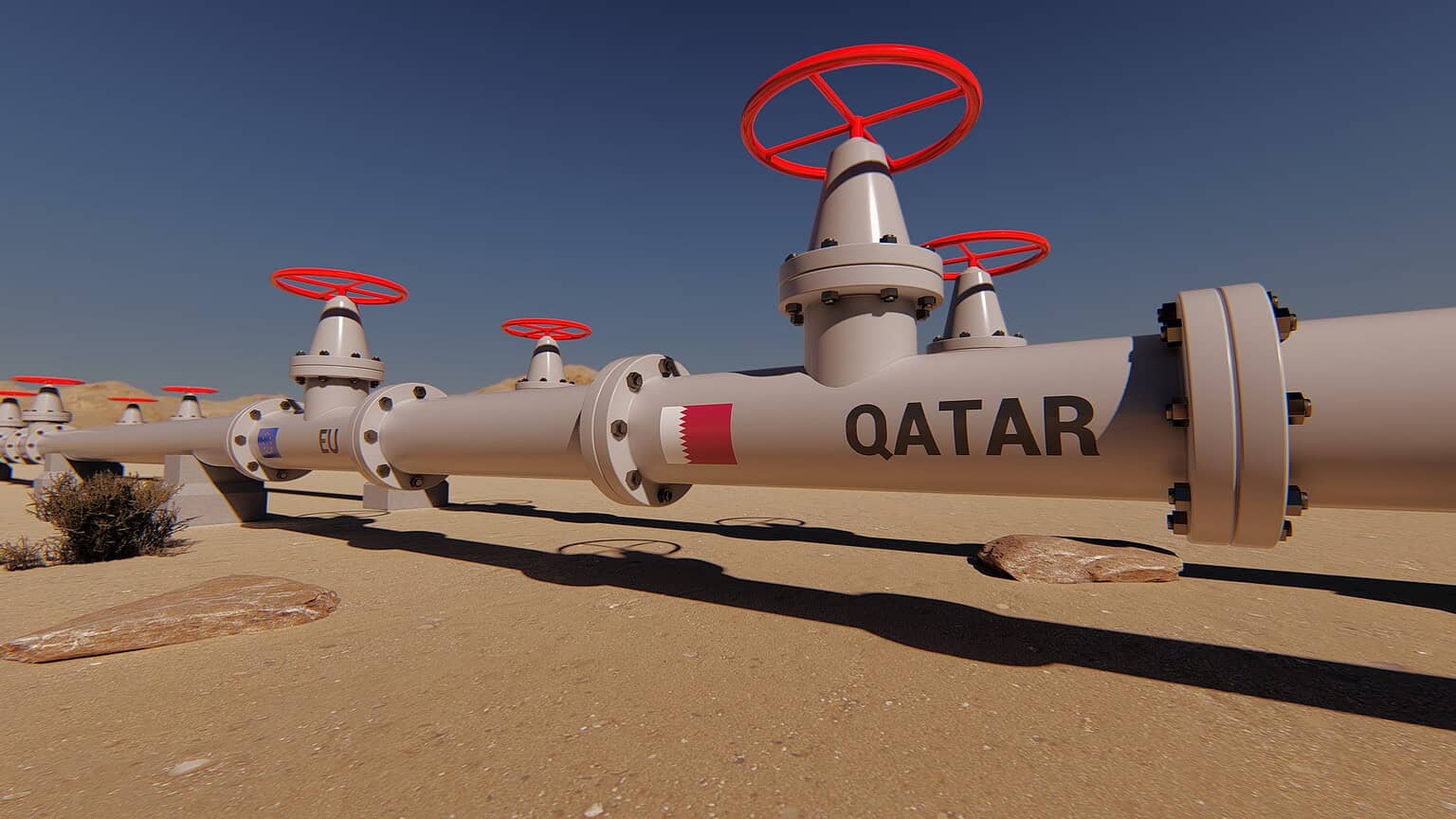
The headlines are screaming about a global energy apocalypse. Qatar pauses production. The Gulf is in "crisis." The world is going dark.
It is all noise. If you enjoyed this article, you should look at: this related article.
If you are panic-buying futures or shivering at the thought of a cold winter, you have been played by a superficial narrative that ignores how liquid natural gas (LNG) actually functions. Most energy analysts treat the market like a grocery store—if the milk isn't on the shelf today, you starve. But the global energy grid is a complex, multi-layered machine designed specifically to absorb the very shocks that the mainstream media is currently hyperventilating over.
Qatar isn't "halting" production because they’ve run out of gas or because a few regional skirmishes have broken the industry. They are recalibrating. In the world of high-stakes commodities, a tactical pause is often a price-support mechanism disguised as a logistical necessity. For another perspective on this development, refer to the recent coverage from Business Insider.
The Myth of the Fragile Supply Chain
The "crisis" narrative relies on the idea that the world lives hand-to-mouth on Qatari gas. It doesn't.
Global LNG trade is defined by long-term contracts and massive floating storage. When a major player like Qatar Petroleum—now QatarEnergy—adjusts its valves, the ripple effect takes weeks, sometimes months, to hit the actual burner tips in Berlin or Tokyo. The "threat to global energy supply" is a paper tiger.
I have spent years watching traders manufacture volatility out of thin air. They love a good Gulf crisis. It justifies the fat spreads and the "risk premiums" they tack onto your utility bill. But look at the data. European storage levels are at record highs. The United States has transitioned into a net exporter that can pivot shipments in mid-ocean.
The idea that one nation—even one as dominant as Qatar—can single-handedly break the global energy back is a relic of the 1970s. We are not in the age of the oil embargo anymore. We are in the age of the global arbitrage.
Why the "Crisis" is Actually a Market Correction
The mainstream press misses the nuance of the North Field Expansion. Qatar is currently mid-swing in a massive $30 billion project to boost its capacity from 77 million tons per year (mtpa) to 126 mtpa.
When you are overhauling the biggest gas field on the planet, you stop. You vent. You maintain.
Calling a scheduled or tactical maintenance window a "halt due to crisis" is like saying a Boeing 747 is "crashing" because it pulled into a hangar for an engine swap. The narrative of regional instability provides a convenient cover for Qatar to tighten the market while they prepare for their next decade of total dominance.
Let's dismantle the "People Also Ask" nonsense surrounding this:
- Will my heating bill double? No. Unless your local utility is run by incompetent gamblers who didn't hedge their winter strips six months ago.
- Is this the end of the energy transition? Quite the opposite. Volatility in gas prices is the single greatest catalyst for accelerated CAPEX in nuclear and renewables.
- Is Qatar losing its grip? They are tightening it. By controlling the flow now, they ensure that when their new capacity comes online, the market is hungry enough to pay the premium.
The Invisible Safety Net: The US-Australia-Qatar Triad
The media loves a "single point of failure" story. It’s easy to write. It’s easy to sell. But the reality is a triad of production that the "experts" consistently ignore.
When Qatar slows down, the US Gulf Coast ramps up. When the US faces a hurricane, Australia’s North West Shelf fills the gap. This isn't a fragile ecosystem; it is a self-correcting, decentralized network.
- US Flexibility: American LNG is "destination flexible." Unlike Qatari gas, which is often locked into rigid, decades-long bilateral agreements, US cargos go to the highest bidder. They are the global "swing" supply.
- Asian Pivot: Japan and South Korea have some of the most sophisticated strategic reserves on earth. They aren't panicked. Why are you?
- The Russia Factor: Even with the decoupling from Russian pipeline gas, the infrastructure for LNG regasification in Europe has expanded at a rate that was unthinkable three years ago. The "bottleneck" is gone.
Stop Looking at the Map, Start Looking at the Spread
If you want to understand what is actually happening, stop looking at maps of the Strait of Hormuz and start looking at the price delta between the JKM (Japan Korea Marker) and the Dutch TTF.
The volatility isn't coming from a lack of gas. It is coming from the uncertainty of the route.
The "crisis" is a shipping problem, not a molecule problem. We have plenty of gas. We just have to take the long way around the Cape of Good Hope. Yes, it adds 10 days to the journey. Yes, it burns more bunker fuel. But it does not "threaten the global energy supply." It just changes the delivery date on the invoice.
I've seen companies blow millions of dollars panic-buying spot cargos because they believed the "supply cliff" myth. They ended up with tankers they couldn't unload and storage fees that ate their margins. The winners in this "crisis" will be the ones who realize that the physical supply is fine—only the sentiment is broken.
The Professional’s Playbook
Stop reading the general news for energy insights. It’s written by people who think a "therm" is a brand of underwear.
- Ignore the "Halt" Headlines: Look for the "Re-exports" data. Watch the AIS (Automatic Identification System) tracking for tankers. If the ships are moving, the gas is flowing.
- Bet on Infrastructure, Not Molecules: The money isn't in the gas price; it's in the regasification terminals and the specialized shipping fleets.
- Embrace the Volatility: For a savvy operator, a "crisis" is just a high-frequency trading opportunity.
The Qatari "halt" is a masterclass in market psychology. They are letting the world realize how much they need them, right before they flood the market with their expanded capacity and crush every competitor from the Permian Basin to the Arctic.
It’s not an emergency. It’s an advertisement.
The lights aren't going out. The price of the light just went up because you believed a headline.
Stop panicking and start calculating.