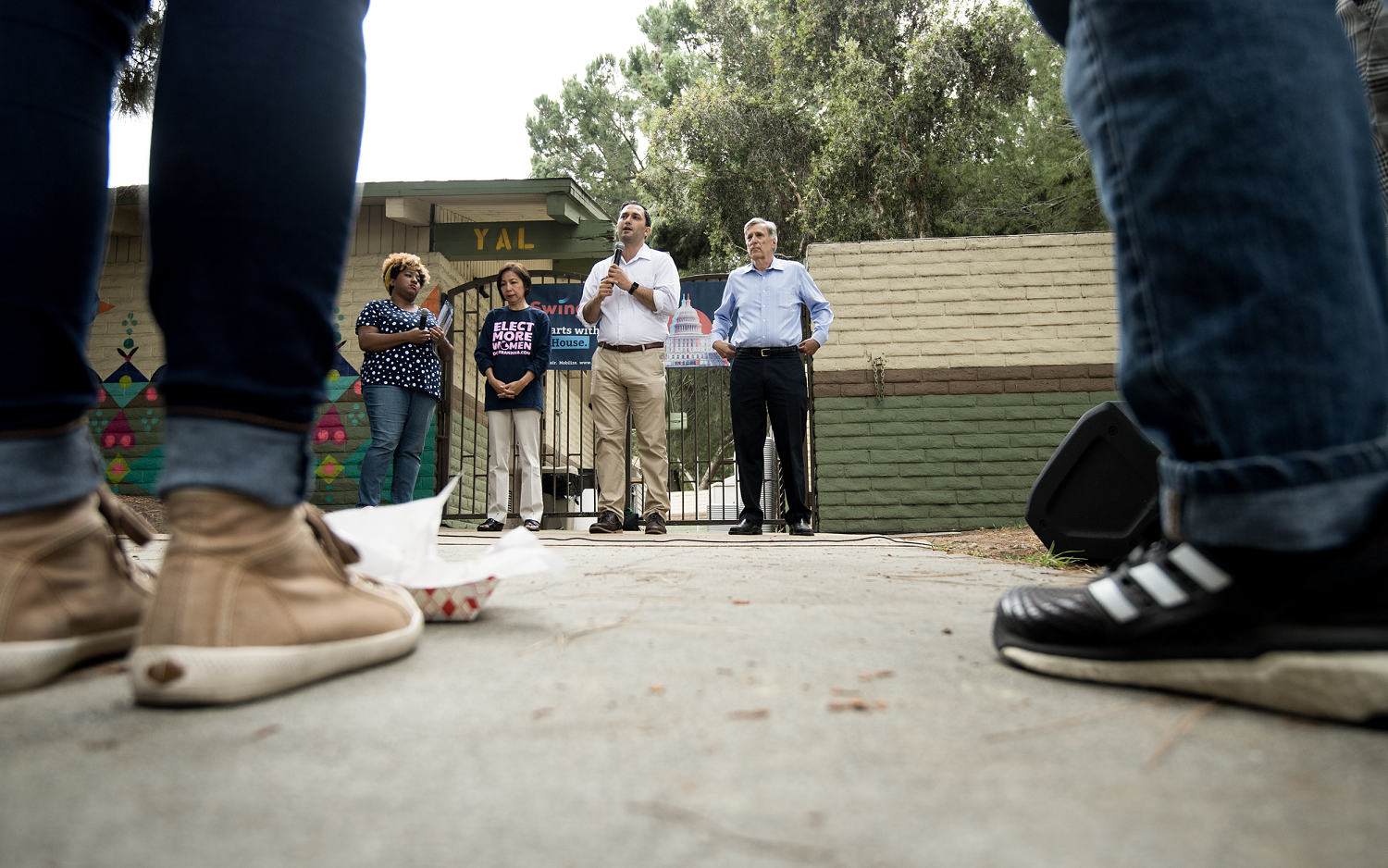
The Democratic Party is betting its legislative future on a massive, door-to-door ground campaign targeting 60 critical races across the United States. This isn't just about high-profile Senate seats or the White House. The effort, led by major grassroots organizations like PCCC and various state-level coalitions, focuses on the "down-ballot" contests that determine who controls state houses and local election boards. By deploying thousands of canvassers to swing districts, the party aims to overcome the traditional midterm or off-year slump in voter turnout. The goal is simple. Win the narrow margins that decide the balance of power.
The Math of the Micro Level
National elections capture the headlines, but the real power often sits in the state legislatures. These are the bodies that draw congressional maps, set voting rules, and decide on everything from reproductive rights to education funding. The decision to target 60 specific races suggests a data-driven surgical strike rather than a broad, wasteful spending spree.
Internal party data shows that in many of these districts, the margin of victory in previous cycles was less than 2,000 votes. In some cases, it was under 500. When you look at the numbers through that lens, a television ad buy is a blunt instrument. A person standing on a porch, talking to a frustrated neighbor, is a precision tool. This grassroots push is designed to identify "drop-off" voters—people who show up for presidential years but vanish during the cycles that actually impact their daily lives.
The logic holds up. If the Democrats can flip or hold these 60 seats, they create a firewall against Republican policy initiatives at the state level. More importantly, they build a bench of future national leaders.
Why Television Ads Are Dying
For decades, the political playbook was easy. Raise millions of dollars and dump it all into local TV markets three weeks before the election. That model is broken. Between the rise of streaming services and the sheer volume of political noise, voters have become experts at tuning out the screen.
Canvassing works because it bypasses the digital filters. You cannot "skip" a human being standing on your front step. These grassroots groups are focusing on deep canvassing, a method that involves longer conversations rather than just reading a script and checking a box. The idea is to listen to a voter’s concerns first. Once a connection is made, the canvasser can explain how a specific candidate’s platform addresses those exact fears.
It is labor-intensive. It is exhausting. But the conversion rate for a face-to-face interaction is significantly higher than any digital impression or mailer. The "cost per vote" via canvassing is often lower than high-end media buys when you account for the actual impact on turnout.
The Infrastructure of the Grassroots
This isn't a top-down operation run from a sleek office in D.C. The power behind this 60-race strategy comes from local organizers who live in the districts they are trying to flip. These are teachers, retirees, and local activists who know which neighborhoods are neglected and which issues are boiling over at city council meetings.
Funding the Ground Game
Money still matters, but the way it’s being used is changing. Instead of paying consultants to produce slick videos, the funds are going toward:
- Stipends for lead organizers to ensure they can work full-time on the campaign.
- Sophisticated voter-tracking software that tells canvassers exactly which houses have registered voters who haven't returned their ballots.
- Logistics and transportation for volunteers moving between rural precincts.
The Democratic grassroots ecosystem has learned from past failures. They know that showing up two weeks before an election looks cynical. The current effort started months, sometimes years, in advance. This "permastructure" allows the party to keep voters engaged even when there isn't a primary on the immediate horizon.
The Vulnerability of the Strategy
No plan is perfect. The biggest risk to this canvassing-heavy approach is the "burnout" factor. Recruiting enough volunteers to hit thousands of doors across 60 different races is a massive logistical hurdle. If the enthusiasm gaps start to widen, the ground game collapses.
There is also the counter-move. Republican organizations have noticed the success of Democratic field operations and are pouring their own resources into similar efforts. We are entering an era of "trench warfare" politics. In this environment, the side with the most boots on the ground usually wins, but only if those boots are reaching the right doors.
A miscalculation in the data—targeting the wrong neighborhoods or using the wrong messaging—can result in "negative turnout," where a canvasser accidentally motivates an opposition voter to head to the polls. The margin for error is razor-thin.
Beyond the Election Cycle
The 60-race target is a tactical move for the immediate future, but the long-term play is about permanent engagement. By building these networks now, the Democratic party is trying to solve its "rural problem." Many of these 60 races are in suburban-rural fringe areas where the party has struggled for years.
By showing up in person, organizers are trying to strip away the "national brand" of the party, which can be a liability in conservative-leaning areas, and replace it with a local face. They want to talk about the local bridge that needs fixing or the school board's budget.
If this strategy succeeds, it provides a blueprint for every election cycle moving forward. It shifts the power away from the D.C. consultant class and back to the precincts. The success of this 60-race push will be the ultimate test of whether "all politics is local" still holds true in a hyper-polarized, digital world.
The results won't be found in a national exit poll. They will be found in the quiet tallies of county clerks in places most people couldn't find on a map. That is where the next decade of American policy will be decided.