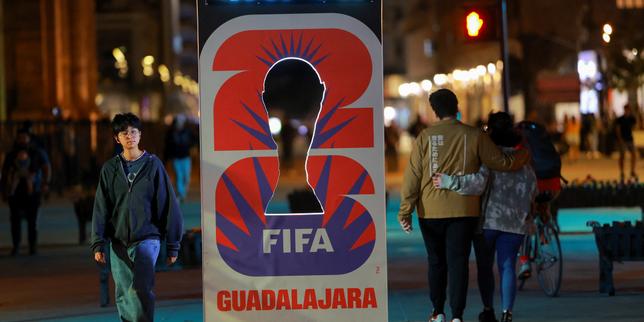
The death of Nemesio Oseguera Cervantes, the warlord known as "El Mencho," has done more than vacuum out the leadership of the Jalisco New Generation Cartel (CJNG). It has ignited a structural collapse of security in Guadalajara that FIFA can no longer ignore. While official communiqués from the local government attempt to paint a picture of readiness for the 2026 World Cup, the reality on the ground is a frantic scramble to contain a multi-front succession war. This isn't just about crime. It is about the viability of hosting a global sporting event in a territory where the local monopoly on force has evaporated.
The primary concern for international observers isn't necessarily a direct attack on a stadium. It is the collateral chaos. When a figurehead like El Mencho falls, the franchise model of the CJNG breaks into autonomous, hungry cells. These factions compete for territory through "narcobloqueos"—the practice of seizing buses and semi-trucks to set them ablaze across major arteries. For a city like Guadalajara, which relies on a few critical veins of infrastructure to move thousands of fans to the Estadio Akron, these tactical shutdowns represent a logistical nightmare that no amount of private security can solve.
The Infrastructure of Fear
Guadalajara is a city of high-contrast living. On one side, you have the gleaming tech hubs and luxury developments of Zapopan; on the other, a hinterland where the law is a suggestion. The Estadio Akron sits right on the edge of this divide. It is a beautiful, modern architectural feat, but its surrounding geography is a vulnerability.
Security analysts who have spent decades tracking the CJNG note that the group’s power was built on a terrifyingly efficient, corporate-like structure. Without El Mencho at the helm, that efficiency is gone. We are now seeing the "splinter effect." Smaller commanders, looking to prove their dominance or carve out their own fiefdoms, are less likely to respect the "quiet periods" that usually precede major international events. In the past, cartels often kept a low profile during global spectacles to avoid the heat of federal intervention. That unspoken rule is dead.
The "why" behind the current anxiety is simple. The Mexican state’s strategy has shifted from direct confrontation to a more passive containment, but that doesn't work when the aggressors are fighting each other. If two rival factions decide to settle a score on the road to the airport during the opening week of matches, the international fallout would be catastrophic for Mexico's reputation and its economic future.
FIFA and the Liability Shift
For years, FIFA has operated with a certain level of willful blindness regarding the internal politics of host nations. They look at stadium capacity, broadcast rights, and VIP hospitality suites. However, the 2026 tournament is different. It is a sprawling, tri-national experiment. If Guadalajara becomes a liability, the pressure to shift matches to safer venues in the United States or Canada will become overwhelming.
This puts the Jalisco state government in an impossible position. They must prove they can guarantee safety without turning the city into a visible military zone. Fans don't want to walk past platoons of National Guard troops in balaclavas just to buy a jersey. Yet, without that presence, the risk of a high-profile kidnapping or a stray-fire incident remains unacceptably high.
The financial stakes are massive. Billions of pesos have been poured into urban renewal and stadium upgrades. If the "El Mencho" power vacuum leads to a sustained spike in homicides and daylight shootouts, the tourism "bounce" the city expects will turn into a ghost town scenario. Travelers are fickle; they will stay in their hotels or skip the Guadalajara leg of the trip entirely if the headlines continue to bleed.
The Myth of the Controlled Perimeter
There is a common misconception in sports management that you can "bubble" an event. You secure the stadium, you secure the official hotels, and you assume the rest will manage itself. In a city integrated with cartel logistics, the bubble is a fantasy.
The CJNG doesn't just deal in narcotics. They control segments of the local economy including avocado farming, construction supplies, and even local transport unions. When the leadership undergoes a violent transition, these legal or "gray" businesses also feel the tremor. This means labor strikes, supply chain disruptions for stadium vendors, and a general atmosphere of extortion that affects everyone from the street food seller to the luxury hotelier.
A History of Broken Truces
We have seen this play out before in other regions, but never on this scale. When the leadership of a major criminal organization is decapitated, the violence typically peaks 12 to 18 months later. The timing for the 2026 World Cup could not be worse. We are currently in the early stages of the "thermal" phase of this conflict—where the new borders of influence are being drawn in blood.
The Mexican federal government has promised a surge of elite troops to the region, but history suggests this often acts as a catalyst rather than a cure. Federal presence frequently forces cartel elements into more desperate, high-visibility acts of violence to assert their local relevance.
The Overlooked Factor of Cyber Security and Intelligence
While everyone is focused on the physical threat of gunfire, the analytical community is watching the digital space. The CJNG has historically used sophisticated surveillance and social media campaigns to intimidate the population. In the wake of El Mencho’s reported demise, the digital propaganda war has intensified.
Fake news regarding "curfews" or "imminent attacks" can clear a city street faster than a physical explosion. For FIFA, the challenge will be managing the information environment. If a rumor of a cartel blockade goes viral on the morning of a match, the resulting panic in a crowded urban center could lead to trampling or mass chaos, even if no actual threat exists. The city’s current infrastructure for emergency communication is woefully unprepared for this kind of psychological warfare.
Logistics Under Siege
Consider the movement of teams. National squads travel in highly visible, branded buses. In a stable environment, this is a PR win. In a fractured Guadalajara, it is a target for any fringe group looking to gain international leverage. To think that a "security corridor" can be maintained 24/7 across a sprawling metropolis is to ignore the reality of Mexican urban warfare. The cartels know the side streets better than the police. They own the lookouts on every corner.
The Counter-Argument for Resilience
Some local business leaders argue that the city has lived with this tension for a decade and that the World Cup will go on as planned because it is in the cartels' best interest. They posit that the CJNG and its rivals want the influx of cash and the global spotlight as much as the legitimate businesses do.
This is a dangerous gamble. It assumes rational, long-term thinking from fragmented cells led by young, aggressive lieutenants who may value short-term ego and territory over a "business-as-usual" peace. The "Pax Mafiosa" only works when there is a single kingpin to enforce the rules. With El Mencho gone, there is no one to take the call when things go wrong.
Transparency as a Security Requirement
The local government's habit of downplaying "isolated incidents" must end if they want to retain their host status. Transparency is the only currency that matters to international security firms and the fans they protect. If a shooting occurs in a tourist district, calling it a "personal dispute" rather than a cartel skirmish fools no one and only erodes trust.
The path forward requires a brutal assessment of what can actually be protected. It might mean moving fan festivals to more defensible locations or implementing a level of biometric surveillance that would make civil libertarians recoil. But the alternative—a World Cup defined by black smoke on the horizon and empty seats in the Akron—is a failure Mexico cannot afford.
The world is coming to Guadalajara. Whether the city belongs to the fans or the factions will be decided in the next few months of shadow-fighting. The clock isn't just ticking for the kickoff; it's ticking on the city's ability to prove it still governs its own streets.
Demand a clear, unvarnished security audit of the Guadalajara transit corridors before booking your tickets.