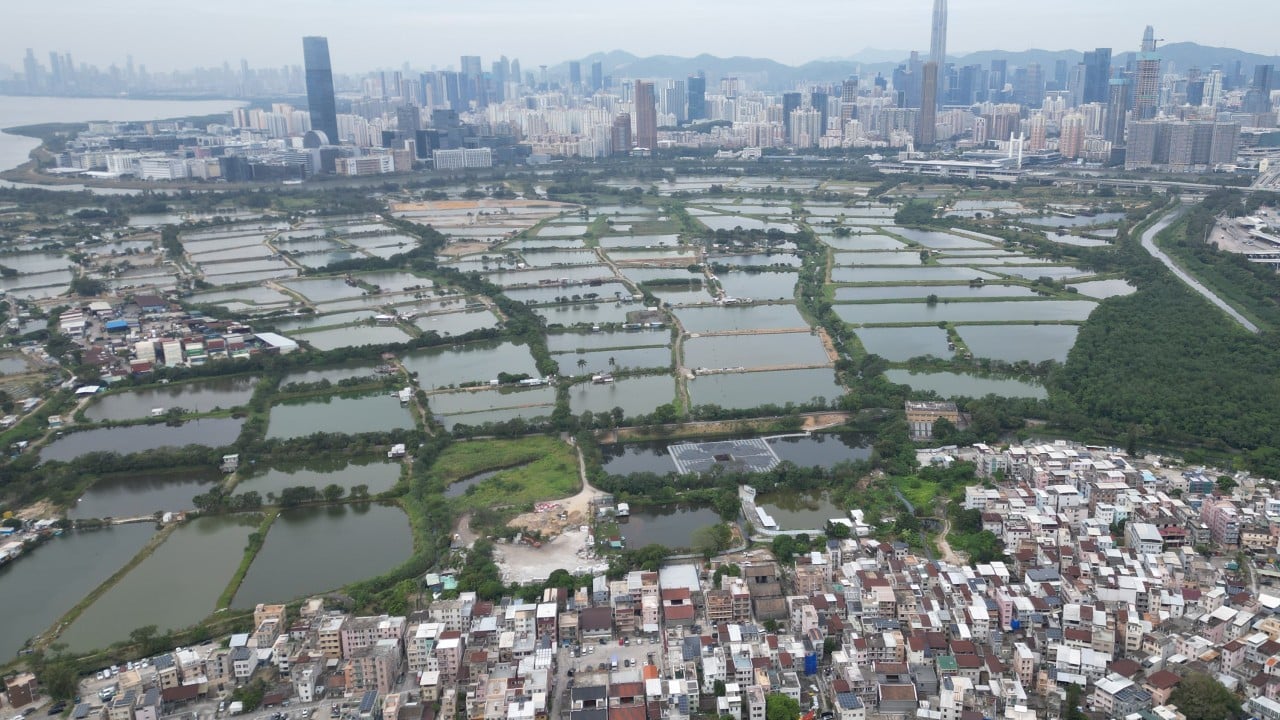
The Northern Metropolis was sold to the Hong Kong public as a self-sustaining urban miracle, a HK$100 billion-plus attempt to shift the city’s economic gravity away from the cramped Central District toward the Shenzhen border. However, the recent "active alignment" signaled by Guangdong provincial authorities reveals a different reality. This is not a partnership between equals. It is a systematic integration where the mainland’s industrial muscle is moving to dictate the terms of Hong Kong’s northern expansion. While Hong Kong officials talk about logistics and housing, Guangdong is looking at the Northern Metropolis as a strategic landing strip for its own technological giants.
Guangdong is not just helping. It is moving in.
The Power Shift from Central to the Border
For decades, the border between Hong Kong and Shenzhen was a hard line between two different worlds. One was a financial fortress, the other a manufacturing hub. That line has blurred into irrelevance. The Northern Metropolis, spanning 30,000 hectares, was designed to house 2.5 million people and create an "international I&T hub." But the capital required to build this at the speed the market demands is not coming from Hong Kong’s risk-averse developers. It is coming from the mainland’s state-backed infrastructure machine.
When Guangdong Governor Wang Weizhong speaks of "active alignment," he is referring to the GBA (Guangdong-Hong Kong-Macao Greater Bay Area) integration plan where Hong Kong provides the legal framework and the "window" to global markets, while Guangdong provides the actual economic engine. The risk for Hong Kong is becoming a "dormitory city" for Shenzhen’s high-tech workforce.
Why the High Tech Dream Hinges on Mainland Subsidies
Hong Kong’s San Tin Technopole is the crown jewel of the Northern Metropolis. It is supposed to be the "Silicon Valley of the East." Yet, if you look at the tenant list of any major tech park in Hong Kong, the heavy hitters are increasingly mainland firms like Meituan, TikTok's ByteDance, or Huawei. These companies do not need Hong Kong for its tech talent; they need it for its capital account convertibility and its common law system.
Guangdong’s involvement solves a massive problem for Hong Kong: the talent gap. Hong Kong produces world-class researchers but lacks the middle-management and technical labor force to scale a hardware industry. By aligning with Guangdong, the Northern Metropolis effectively plugs into the supply chains of Dongguan and the AI labs of Guangzhou. This makes the project viable, but it also means the strategic decisions for the "Northern Metropolis" are increasingly being made in government offices in Guangzhou, not the Legislative Council in Admiralty.
The Real Estate Trap
Local developers in Hong Kong are in a bind. They have sat on massive land banks in the New Territories for generations, waiting for the government to provide the infrastructure that would skyrocket their land value. Now that the infrastructure is coming, the rules have changed. The government is no longer willing to wait for slow-burn private development.
Under pressure from Beijing to solve the housing crisis, the Hong Kong government is using "Enhanced Conventional New Town Approach" (ECNTA), which allows for quicker land resumption. Guangdong’s "alignment" adds another layer of pressure. If Hong Kong developers don't build fast enough, mainland conglomerates—who operate on thinner margins and with state backing—are ready to step in. We are seeing the end of the era where five or six families controlled the pace of Hong Kong's urban growth.
The Infrastructure Loophole
Alignment means more than just shared meetings. It means physical and regulatory synchronization. We are looking at a future where the "Co-location Arrangement" seen at the West Kowloon High-Speed Rail station becomes the standard for the Northern Metropolis.
Guangdong is pushing for:
- Unified customs clearance that feels invisible to the user.
- Cross-border data flow that allows AI companies in the Technopole to use mainland datasets without hitting the Great Firewall.
- Professional recognition where mainland engineers can work in the Northern Metropolis without the grueling multi-year certification processes usually required in Hong Kong.
These are not minor tweaks. They represent a fundamental shift in how Hong Kong maintains its "Two Systems" identity. If the regulations are identical to Shenzhen’s, the unique value proposition of the Northern Metropolis begins to evaporate.
The Competition for Global Capital
The world is watching to see if the Northern Metropolis can actually attract non-mainland investment. In the current geopolitical climate, Western firms are hesitant. They see the "alignment" with Guangdong as a sign that Hong Kong is becoming just another Chinese city. To counter this, Hong Kong must prove that the Northern Metropolis offers protections that Shenzhen cannot.
This is the central tension. To be successful, the project needs the mainland’s scale and speed. But to be "international," it needs to maintain a visible distance from the mainland’s regulatory overreach. Guangdong’s eagerness to "align" might actually be scaring off the very global investors Hong Kong desperately needs to diversify its economy away from real estate and retail.
The Burden of the HK$100 Billion Price Tag
Hong Kong is facing its first significant fiscal deficits in years. The cost of reclaiming land and building the Northern Metropolis is staggering. By aligning with Guangdong, Hong Kong is looking for ways to share the financial burden. This could take the form of joint-venture investment funds or allowing mainland state-owned enterprises (SOEs) to take the lead on major "Build-Operate-Transfer" projects.
While this eases the pressure on the Hong Kong Treasury, it transfers ownership of the city's future to external entities. If a mainland SOE builds the bridges, manages the tech parks, and provides the 5G infrastructure, who really owns the Northern Metropolis?
A City Within a City
The Northern Metropolis will eventually house nearly a third of Hong Kong's population. If this area becomes culturally and economically indistinguishable from Shenzhen, we will see a two-tier Hong Kong. In the south, the "Old Hong Kong" will focus on traditional finance and tourism. In the north, the "GBA Hong Kong" will be a high-tech, high-speed extension of the mainland.
The "alignment" is the first step in this bifurcation. Guangdong is moving with purpose because it sees the Northern Metropolis as the missing piece of its industrial puzzle: a high-end service and finance hub that sits directly on its border. For Guangdong, it’s a win. For Hong Kong, it’s a gamble that the city can stay relevant by becoming the gateway to a system that is rapidly absorbing it.
The Northern Metropolis is no longer a Hong Kong project; it is a Guangdong-led initiative with a Hong Kong address. Any investor or citizen who believes otherwise hasn't been paying attention to the policy shifts coming out of Guangzhou. The speed of this "active alignment" suggests that the timeline for integration has been moved up, and the days of the border being a meaningful barrier are over.
Demand clarity on land resumption rights and the legal status of data across the border before committing capital to any New Territories development.