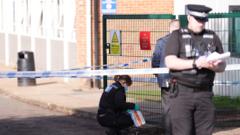
Imagine being thousands of miles away when you get the call that every parent dreads. Your child has been hurt. Not a scraped knee or a playground tumble, but something far more sinister. For the mother of a schoolgirl recently stabbed in a random attack, this nightmare became a reality while she was traveling abroad. It’s a level of helplessness that most of us can’t even fathom. You’re stuck in a different time zone, staring at a phone screen, waiting for updates that feel like they’re moving in slow motion.
The incident involving the schoolgirl in South London isn't just another headline. It’s a sharp reminder of how quickly a normal day can turn into a tragedy. The victim's mother was out of the country when the attack happened. She described herself as "terrified" and "desperate" to get back to her daughter. This isn’t just about a crime; it’s about the visceral, agonizing distance between a parent and a child in crisis. Expanding on this topic, you can also read: Why the Green Party Victory in Manchester is a Disaster for Keir Starmer.
When we talk about knife crime, we often focus on statistics or police response times. We forget the human element—the frantic flight bookings, the shaky hands holding a passport, and the crushing guilt of not being there to shield your child from the unthinkable.
Why Random Attacks Leave Communities Shaken
Most people think violent crime follows a pattern. We like to believe that if we avoid certain areas or stay away from specific crowds, we’re safe. But the stabbing of a schoolgirl on her way to or from school shatters that illusion. It feels personal because it could happen to anyone’s kid. The randomness is what fuels the fear. Experts at NBC News have also weighed in on this matter.
When a child is targeted, the psychological impact ripples through the entire neighborhood. Parents start walking their teenagers to the bus stop again. Local shops see a dip in foot traffic as people stay indoors. The "it won't happen here" mentality dies a quick, painful death. In this specific case, the fact that the mother was abroad adds a layer of modern anxiety. We live in a globalized world where parents travel for work or family, trusting that the "village" at home will keep their children secure. When that trust is broken by a blade, the recovery isn't just physical—it's foundational.
The Mental Toll on Families at a Distance
There is a specific type of trauma that comes from being an "absent" witness to a family tragedy. I’ve seen how this plays out in high-stress situations. The person who isn't there often suffers more from Post-Traumatic Stress Disorder (PTSD) because their imagination fills in the gaps that reality hasn't provided yet.
- Information Blackouts: In the early hours of an investigation, police are often tight-lipped. For a mother in a different country, every minute of silence feels like an hour.
- The Guilt Cycle: Even though there’s nothing she could have done from a plane or a hotel room, the "what ifs" are relentless.
- Logistical Nightmares: Trying to navigate emergency medical updates through a patchy international roaming connection is a special kind of hell.
We need to stop treating these stories as mere police reports. They are family collapses. The schoolgirl’s recovery will be long, but the mother’s journey to feeling "safe" leaving her child’s side again might take even longer. It’s a fracture in the family unit that doesn't show up on an X-ray.
What Authorities Are Missing About Street Safety
Police often talk about "hotspot policing" or "increased patrols." Honestly, that's often just a band-aid. By the time a patrol car sees a knife, the damage is frequently already done. The real issue is the culture surrounding youth violence and the accessibility of weapons.
The Metropolitan Police and other urban forces have struggled to get a grip on "random" acts of violence because they don't fit the typical gang-related profile. When a schoolgirl is attacked, it often points to a breakdown in mental health services or a failure in early intervention programs. We’re spending millions on reactive measures while the proactive ones—like youth mentorship and community centers—are being gutted.
If we want to protect kids, we have to look at the environment they walk through every day. Is there adequate lighting? Are there "safe shops" where kids can run if they feel followed? These are small, tangible things that matter more to a parent than a press release from a commissioner.
Supporting Victims Beyond the Hospital Bed
Once the physical wounds heal, the real work begins. Victim support in the UK is often criticized for being a "tick-box" exercise. You get a few counseling sessions and a pamphlet. That doesn't cut it when a child has been traumatized and a mother has been scared half to death from across the globe.
We need a more integrated approach. That means:
- Schools providing long-term psychological support, not just a one-off assembly.
- Legal protections for parents who need to take extended leave from work to care for a traumatized child.
- Community-led "buddy systems" for students walking to and from school in areas where incidents have occurred.
Don't wait for the next headline to check on your local safety protocols. Talk to your kids about their routes. Check in with other parents. The only way to combat the feeling of helplessness is through collective vigilance. If you see something that looks "off" on a street corner, don't just keep walking. Report it. Being an active part of your community's safety net is the best way to ensure no other parent has to receive that terrifying call while they're far from home.
The next step for any concerned resident is to attend the next local ward panel meeting. Demand to see the specific crime prevention plan for your child's school route. Don't accept vague answers. Push for real, visible changes in your streets today.