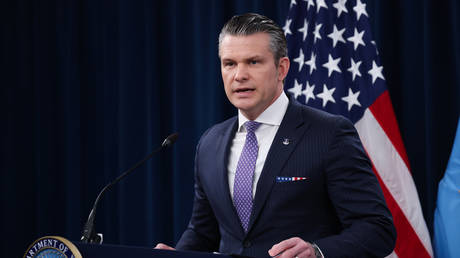
Pete Hegseth isn't just throwing stones at a glass house; he's pointing out that the foundation is already crumbling. For decades, the North Atlantic Treaty Organization has been the sacred cow of Western foreign policy. You don't question it. You don't challenge its utility. If you're a politician in Washington, you just keep signing the checks and nodding along. But the era of the blank check is ending. When Hegseth talks about the future of NATO being uncertain, he's reflecting a sentiment that has been brewing in the American heartland for years. It's a shift from "policeman of the world" to "investor in our own backyard."
The reality is that the geopolitical map of 1949 doesn't fit the world of 2026. We're dealing with a Europe that is economically powerful yet militarily hesitant, and an American public that is tired of subsidizing the defense of nations that often work against US interests in the global marketplace. If you think the current friction is just a temporary political spat, you’re missing the bigger picture. This is a fundamental recalibration of what an alliance actually means.
The Cold Hard Math of European Defense
Let's talk about the 2% rule. For years, NATO members agreed to spend at least 2% of their GDP on defense. For years, most of them treated it like a "suggested donation" rather than a requirement. While Poland and the Baltic states have stepped up—mostly because they can see the Russian border from their bedroom windows—Western European giants have lagged. Germany’s Zeitenwende or "turning point" was supposed to fix this, but the bureaucratic sludge in Berlin moves slowly.
Hegseth’s point is simple. Why should an American taxpayer in Ohio pay for the defense of a wealthy German welfare state? It’s a fair question. When you look at the numbers, the US accounts for roughly 70% of total NATO defense spending. That isn't a partnership. It’s a protection racket where the protector is getting stiffed on the bill.
We’ve seen this play out in the equipment gaps. During recent exercises, it became clear that many European nations lacked the basic logistical capacity to move heavy armor across their own borders without massive US assistance. If you can’t move your own tanks to your own front lines, you don’t have a military. You have a parade.
Why the Hegseth Critique Hits Different
Most critics of the traditional NATO structure get labeled as "isolationists." It’s a lazy label. Hegseth isn't saying the US should retreat from the world and hide behind the oceans. He’s arguing for a "Peace Through Strength" model that prioritizes American readiness over international bureaucracy. The concern is that NATO has become more about summits and communiqués than actual combat lethality.
The alliance has expanded significantly since the fall of the Berlin Wall. Each new member brings a new obligation for the US to defend them, often without adding significant military value to the pot. When you expand an alliance to include countries with tiny militaries and massive border risks, you’re not getting stronger. You’re getting more vulnerable. You’re diluting your focus.
The focus now is shifting toward the Indo-Pacific. China is the primary peer competitor, and NATO is a North Atlantic organization. While some European leaders are starting to talk about the "systemic challenge" of Beijing, their primary concern remains their immediate neighborhood. This creates a strategic disconnect. The US wants allies that can help contain China; Europe wants a US that stays focused on the Suwalki Gap. Both can't be the top priority at the same time.
The Bureaucracy vs The Battlefield
If you've ever spent time around the NATO headquarters in Brussels, you know it's a labyrinth of committees. It's where good ideas go to die in a pile of consensus-based decision-making. Hegseth, with his background in the military, sees this through the lens of a soldier. He knows that in a real conflict, "consensus" is a luxury you don't have.
- Slow Procurement: European defense companies often compete with each other rather than integrating. This leads to a mess of different tank models, different ammunition types, and incompatible communications systems.
- Divergent Interests: Turkey’s relationship with Russia is vastly different from Norway’s. Hungary’s view on energy is miles apart from the UK’s.
- The Veto Power: Any single member can gum up the works. We saw this with Sweden and Finland’s accession process. It turned into a bazaar of demands and concessions.
This isn't how you run a lean, mean fighting machine. It’s how you run a post-WWII social club. Hegseth is essentially saying that the club is too expensive and the members aren't paying their dues.
The Poland Model vs The Rest of Europe
If you want to see what a functional NATO member looks like, look at Warsaw. Poland is on track to spend 4% of its GDP on defense. They aren't just buying American; they're buying Korean tanks and building their own domestic industry. They understand that the US umbrella isn't a guarantee—it's a supplement.
The "uncertainty" Hegseth mentions comes from the fact that the US is tired of being the only one taking the threat seriously in a practical, budgetary sense. Honestly, the best thing that could happen to NATO is a period of American "tough love." If the threat of a US drawdown is what it takes to make Paris and Berlin actually build a credible military, then that threat is a service to the alliance, not a betrayal of it.
What Happens if the US Pivots
There is a real risk here. If the US pulls back or significantly changes its commitment, the European security architecture could fracture. Some nations might try to strike their own deals with Moscow. Others might try to form a "European Army," an idea that has been floated for years but always fails because no one wants to give up their national sovereignty to a central command in Brussels.
But the status quo is equally risky. Relying on a single superpower that is $34 trillion in debt and facing its own internal social pressures is not a sustainable long-term strategy for Europe. Hegseth is the messenger for a reality that is already here. The US is refocusing. It has to.
Practical Steps for the Road Ahead
If you’re watching this play out, don't focus on the "will they or won't they" drama of a US exit. Instead, watch the specific metrics that indicate if the alliance is actually evolving.
- Monitor the "Direct Defense" Spending: Look at how much is going into actual hardware—tanks, drones, and missiles—versus personnel costs and pensions. Many European budgets are inflated by high administrative costs.
- Watch the Indo-Pacific Engagement: If European NATO members start sending carrier groups or significant naval assets to the South China Sea, it shows they’re willing to support American strategic priorities.
- Follow the Defense Industry Consolidation: If Europe can’t agree on a single "Euro-tank" or a unified air defense system, they will remain dependent on the US for the heavy lifting.
- Pay Attention to the Rhetoric in the US Heartland: The future of NATO isn't decided in Brussels; it's decided in polling stations in Pennsylvania and Michigan. If the American public stops seeing the value, the policy will eventually follow.
The uncertainty Hegseth talks about is a wake-up call. The era of the American "security handout" is over. What comes next will either be a leaner, more balanced alliance or a fragmented Europe that has to relearn how to defend itself the hard way. Stop thinking of NATO as a permanent fixture of the universe. It's a contract, and contracts are only good as long as both parties find them valuable. Right now, the value proposition for the United States is being questioned more loudly than ever before.