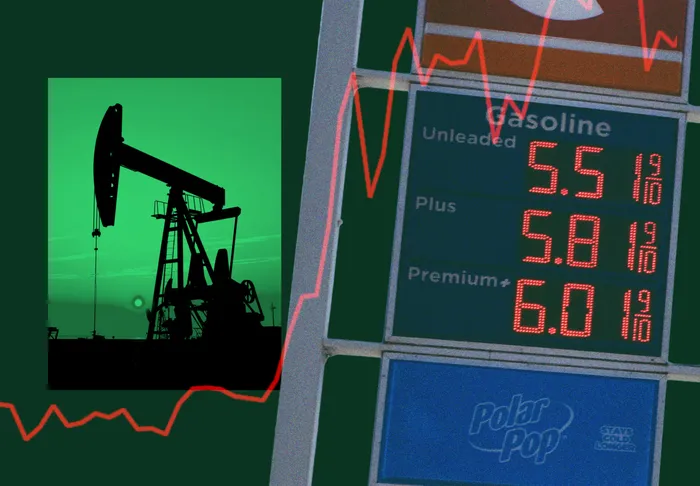
The White House is dusting off an old playbook as oil prices surge toward triple digits. With a widening conflict in the Middle East threatening the flow of crude through the Strait of Hormuz, the administration has begun vetting a suspension of the federal fuel tax. On paper, it looks like a win for the American driver. In reality, it is a desperate fiscal sedative that does nothing to fix the underlying supply crisis while potentially handing a multibillion-dollar gift to the very oil companies the government claims to be fighting.
The federal gas tax stands at 18.4 cents per gallon for gasoline and 24.4 cents for diesel. When prices at the pump hit $5.00 or $6.00, those pennies feel like a rounding error to the consumer, yet they represent the lifeblood of the Highway Trust Fund. Suspending this tax is the political equivalent of putting a Band-Aid on a gunshot wound. It provides the illusion of movement without the mechanics of progress.
The Friction in the Pipeline
Economists call it "asymmetric price transmission." Most of us just call it "rockets and feathers." When the price of crude oil jumps, pump prices shoot up like a rocket. When crude prices fall—or when a tax is removed—pump prices drift down slowly, like a feather.
There is no law requiring gas station owners or regional distributors to pass the 18.4-cent savings directly to you. In a high-demand market where supply is squeezed by overseas warfare, retailers have every incentive to keep their prices steady and simply absorb the tax break into their own profit margins. We saw this play out at the state level during previous price spikes. When Maryland and Georgia suspended their state taxes, the immediate "savings" for drivers began to evaporate within weeks as retailers adjusted their pricing to match what the market was already willing to pay.
The math is brutal. If the federal government suspends the tax, it loses roughly $10 billion in revenue over a single quarter. If only half of that reaches the consumer, the taxpayer has effectively subsidized the oil industry’s bottom line to the tune of $5 billion while only saving the average driver about the price of a cheap sandwich every month.
The Iran Variable and the Ghost of 1979
The current price surge isn't being driven by domestic policy or corporate greed alone. It is a risk premium born from the specter of a closed-off Persian Gulf. If Iran follows through on threats to disrupt shipping, the global market loses roughly 20% of its daily oil liquid consumption.
A tax holiday cannot drill more wells. It cannot protect tankers in the Gulf. It certainly cannot force OPEC+ to increase production. By artificially lowering the price at the pump—assuming the savings are even passed on—the government is actually encouraging more consumption at a time when supply is most fragile. This creates a feedback loop where demand remains high, supply stays low, and prices eventually climb even higher to reach a new equilibrium, rendering the tax break moot.
We are watching a collision between geopolitical reality and election-year optics. The administration knows that high energy prices are the single most effective way to tank a presidency. Every time a voter watches the numbers spin on the pump, they are reminded of a world they cannot control. The gas tax holiday is a psychological tool meant to signal empathy, but empathy doesn't pave roads.
Starving the Infrastructure Machine
The Highway Trust Fund is already on life support. For decades, the 18.4-cent tax has not been adjusted for inflation, meaning its actual purchasing power has plummeted since 1993. Every mile of asphalt and every bridge repair relies on this steady stream of revenue.
The Long-Term Cost of Short-Term Relief
- Deferred Maintenance: Delaying projects now leads to exponentially higher repair costs five years down the road.
- Transit Impact: A portion of these funds supports city bus and rail systems, which are the only alternatives for low-income workers when gas becomes unaffordable.
- The Debt Spiral: To keep the Trust Fund solvent during a holiday, Congress would likely have to transfer billions from the general fund, further inflating the national deficit.
The irony is thick. To "save" the American public money at the pump, the government will likely borrow money that the public will eventually have to pay back with interest. It is a shell game where the shells are made of oil barrels and the pea is missing.
Why the Supply Chain Won’t Feel It
Diesel is the hidden engine of the American economy. While the 18.4-cent gasoline tax gets the headlines, the 24.4-cent diesel tax is what impacts the price of milk, eggs, and Amazon packages. Trucking companies operate on razor-thin margins. You might expect a diesel tax holiday to lower shipping costs and, by extension, grocery prices.
It rarely happens that way. Shipping contracts often include fuel surcharges that are negotiated months in advance. These surcharges are pegged to national averages, not specific tax rates. Furthermore, the sheer volatility of the market during an active conflict in the Middle East means that any tax savings are instantly swallowed by the daily fluctuations in wholesale "rack" prices.
Logistics firms aren't going to lower their freight rates for a temporary tax break that might be reinstated in ninety days. They will use the extra cushion to build up cash reserves against the next price spike. The consumer at the grocery store sees zero benefit.
The Strategic Petroleum Reserve is Not a Bottomless Pit
The administration has already leaned heavily on the Strategic Petroleum Reserve (SPR) to dampen price shocks over the last two years. The reserve is currently at its lowest level in decades. Using a tax holiday as a secondary lever shows how few options are left on the table.
If the conflict with Iran escalates into a full-scale regional war, the U.S. will need its SPR for actual military and emergency readiness, not for managing the political optics of gas prices. Relying on a tax holiday suggests that the government is running out of meaningful ways to influence the energy market.
The False Choice of Energy Independence
Critics often argue that we wouldn't need to worry about Iran if we simply "drilled more at home." This ignores the fundamental reality of the global commodities market. Oil is a fungible good traded on a global stage. Even if the U.S. produced enough to satisfy every drop of domestic demand, American drillers would still sell to the highest bidder on the international market.
When the price of Brent Crude spikes because of a drone strike in the Middle East, the price of West Texas Intermediate follows it. A tax holiday doesn't insulate us from this. It just masks the symptoms of our continued dependence on a global system that is inherently volatile.
The Real Winners of a Gas Tax Holiday
If you want to see who truly benefits from this proposal, look at the integrated oil majors and the large-scale convenience store chains. For them, a tax holiday is a windfall. It allows them to maintain higher "shelf" prices while their underlying cost of goods sold drops by the amount of the tax.
Who Wins?
- Refiners: They can keep wholesale prices high while the tax burden disappears.
- Retailers: They gain more room to play with margins during a period of high volatility.
- Politicians: They get a "pro-consumer" talking point for the nightly news.
Who Loses?
- The Taxpayer: Who loses infrastructure funding and pays the interest on the resulting debt.
- The Driver: Who sees, at best, a $3.00 savings per tank of gas—if they see anything at all.
- The Environment: Artificially subsidized fossil fuels discourage the transition to more efficient vehicles.
The Brutal Reality of Energy Policy
There is no "make gas cheap" button in the Oval Office. The price of fuel is a complex calculation of refinery capacity, global inventory, shipping insurance rates, and geopolitical stability. Attempting to manipulate that price by removing a small tax is like trying to lower the temperature of the ocean by throwing an ice cube into it.
It is a move born of political necessity rather than economic logic. As long as the conversation focuses on these 18.4 cents, we aren't talking about the lack of refinery investment, the vulnerability of global shipping lanes, or the reality that our infrastructure is crumbling. We are arguing over the tip while the restaurant is on fire.
If the goal is truly to help the American family, direct rebates or targeted credits for low-income commuters would be far more effective. Such measures ensure the money actually reaches the people who need it, rather than getting stuck in the pockets of midstream distributors. But direct checks are politically difficult and carry the "stimulus" label that many in Washington want to avoid. A tax holiday is easier to sell because it feels like a "refund," even if the person receiving it is actually the one being fleeced.
Stop looking at the tax rate and start looking at the spread between crude prices and retail prices. That is where the money is disappearing. Until the government addresses the bottleneck in refining and the predatory nature of "rockets and feathers" pricing, the federal gas tax holiday will remain nothing more than a ghost of a solution—a fleeting, expensive distraction from a world that is becoming increasingly difficult to power.