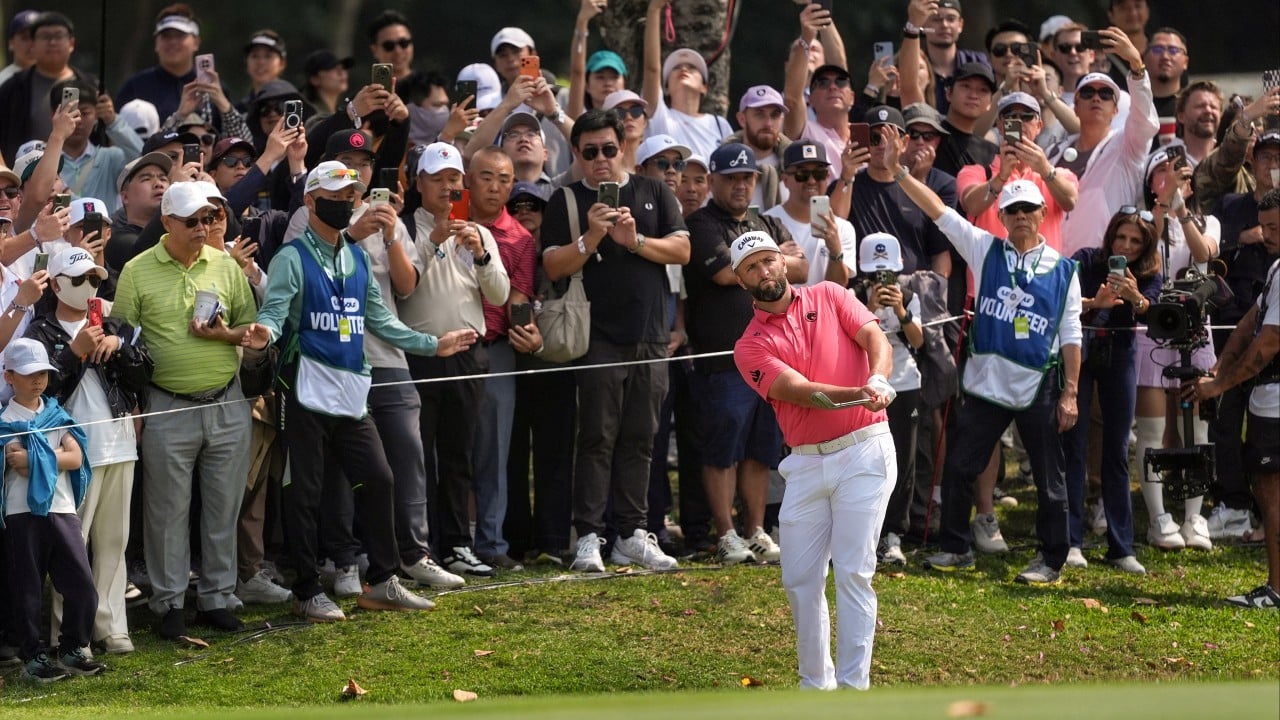
A "bumper crowd" at Fanling doesn't mean what the league wants you to think it means. The sports media machine is currently obsessed with the visual of a few thousand fans packed into the Hong Kong Golf Club, desperate to frame it as a turning point for the Greg Norman-led venture. They see a three-way playoff and a roar from the gallery and scream "validation."
They are wrong. They are measuring the wrong metrics, asking the wrong questions, and ignoring the structural decay hiding behind the pyrotechnics.
Fan attendance in a city starved for international sporting events is a low bar. It is the easiest box to tick. If you bring world-class athletes to a geography that has been largely isolated from global circuits for years, people will show up. That isn't a business model; it’s a circus coming to town. The real question isn't whether Hong Kong likes a party. The question is whether the party can ever become a self-sustaining ecosystem.
The Attendance Trap
The competitor narrative suggests that because the gallery was thick and the atmosphere was electric, LIV has finally "arrived" in Asia. This is a fundamental misunderstanding of how sports rights and long-term viability work.
I have spent decades watching leagues attempt to buy relevance. You can subsidize a "vibe" for a weekend. You can pour hundreds of millions into appearance fees and music stages to ensure the cameras capture a smiling crowd. But a crowd is not a customer base.
- The Ticket Giveaway Reality: In many of these emerging markets, "sold out" or "record crowds" often hide a massive volume of corporate hospitality giveaways and heavily discounted papering of the house.
- The Novelty Factor: Hong Kong is a high-density, event-hungry market. Using a one-off weekend spike to project the health of a global tour is like judging a restaurant’s long-term prospects based on its opening night free-buffet turnout.
The "bumper crowd" is a vanity metric. If you want to know if LIV is actually ticking boxes, look at the broadcast rights. Look at the local sponsorship depth. In Hong Kong, the money is still flowing out of the PIF coffers, not into the league’s balance sheet from external partners. Until the cash flow reverses, the size of the crowd is just an expensive wallpaper.
The Three-Way Fight That Nobody Can Trace
The media keeps pushing the "drama" of the final day. A three-way fight! A playoff!
Here is the brutal truth: High-stakes drama requires a narrative arc that spans more than 54 holes. The reason the Masters or the Open Championship feels heavy is the weight of history and the grueling nature of the 72-hole test.
LIV’s format is designed for the TikTok era—short, fast, and loud. But by shortening the test, they have inadvertently lowered the stakes. When every event is a sprint and the "teams" are arbitrary brands with no geographic or historical roots (what exactly is a Cleek?), the drama is manufactured.
Imagine a scenario where a golfer wins $4 million in a playoff but the average viewer can’t tell you how many points his team earned or why it matters for the season standings. That isn't a sport; it’s an exhibition. The "three-way fight" in Hong Kong was a display of great golf, certainly, but it lacked the "soul" that converts a casual channel-flipper into a die-hard fan.
The Asian Tour Cannibalization
The narrative often ignores the collateral damage. By planting a flag in Hong Kong, LIV claims to be "growing the game" in Asia.
Is it? Or is it simply suffocating the existing infrastructure?
The Asian Tour was already the underdog. By siphoning off the top talent and forcing a wedge between traditional pathways and the LIV ecosystem, the league is creating a top-heavy monopoly that does nothing for the local pro playing in Thailand or South Korea.
If you want to grow golf in Asia, you build academies. You fund junior tours. You create a sustainable path to the elite level. Dropping a billionaire’s playground into Fanling for three days and then flying the private jets out on Monday morning isn't growth. It’s a raid.
The Fallacy of the Team Concept
The "box" that LIV is most desperate to tick is the viability of its team model. They want these franchises to be valued like the Cowboys or the Yankees.
In Hong Kong, the broadcast spent an inordinate amount of time trying to make us care about the Fireballs or the Crushers.
It’s not working.
Real sports teams are built on one of two things:
- Geography: I support them because I live there.
- Legacy: I support them because my father did.
LIV has neither. By attempting to manufacture "tribalism" through neon logos and catchy names, they are fighting against a century of sports psychology. The "bumper crowd" in Hong Kong didn't show up to support the Smash GC. They showed up to see Brooks Koepka.
When the players inevitably age out or their contracts expire, the "team" has zero residual value. This is the structural flaw that no amount of Hong Kong gallery noise can drown out.
Why the Data Tells a Different Story
Let’s talk about the "Reach" vs. "Frequency" problem.
LIV supporters point to YouTube views and social media clips as proof of disruption. But if you analyze the data, the "Frequency"—the number of people who return week after week to watch an entire broadcast—remains stagnant.
In Hong Kong, the local interest was high. But the global "appointment viewing" metrics tell a story of a niche product struggling to break into the mainstream. You cannot build a global sports empire on the back of people who "might" watch a highlight on X. You build it on the back of people who will pay for a subscription.
LIV is currently a product with high awareness but low intent. Everyone knows what it is; very few people are willing to change their Sunday plans to watch it.
The Counter-Intuitive Truth About "Ticking Boxes"
The competitor article claims LIV is ticking boxes. I argue they are just drawing new boxes around things they’ve already done and calling it progress.
- Box: Star Power. Ticked years ago, but the stars are getting older.
- Box: Innovation. Music on the range isn't innovation; it’s a distraction.
- Box: Global Footprint. Flying to different countries is easy when you have an infinite fuel budget.
The only box that matters for the long-term survival of the sport is Integration.
As long as LIV exists as a rebel state, separate from the world rankings and the historical heartbeat of the game, it is a closed loop. A closed loop eventually runs out of energy. The Hong Kong event was a high-energy pulse, but it didn't change the physics of the situation.
The PGA Tour and DP World Tour are currently in a stalemate with PIF. The irony? The more LIV "succeeds" in markets like Hong Kong, the less likely a merger becomes, because the ego on both sides grows. The fan loses. The "three-way fight" we saw was a beautiful display of skill, but it took place in a vacuum.
The Strategy for Real Disruption
If LIV actually wanted to disrupt the status quo, they would stop trying to mimic the PGA Tour with "teams" and start leaning into what they actually are: an elite, high-stakes, short-form tour that feeds into the Majors.
Instead of trying to prove they have "bumper crowds," they should be proving they have the best golfers. But when your players are slide-tackling each other in the world rankings because they can't earn points, the "best golfer" claim becomes impossible to defend.
The Hong Kong crowd was a mirage. It was a local appetite for a global event, not a global appetite for a new league.
Stop looking at the gallery. Look at the ledger. Look at the lack of non-PIF sponsors. Look at the aging curve of the marquee names.
Golf doesn't need more "boxes ticked" by PR departments. It needs a unified structure where the results in Hong Kong actually matter on the Monday morning after the trophies are handed out. Right now, they don't.
The fans in Fanling had a great time. But don't mistake a good party for a healthy industry. The hangover is coming, and no amount of "bumper crowds" will fix the underlying math.