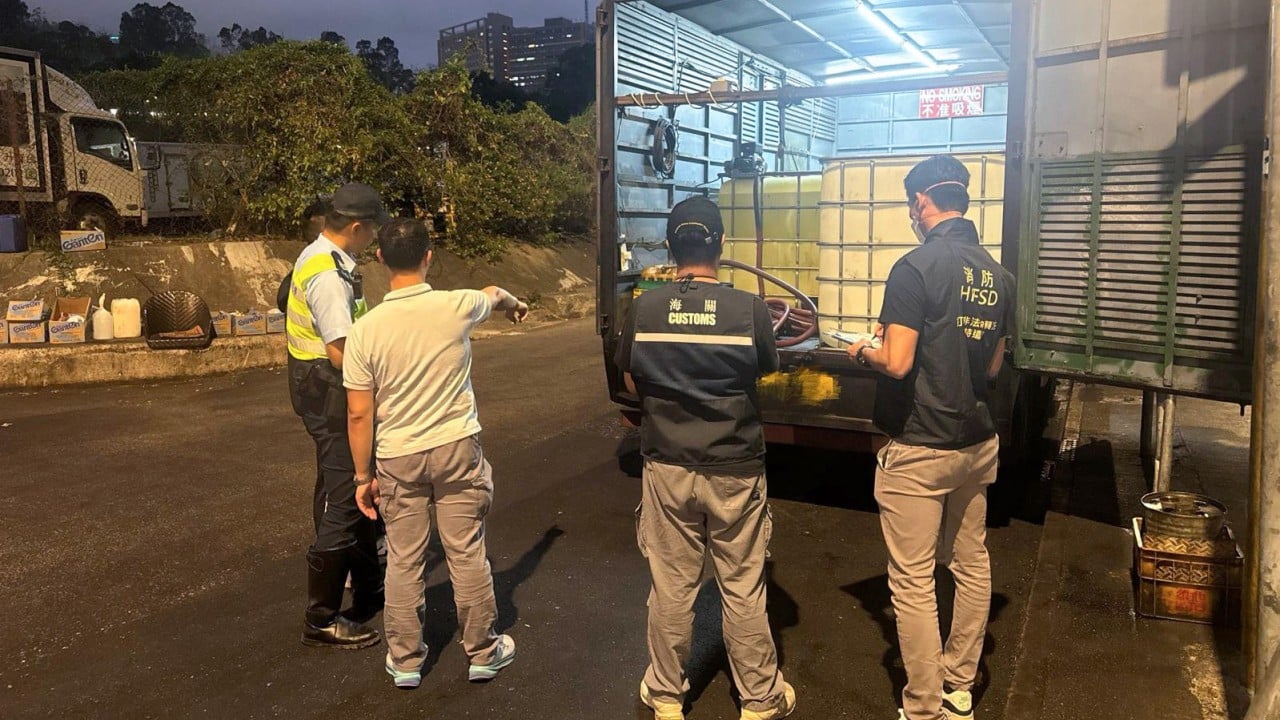
You’ve seen the lines at the pump. Maybe you’ve even winced while tapping your Octopus card as the total climbs past HK$1,500 for a single tank. With premium unleaded petrol hitting record highs of HK$32.89 per liter in early 2026, it’s no wonder some drivers are looking for a back-alley deal. But the government’s patience has officially run out. Hong Kong is tightening the screws on a thriving black market for "shadow fuel" that isn't just about tax evasion—it's becoming a genuine public safety nightmare.
The math is simple and brutal. When pump prices soar, the profit margin for smugglers expands. Right now, the price gap between legitimate stations and illicit mobile tankers is so wide that syndicates are willing to risk everything. They’re bringing in untaxed motor spirit from mainland China, often using cross-border trucks with illegally modified, oversized tanks. It’s an "ant-moving-home" strategy that has flooded industrial estates in Kwai Chung and Yuen Long with cheap, dangerous petrol.
The true cost of cheap petrol
If you think buying illegal fuel is a victimless crime against the Treasury, think again. These makeshift "petrol stations" are often nothing more than a van packed with plastic drums and a hand-cranked pump. They operate in densely populated residential areas and cramped industrial buildings. Last month, a truck fire in Kwai Chung—suspected to be a mobile fueling site—nearly took out a neighboring warehouse.
There are no fire extinguishers here. There’s no vapor recovery system. Just one stray cigarette or a spark from a faulty battery, and you’ve got a massive explosion in the middle of a city where people live and work.
Hong Kong’s Commissioner of Customs and Excise, Chan Tsz-tat, recently made it clear: the gloves are off. In 2025 alone, enforcement cases involving illegal fueling stations jumped by 1.6 times compared to the previous year. Customs seized over 96,000 liters of illicit motor spirit. But the numbers for early 2026 are looking even worse as geopolitical tensions in the Middle East continue to drive global oil prices through the roof.
How the crackdown is changing
In the past, the government mostly went after the operators. You’d see a raid, a few drums seized, and a fine. That didn't work. The syndicates just viewed those fines as a cost of doing business. Now, the strategy is shifting toward total asset forfeiture and targeting the customers directly.
Vehicle seizures are the new standard
If you’re caught filling up at an illegal site, you won't just get a slap on the wrist. Authorities are now aggressively using the Dutiable Commodities Ordinance to seize the vehicles involved. This applies to both the seller and the buyer. Imagine losing your HK$500,000 van because you wanted to save HK$400 on a tank of diesel. It’s a terrible trade-off.
Joint task forces
We’re seeing a much higher level of cooperation between Hong Kong Customs, the Fire Services Department (FSD), and the Police. Operation "Knockout," which ran earlier this year, proved that hitting multiple sites simultaneously is the only way to disrupt these networks. They aren’t just looking for fuel; they’re looking for land lease breaches and fire safety violations to shut these locations down permanently.
Why pump prices stay so high
You might be wondering why we’re in this mess to begin with. Why is Hong Kong petrol consistently the most expensive in the world? It’s a mix of bad luck and structural issues that the government is only now starting to address under public pressure.
- Fixed Fuel Tax: Unlike other cities that might lower taxes when global prices spike, Hong Kong’s fuel tax is a fixed amount per liter. It doesn't budge.
- Land Costs: Most of what you pay at the pump goes toward the astronomical rent for the petrol station land, which is auctioned off by the government.
- The Transparency Gap: Critics and lawmakers have long complained about "price collusion." Prices at the big oil companies seem to rise instantly when crude oil goes up but take weeks to trickle down when prices drop.
There’s a growing movement led by the Hong Kong, China Automobile Association to introduce 95-octane petrol. Currently, Hong Kong only offers 98-octane premium fuel, which most economy cars don't even need. Giving drivers a cheaper, lower-octane option would likely kill off a huge chunk of the illegal market overnight.
What happens if you get caught
Don't ignore the legal risks. Possession or sale of illicit motor spirit carries a maximum penalty of a HK$1 million fine and two years in prison. Even if you don't go to jail, having a criminal record for tax evasion will ruin your ability to work in many sectors in Hong Kong.
The Fire Services Department is also handing out fines of up to HK$100,000 for the illegal storage of dangerous goods. If you’re a repeat offender, that fine doubles, and you’re looking at six months of jail time.
Protect yourself and your community
The temptation to save money is real, especially when the cost of living in Hong Kong is already squeezing everyone dry. But the "savings" from illegal fuel come with a massive side of risk. You’re putting your vehicle’s engine at risk with contaminated, low-quality fuel, and you’re funding organized crime syndicates that don't care if your neighborhood burns down.
If you see suspicious fueling activity—usually vans or trucks parked in weird spots with long hoses—don't just walk past. Use the Customs 24-hour hotline at 182 8080 or the Fire Services Department’s electronic complaint portal.
Stop looking for the cheap fix. It’s time to lean on the government to fix the actual market structure and bring in 95-octane fuel so we can all afford to drive without breaking the law. Keep your receipts from legitimate stations; they're your only proof that you're playing by the rules if Customs ever pulls you over for a spot check.