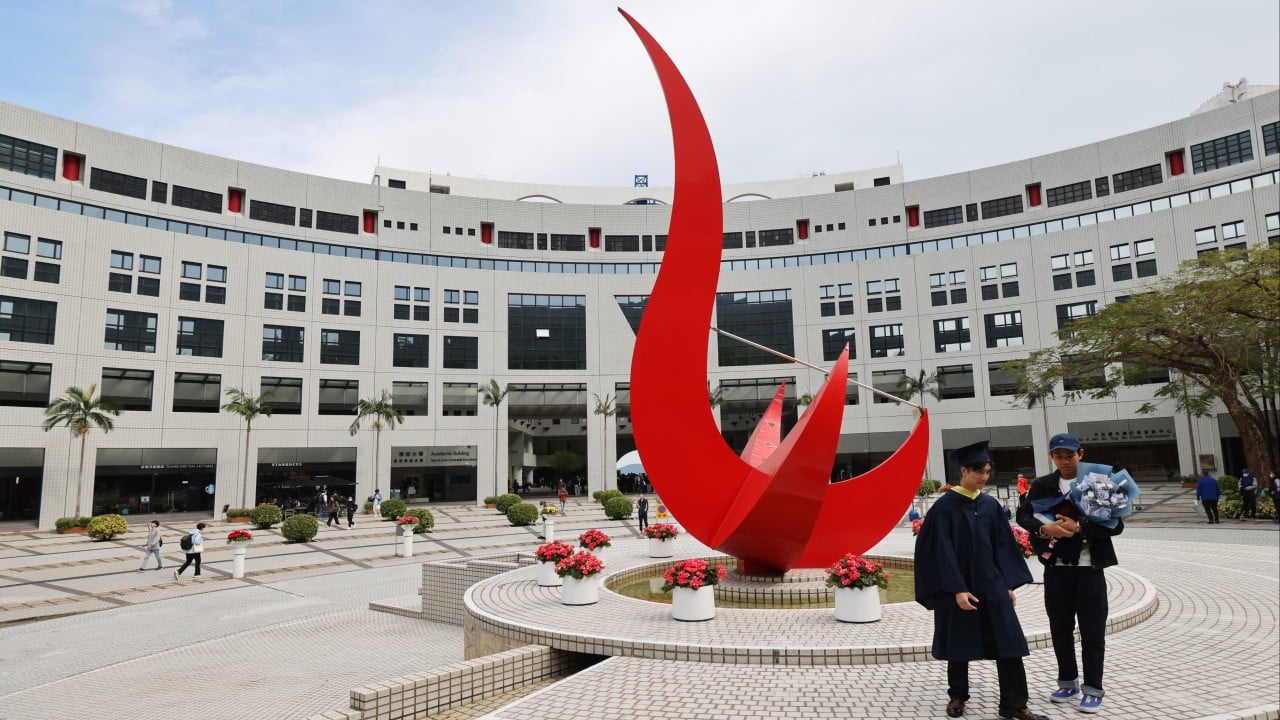
The headlines are predictable. HKUST is floating a plan to reserve 20% of its inaugural medical school seats for non-local students. The public discourse is already spiraling into a tired debate about "stealing spots" from local kids or "fixing the doctor shortage."
Both sides are wrong. For an alternative look, read: this related article.
The "doctor shortage" in Hong Kong is a structural myth, and the 20% quota isn't a gesture of internationalism. It is a desperate hedge against a local education system that is failing to produce the kind of polymaths required for the next century of medicine. We aren't short on bodies in white coats; we are short on the right kind of intellects. By focusing on the 20% non-local figure, we are ignoring the 80% of local talent that is being funneled into a pedagogical meat grinder.
The Myth of the Numbers Game
Hong Kong currently has a doctor-to-population ratio of about 2.1 per 1,000 people. Compare that to the OECD average of roughly 3.6. The "lazy consensus" says: build a third school, crank out more graduates, and the waiting times at Queen Mary Hospital will magically vanish. Similar analysis regarding this has been published by Mayo Clinic.
It won't work.
Throwing more junior doctors into a dysfunctional, top-heavy public healthcare system is like pouring water into a bucket full of holes. The issue isn't recruitment; it's retention and distribution. We have enough doctors; we don't have enough doctors who want to work for the Hospital Authority under conditions that resemble a Victorian-era workhouse.
If HKUST simply mimics the curriculum of HKU or CUHK, they aren't solving a crisis. They are just subsidizing the private sector's future workforce. The real "shortage" is in primary care and chronic disease management—specialties that ambitious medical students avoid because the prestige and the paycheck lie in high-tech intervention and private aesthetics.
Why 20% Non-Local is Too Low
The pushback against non-local students is rooted in a provincialism that Hong Kong can no longer afford. The "localism" argument suggests that a student from Kowloon is inherently more valuable to the healthcare system than a brilliant graduate from Singapore, London, or Shanghai.
This is a fantasy.
Medicine is no longer just about memorizing the Gray’s Anatomy. It’s about biotechnology, AI integration, and cross-border research. By capping non-local intake at 20%, HKUST is voluntarily diluting its own excellence. In a truly meritocratic world, the quota should be zero—meaning the best 200 candidates get in, regardless of where their passport was issued.
If 50% of the best applicants are non-local, you take them. Why? Because the presence of elite international talent forces local students to level up. It breaks the "Big Brother" culture of local medicine where seniority is valued over innovation. I have seen hospital departments stagnate for decades because they only hire from their own alumni networks. It breeds intellectual incest.
The "Second Degree" Savior
HKUST is signaling a preference for "graduate-entry" students—those who already have a degree in another field. This is the only part of their plan that actually makes sense, and yet it's the part the public is ignoring.
The traditional 18-year-old medical student in Hong Kong is an exam-taking machine. They have spent their lives optimizing for the DSE. They are brilliant at following rules and terrible at breaking them. But modern medicine requires people who understand data science, ethics, and engineering.
A student who spent four years studying Bioengineering at MIT or Philosophy at Oxford before entering medical school is worth five "straight-A" high schoolers. They bring a cognitive diversity that is currently non-existent in the wards of Prince of Wales Hospital.
The "contrarian truth" here is that we should be actively discouraging 18-year-olds from entering medicine. We are forcing children to make a lifelong commitment to a high-stress profession before they’ve even had a legal drink. That is a recipe for the very burnout that is currently gutting our public hospitals.
The Economic Betrayal
Let’s talk about the money. Training a doctor in Hong Kong costs the taxpayer millions of dollars. When a student graduates and immediately jumps to a lucrative private practice in Central after their internship, that is a failed ROI for the public.
If HKUST wants to be "bold," they shouldn't just talk about quotas. They should talk about service bonds.
You want a spot in the new medical school? Fine. In exchange for the world-class education and the 80% subsidy, you sign a ten-year contract to the public sector. If you want out early, you buy yourself out at the full market rate of your education.
The current system is a massive wealth transfer from the average taxpayer to the future wealthy elite. Reserving 20% for non-locals—who will likely pay higher fees and are often more mobile—is actually a smarter fiscal move for the university, but it doesn't solve the equity problem for the person waiting 18 months for a hip replacement.
The Infrastructure Lie
Building a medical school isn't just about classrooms and a fancy new building in Clear Water Bay. It’s about clinical placement.
Hong Kong’s teaching hospitals are already bursting at the seams. You cannot simply "add" 200 students a year without degrading the quality of training for everyone else. Where will these students see patients? Which consultants will have the time to supervise them when they are already handling 60 patients in a four-hour clinic?
The competitor’s article misses the logistical nightmare. If HKUST doesn't secure a dedicated teaching hospital—one that isn't already cannibalized by HKU or CUHK—they are selling a second-rate clinical experience. We are at risk of creating a "diploma mill" for doctors where the theoretical knowledge is high, but the "bedside" hours are dangerously low.
The Brain Drain Double-Standard
There is a loud outcry about non-locals "taking spots and leaving." This ignores the reality that our own local graduates are leaving in record numbers.
The "non-local" student who fights their way into a Hong Kong medical school is often more committed to staying than the local student who has a British passport in their back pocket. These international students see Hong Kong as a gateway to the GBA (Greater Bay Area) and a hub for Western-style medicine in Asia. They are the ones who will build the biotech startups and the private-public partnerships we claim to want.
Stop treating non-local students as "tourists." Treat them as "investors."
Stop Asking the Wrong Question
The question isn't "Should HKUST have a 20% non-local quota?"
The question is "Why are we building a third medical school using a 20th-century model?"
If we wanted to disrupt healthcare, we wouldn't be arguing about intake percentages. We would be:
- Abolishing the 6-year undergraduate model in favor of a mandatory 4-year graduate-entry system to ensure emotional and intellectual maturity.
- Integrating the GBA immediately, allowing students to do clinical rotations in Shenzhen to see a volume of cases that Hong Kong simply cannot provide.
- Ending the protectionist gatekeeping of the Medical Council, which makes it harder for qualified non-local doctors to practice here than it is for them to move to Australia or the UK.
We are rearranging deck chairs on the Titanic. HKUST's medical school is a shiny new deck chair, and the 20% quota is just a bit of fresh paint. Unless the entire philosophy of how we train, retain, and utilize medical talent changes, we aren't "addressing the shortage." We are just creating more over-qualified, burnt-out professionals who will eventually flee to the private sector or overseas.
The third medical school should be an experimental lab for the future of health, not a desperate attempt to fix a headcount problem that doesn't actually exist. If you want to save Hong Kong's healthcare, stop looking at the student intake and start looking at the hospital exit.
Go ahead, build the school. Fill it with whoever is smartest, regardless of their birthplace. But don't pretend for one second that this solves the crisis for the grandmother waiting three years for a cataract surgery in Tuen Mun. That crisis is a choice made by administrators, not a shortage of students.
Stop protecting the "local" spot and start protecting the patient. They aren't the same thing.