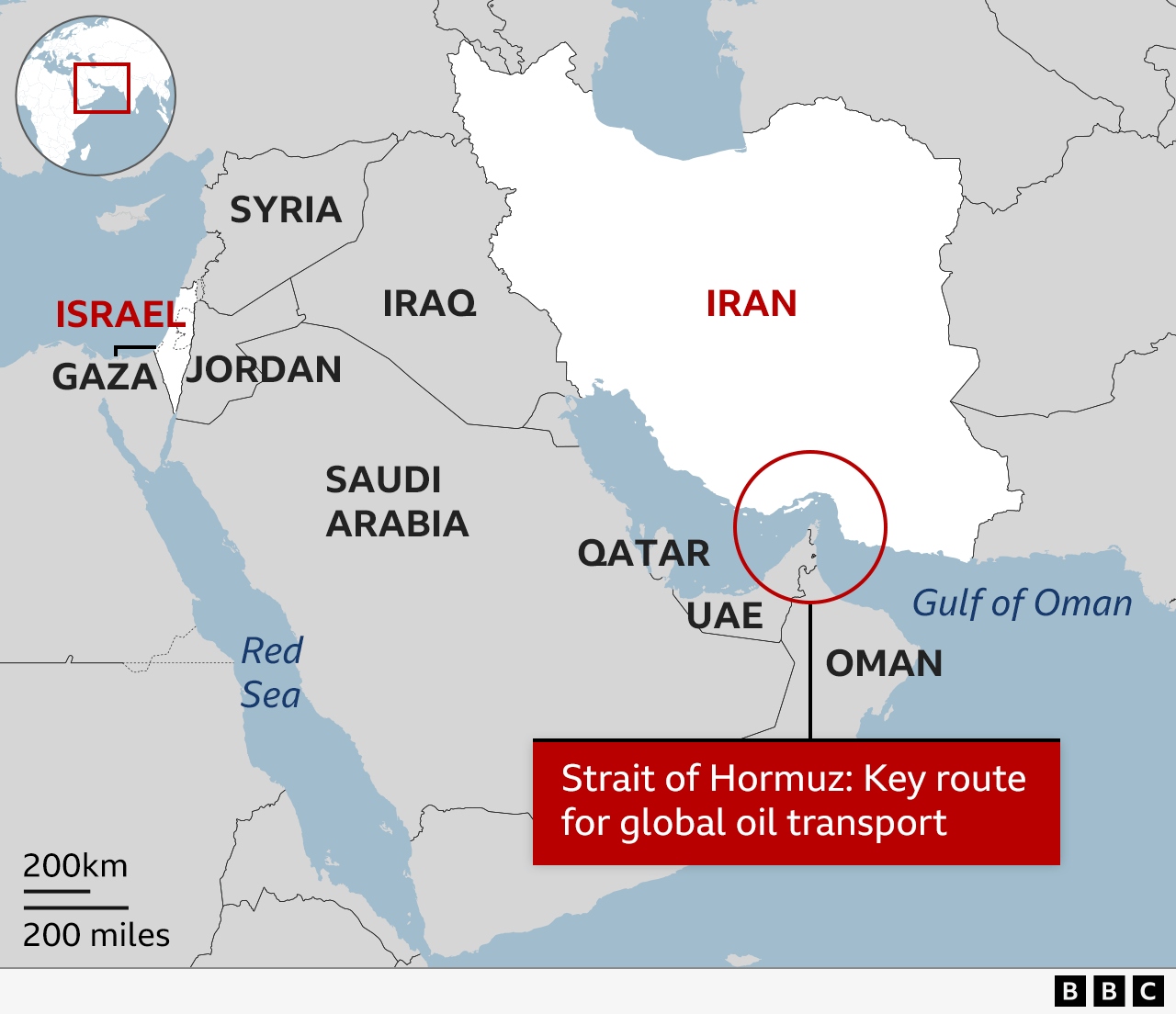
You’ve heard the "America First" rhetoric for years, but Donald Trump’s latest move in the Strait of Hormuz is more than a slogan. It's a chokehold. By launching a naval blockade on Iranian ports, the U.S. isn't just targeting Tehran’s wallet; it's effectively putting a gun to the head of the world's most energy-dependent economies. If you’re sitting in Beijing or New Delhi right now, the view looks grim.
The math is simple and terrifying. About 20% of the world's oil and nearly a fifth of its liquefied natural gas (LNG) pass through that narrow strip of water. Since the blockade began on Monday at 5:30 p.m. Iranian time, the rules of the game have changed. While the U.S. claims it's only stopping ships tied to Iran, the reality on the water is chaotic. Any vessel in those waters is now navigating a literal minefield of geopolitical tension.
The China Trap and the End of Cheap Energy
China is the world's largest importer of Iranian crude. For years, Beijing played a clever game of ignoring U.S. sanctions, using "dark fleets" and ship-to-ship transfers to keep the oil flowing. That era is over. Trump has made it clear that "fast attack ships" and sanctioned tankers like the Rich Starry—a vessel linked to China—are in the crosshairs.
China has been stockpiling oil like crazy, but even a massive reserve only buys you a few months. When that runs out, the world's factory starts to sputter. I've seen analysts suggest this could push China to accelerate its nuclear and renewable plans even faster, but you can't build 23 nuclear reactors overnight. In the short term, they’re stuck. They either risk a direct naval confrontation with the U.S. or watch their energy costs go through the roof.
India's Indirect Nightmare
India's situation is different but equally painful. While New Delhi hasn't been buying much Iranian oil lately, it’s heavily dependent on the other stuff coming through Hormuz. I'm talking about LPG and LNG. About 60% of India's domestic gas consumption is imported, and 90% of those imports usually transit through the Strait.
If you're an Indian consumer, this isn't some abstract foreign policy debate. It’s the reason why your LPG cylinder takes longer to arrive and costs more when it does. The government is already rationing supply for commercial use. Beyond the gas, there's the human element. Over 8 million Indians work in the Gulf. Any sustained conflict that destabilizes the region threatens the $100 billion in remittances that flow back to India every year. That’s a massive hole in the national budget that nobody's talking about enough.
The $5 Gas Warning
Iran’s Parliament Speaker, Mohammad Bagher Ghalibaf, didn't mince words when he told the U.S. to "enjoy the current pump figures." He’s betting that American voters will lose their appetite for this blockade when gas hits $5 or $6 a gallon. Trump, on the other hand, is gambling that U.S. domestic production can fill the gap.
It’s a bad bet. American crude isn't a "one-for-one" swap for the heavy sour crude that comes out of the Middle East. Refineries in Asia are built for specific types of oil. You can't just flip a switch and process Texas light sweet crude in a plant designed for Iranian heavy.
The False Promise of Neutral Shipping
The U.S. Central Command says neutral ships won't be impeded. Don't believe it. In a blockade, "neutral" is a flexible term. The UK Maritime Trade Operations has already told seafarers to maintain "heightened situational awareness." Basically, they’re saying: "Enter at your own risk."
We've already seen ship movements drop from 135 a day to single digits. When insurance premiums for tankers skyrocket, it doesn't matter if the U.S. Navy lets you through. The cost of the trip becomes so high that nobody wants to make it. This is a de facto shutdown of the world's most important energy artery.
What Happens Next
If you're an investor or just someone worried about the global economy, don't wait for a "peaceful resolution" that might not come. The Islamabad talks failed for a reason: neither side thinks they can lose.
- Watch the LPG markets. This is the first place where the average consumer in Asia will feel the pinch.
- Look at the "Dark Fleet" movements. If China continues to push tankers through the blockade, we’re looking at a potential naval skirmish.
- Diversify your energy exposure. If you're running a business dependent on transport or plastics, your input costs are about to become a rollercoaster.
The U.S. is betting that Iran will blink first. Iran is betting that the global economy—and the American consumer—will break first. It's a high-stakes game of chicken where China and India are the ones tied to the tracks.