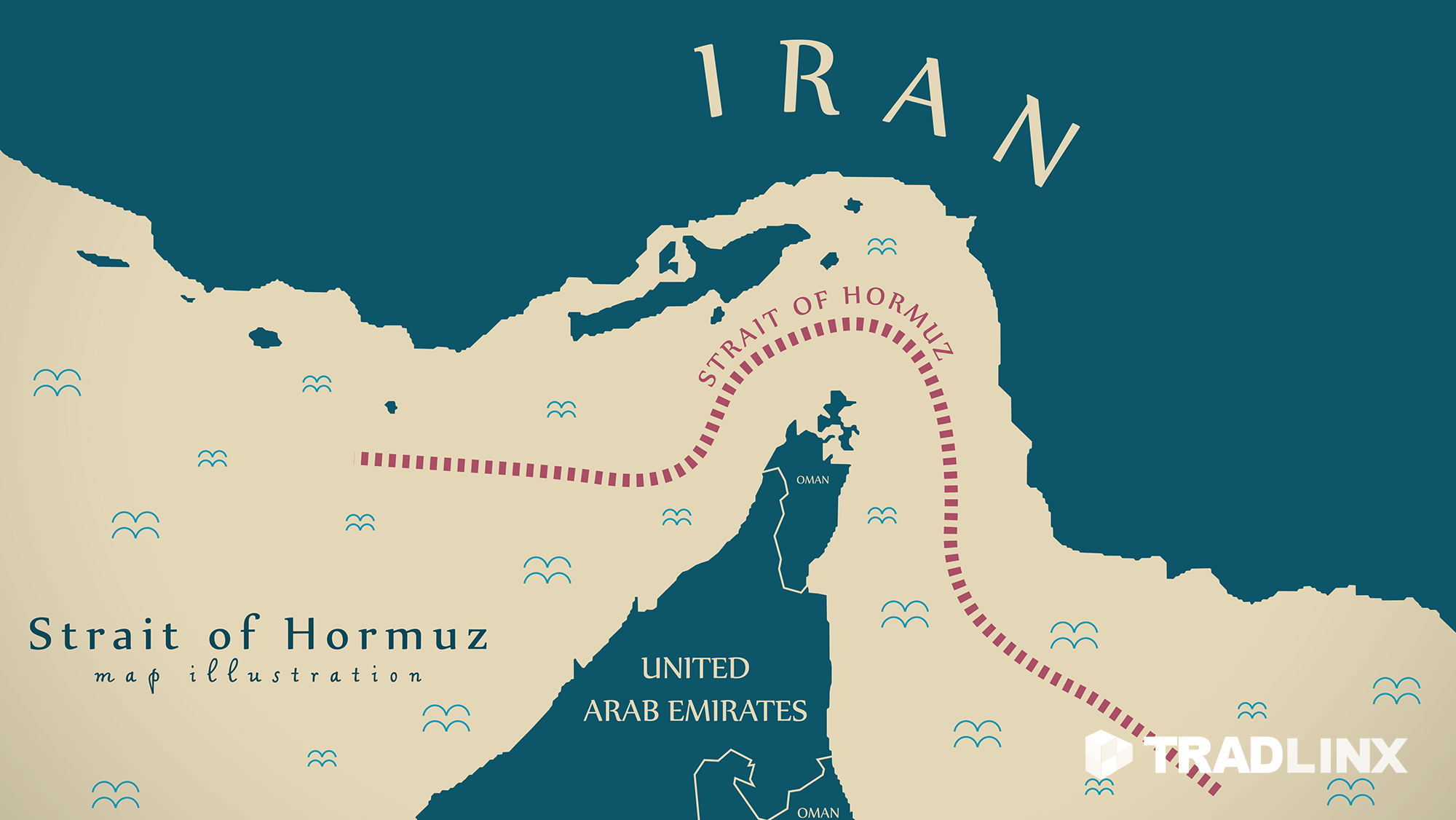
The headlines are predictably frantic. A ship gets tapped by a "projectile" in the Strait of Hormuz, and the British military issues a bulletin that sends insurance premiums ticking upward. The media treats this like the start of a global cardiac arrest. They want you to believe we are one drone strike away from a total collapse of global trade.
They are wrong.
The obsession with "security incidents" in the Strait of Hormuz is a relic of 1970s thinking. We are watching a choreographed theater piece, not a strategic crisis. If you’re tracking every minor kinetic event in these waters, you aren’t monitoring the pulse of global trade; you’re falling for a distraction.
The Myth of the Chokehold
Most analysts treat the Strait of Hormuz as a fragile glass neck. Break it, and the world dies. This "lazy consensus" ignores how much the world has actually hedged against this specific risk over the last forty years.
When the British United Kingdom Maritime Trade Operations (UKMTO) reports an incident, the market reacts with a Pavlovian flinch. But look at the math. In the 1980s "Tanker War," hundreds of ships were hit. Global oil supply stayed remarkably resilient. Today, the infrastructure for bypass—Saudi Arabia’s East-West Pipeline and the UAE’s Habshan-Fujairah line—can move millions of barrels per day directly to the Indian Ocean, skipping the Strait entirely.
The "chokepoint" is now a "filtering point." It is an inconvenience, not an existential threat. The real danger isn't a ship getting hit by a low-tech drone; it’s the massive misallocation of capital by firms that overreact to these headlines.
The Insurance Grift
The primary beneficiaries of these projectile reports aren't the navies or the "shadow fleets"—it’s the London insurance markets. Every time a UKMTO alert goes out, "war risk" premiums spike.
I’ve sat in rooms with commodity traders who pray for these minor skirmishes. Why? Because volatility is a product. If the Strait were actually closed, the game would end. But as long as it’s "dangerous" but "open," the fees keep rolling in.
- Fact: A projectile hitting a hull rarely sinks a modern double-hulled tanker.
- Reality: The cost of the paperwork resulting from the hit is often higher than the physical repair.
- Truth: We are pricing in the idea of conflict, not the conflict itself.
We have reached a point where the signal-to-noise ratio is so skewed that the "threat" is more valuable than the actual cargo.
The Shadow Fleet Paradox
The mainstream media loves to talk about the "threat to international shipping." They ignore the fact that a massive percentage of the ships currently transiting these waters are part of the "shadow fleet"—vessels with opaque ownership, questionable flagging, and non-Western insurance.
When a "projectile" hits a ship, the first question shouldn't be "Who fired it?" The first question should be "Who actually owns the hull?"
Frequently, these incidents target ships that are part of a complex, back-channel energy trade. The Western world views these attacks through a Westphalian lens of state-on-state aggression. In reality, it’s often "enforcement" of illicit trade terms. It’s a debt collection move, not a declaration of war. By treating these as "international security crises," we provide free PR for regional actors who are simply trying to manage their black-market accounts.
Stop Asking if the Strait is Safe
People always ask: "Is the Strait of Hormuz still safe for shipping?"
This is the wrong question. It assumes "safety" is a binary state. The Strait is never safe; it is a contested zone of high-frequency friction. The right question is: "Why are we still pretending this specific 21-mile-wide strip of water determines the fate of the 21st-century economy?"
The pivot toward the Atlantic and the rise of American shale have fundamentally decoupled the U.S. from the Hormuz anxiety. The entities that should be panicking—China and India—are the ones staying the quietest. They know that a total shutdown would hurt them more than anyone, yet they aren't the ones issuing the frantic "projectile" reports.
The Tactical Irrelevance of Drones
The British military likes to categorize these events with clinical precision. "Suspicious craft," "uncrewed aerial systems," "unidentified projectiles." It sounds sophisticated. It isn’t.
We are seeing the democratization of harassment. A $2,000 drone hitting a $100 million ship is the ultimate asymmetric flex. But a flex is not a knockout punch. It’s a mosquito bite on an elephant.
The Industry Blind Spot: Cyber vs. Kinetic
While everyone is staring at grainy footage of smoke on a deck, the real threat to the Strait remains ignored. You don't need to hit a ship with a missile to stop it. You just need to spoof its GPS or compromise its automated ballast systems.
A kinetic strike (a projectile) is loud, messy, and invites a PR backlash. A cyber intervention is quiet and far more effective at halting trade. The fact that we are still obsessing over physical projectiles shows just how outdated our maritime security "experts" really are. They are prepared for the 1940s in a 2020s world.
The Actionable Truth for Investors and Leaders
If you are a CEO or a fund manager, here is how you handle the next "Projectile in Hormuz" headline:
- Ignore the initial 24-hour price spike. It’s driven by algorithms and panic, not fundamentals. It almost always retraces.
- Look at the Suez and Panama throughput instead. The real bottlenecks in global trade are currently administrative and climatic, not ballistic.
- Audit your "war risk" exposure. Many companies are paying exorbitant premiums for a "threat" that hasn't actually stopped a single major trade flow in decades.
- Accept the "Friction Tax." These incidents are now a standard cost of doing business in the Middle East. If your margins can't handle a 5% increase in shipping costs for a week, your business model was already broken.
The Professional Deception
The most frustrating part of this cycle is the "expert" commentary that follows every UKMTO alert. These analysts are paid to make the world seem more dangerous and more complex than it is. They need the Strait to be a "powder keg" because powder kegs require consultants.
I have watched companies burn through millions in "risk assessment" fees every time a drone splashes near a tanker. Most of that money is wasted. You don't need a 50-page report to tell you that the Middle East is volatile. You need to realize that the volatility is already priced in.
The British military is doing its job by reporting the facts. The mistake is the rest of us treating those facts like they change the world. They don't. A ship was hit. It didn't sink. The oil is still flowing. The world didn't end.
Stop reading the play-by-play and start looking at the scoreboard. The game in the Strait is rigged for stalemate, and everyone involved—from the insurers to the regional powers—prefers it that way.
The next time a projectile flies, don't look at the ship. Look at the people telling you to be afraid. They’re the ones with their hands in your pockets.