The headlines are screaming again. Donald Trump promises retaliation "twenty times harder" if Iran touches the Strait of Hormuz. Pundits are dusting off their 1970s oil shock manuals. The "lazy consensus" dictates that a closure of this narrow waterway is the ultimate doomsday clock for the global economy.
They are wrong.
The obsession with the Strait of Hormuz is a relic of a geopolitical era that died a decade ago. We are currently witnessing the terminal stage of "petro-paranoia," where the threat of a supply disruption is far more potent than the actual disruption would be. If Iran actually followed through on its perennial threat to sink a few tankers in the Musandam Peninsula, it wouldn't break the world. It would accelerate the inevitable transition to a decentralized energy architecture that the incumbents are too terrified to embrace.
Stop asking if the global economy can survive a Hormuz closure. Start asking why we are still pretending it matters.
The Math of the 21 Million Barrels
Every "expert" citation starts with the same number: 21 million barrels of oil per day (bpd). That is the volume flowing through the Strait. It represents roughly 21% of global petroleum liquid consumption. The logic follows that if you remove 21% of the supply, the price of Brent crude hits $250, and Western civilization grinds to a halt.
This is a linear fantasy. It ignores the elasticity of modern supply chains and the massive strategic reserves held by the IEA member nations. The United States, once the hostage of Middle Eastern whims, is now the world’s largest producer. Between the Strategic Petroleum Reserve (SPR) and the sheer agility of Permian Basin fracking, the "shock" of a Hormuz closure has been pre-mitigated by the shale revolution.
Furthermore, the "blockade" itself is a tactical nightmare for Iran. You don't just "close" a 21-mile wide strait with a few mines and expect it to stay closed. The U.S. Fifth Fleet isn't sitting in Bahrain to play cards. Any attempt to physically obstruct the waterway would be met with a localized, kinetic response that would erase the Iranian Navy from the map in roughly 72 hours. The disruption would be a spike, not a plateau.
The Retaliation Trap
Trump’s rhetoric about "twenty times harder" retaliation is classic theater. It feeds the narrative that the Strait is a vital organ. In reality, the most effective retaliation wouldn't be a disproportionate bombing campaign; it would be the immediate and permanent redirection of global capital away from the region.
If Iran blocks the Strait, they aren't just hurting "the Great Satan." They are bankrupting their own customers—China, India, and Japan.
- China imports roughly 1.5 million bpd from Iran (often through "dark fleet" transfers).
- India relies heavily on the Persian Gulf for its energy-intensive manufacturing.
- The UAE and Saudi Arabia have invested billions in pipelines—like the Habshan–Fujairah line—to bypass the Strait entirely.
A blockade is an act of economic suicide that targets the very "Global South" allies Iran claims to champion. It is the ultimate "short" on their own future.
Why High Prices are the Catalyst We Need
Let's engage in a thought experiment. Imagine a scenario where the Strait is successfully blocked for sixty days. Oil prices double. The "consensus" says this is a catastrophe. I argue it is the ultimate market correction.
High prices are the only thing that drives efficiency at scale. When oil is cheap, we are lazy. When oil is expensive, the ROI on modular nuclear reactors, long-duration battery storage, and high-efficiency heat pumps goes through the roof. A Hormuz crisis would do more for global energy independence in three months than thirty years of toothless climate summits.
We’ve seen this before. I’ve watched energy companies dump billions into "safe" offshore projects in volatile regions because they were terrified of missing the next cycle. The smart money is already leaving. A blockade would just be the final signature on the divorce papers between the global economy and the Persian Gulf.
The Technological Obsolescence of the Chokepoint
The very concept of a "chokepoint" is becoming obsolete due to the digitization of energy. We are moving from a world of molecules (which must be moved through physical pipes and straits) to a world of electrons (which can be generated locally).
- Distributed Generation: You can’t blockade sunlight or wind.
- HVDC Lines: High-Voltage Direct Current cables are the new "straits." They move power across continents with minimal loss, bypassing physical naval bottlenecks.
- VPPs: Virtual Power Plants turn every home with a battery into a micro-utility.
The more Iran threatens the Strait, the faster the world builds the infrastructure that renders the Strait irrelevant. Iran is holding a gun to the head of a ghost.
Dismantling the "People Also Ask" Delusions
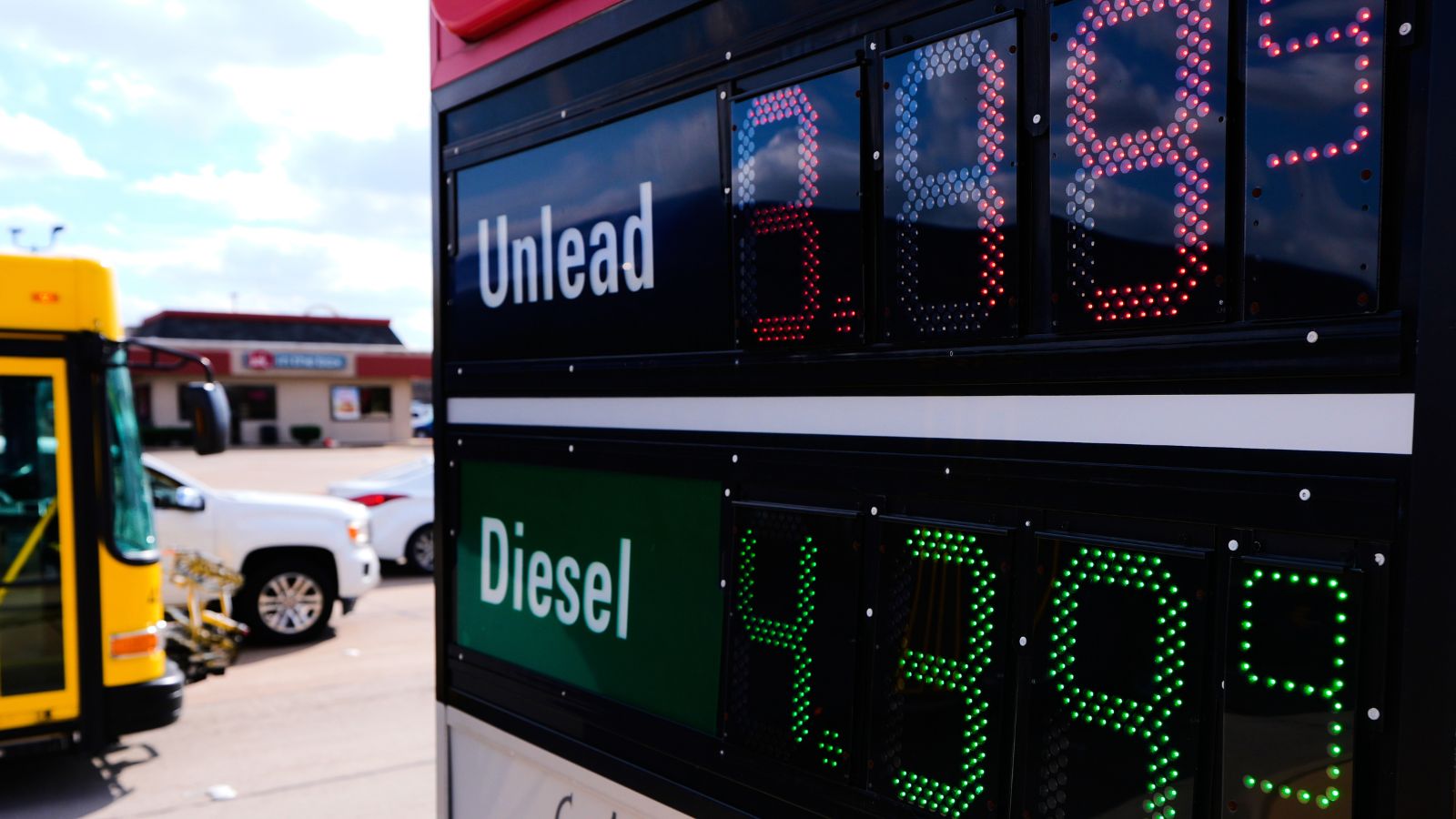
"Will gas prices hit $10 a gallon?" Maybe for a week. Then demand destruction kicks in. People stop driving, work-from-home becomes a patriotic duty again, and the massive glut of oil currently sitting in tankers outside the Strait begins to find its way through via alternative routes and pipelines. The market is a living organism; it reroutes around damage.
"Can the U.S. Navy keep it open?" The U.S. Navy doesn't even need to keep it "open" in the traditional sense. They only need to keep the transit corridor "contested." As long as insurance companies (Lloyd's of London, etc.) see a path for protected convoys, the oil will move. It will just be more expensive to insure.
"What happens to the dollar?" The "Petrodollar" is another favorite boogeyman. Skeptics claim a disruption would end the dollar's reserve status. Actually, in times of extreme volatility, capital flees to the dollar. A Hormuz crisis would likely cause a massive spike in the DXY as investors seek the only deep, liquid market left on the planet.
The Brutal Reality of Iranian Leverage
Iran’s leverage exists only as long as they don't use it. It is the "Fleet in Being" strategy. Once you lay the mines and fire the missiles, the mystery is gone. You are now in a hot war with a superpower and have alienated your only remaining trade partners.
The Strait of Hormuz is the world’s most expensive bluff.
We need to stop reacting to every tweet and every televised threat as if it's 1973. The world has changed. Our energy mix is diversifying. Our production is decentralized. Our resilience is higher than the doom-mongers want you to believe.
If the Strait closes, the world won't end. It will just get to work building the future a little bit faster.
Stop worrying about the blockade. Start worrying about why you’re still invested in a region that thinks a 21-mile stretch of water is a kill switch for the 21st century. It isn't. It’s just an obstacle. And we’re very good at moving obstacles.