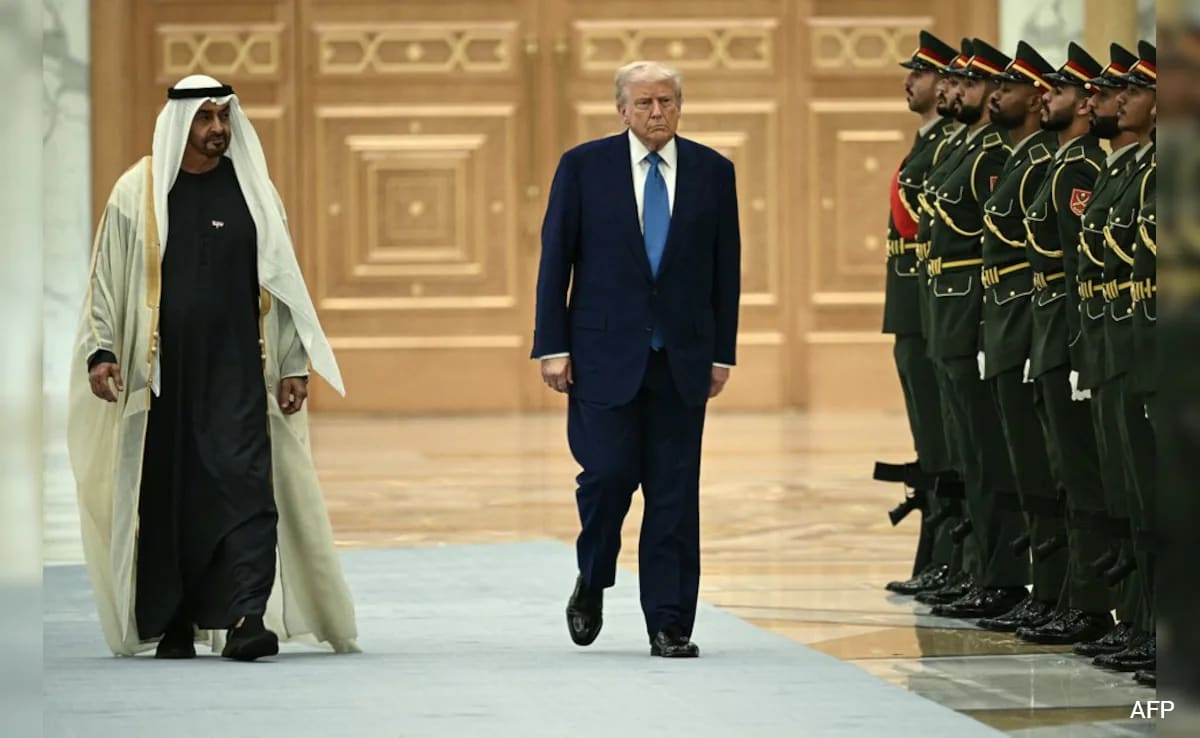
Western analysts are salivating over reports of Saudi and Emirati "boots on the ground" to secure the Strait of Hormuz. They see it as a shift in regional burden-sharing. They see it as the birth of a Middle Eastern NATO. They are completely wrong.
This isn't a strategic pivot. It's a high-stakes performance designed for a Washington audience that is increasingly tired of footing the bill for global energy security. If you believe the UAE or Saudi Arabia are actually prepared to wage a sustained, high-intensity naval and ground campaign against Iranian asymmetrical assets in the Strait, you haven't been paying attention to the last decade of kinetic failure in the region.
The Strait of Hormuz is the world’s most sensitive choke point. Roughly 20% of the world’s petroleum liquids pass through this narrow strip of water daily. The "lazy consensus" suggests that local powers, tired of Western vacillation, are finally ready to seize the sword. The reality is that these nations are fundamentally incapable of securing the Strait without the very US umbrella they claim to be supplementing.
The Myth of Regional Autonomy
The narrative of "Arab boots on the ground" ignores the basic physics of the Persian Gulf. You don’t secure the Strait of Hormuz with infantry. You secure it with integrated air defense systems, sophisticated minesweeping capabilities, and electronic warfare suites that can neutralize swarms of fast-attack craft.
Despite billions in defense spending, Gulf Cooperation Council (GCC) forces remain heavily reliant on Western contractors and intelligence. I’ve sat in rooms with defense attaches who admit privately that without US Link 16 data-sharing, regional coordination collapses in minutes.
The idea that the UAE or Saudi Arabia would deploy ground forces—presumably to occupy Iranian islands or coastal batteries—is a tactical suicide mission. Iran’s military doctrine is built entirely on "Anti-Access/Area Denial" (A2/AD). They have spent forty years perfecting the art of making the Gulf a graveyard for conventional surface vessels.
The Yemen Lesson Everyone Ignored
Look at Yemen. The Saudi-led coalition entered that conflict with overwhelming air superiority and some of the most expensive hardware on the planet. They were stalled by a motivated, indigenous force using relatively low-tech Iranian proxies.
Now, apply that to the Strait. The Iranian Revolutionary Guard Corps (IRGC) doesn't need a carrier strike group. They need thousands of smart mines, land-based anti-ship cruise missiles (ASCMs) hidden in the jagged cliffs of the Musandam Peninsula, and suicide drones.
If Riyadh and Abu Dhabi couldn’t decisively clear the Houthis from a neighboring land border, the notion that they can "force open" the world's most contested waterway against a professional state actor is pure theater. They aren't preparing for war; they are auditioning for a better defense treaty with the United States.
The Economic Suicide Pact
The biggest flaw in the "boots on the ground" argument is economic. The Gulf states aren't just protecting the oil; they are the oil. Any kinetic exchange in the Strait of Hormuz immediately skyrockets insurance premiums to the point where shipping becomes unviable.
Even a "successful" military intervention that results in a few sunken Iranian boats would cause a global price shock that would devastate the very markets the GCC needs to fund their "Vision 2030" style transformations.
If the UAE puts troops on islands near the Strait, they aren't deterring Iran; they are providing targets. Iran’s strategy is built on escalation dominance. They are willing to see the world burn because their economy is already isolated. The UAE, conversely, is a global hub for finance, tourism, and logistics. They have everything to lose. One missile landing near the Burj Khalifa ends the "Dubai Miracle" instantly.
The Missing Link: Asymmetric Vulnerability
Let’s talk about the hardware. The GCC has plenty of F-15s and Rafales. What they lack is the "boring" stuff that actually wins a naval war in a choke point:
- Mine Countermeasures (MCM): Iran has the largest mine inventory in the region. Clearing them takes weeks of slow, methodical work. During that time, the Strait is closed.
- Subsurface Warfare: The Gulf is shallow and acoustically noisy. It’s a nightmare for traditional sonar but a dream for Iran’s small, quiet Ghadir-class submarines.
- Human Capital: Deploying "boots" requires a level of casualty tolerance that these monarchies simply do not possess. In a tribal society, the political cost of dead soldiers is exponentially higher than in a Western democracy.
Why Washington Loves the Lie
The US foreign policy establishment keeps pushing this narrative because it justifies "offshore balancing." If the locals are "willing" to fight, the US can justify keeping fewer assets in the region while still selling billions in arms. It’s a convenient fiction for both sides.
The Gulf states pretend they are ready to lead to gain leverage. Washington pretends to believe them to appease a domestic electorate that wants to "bring the troops home." Meanwhile, the actual security of the energy supply remains as fragile as ever.
The Only Way Out
If you want to understand the real strategy, stop looking at the military deployments and start looking at the pipelines. The only way to "force open" the Strait of Hormuz is to make it irrelevant.
Saudi Arabia’s East-West Pipeline and the UAE’s Habshan-Fujairah pipeline are the only real security measures. Everything else—the talk of "boots," the joint naval exercises, the "willingness to act"—is a distraction.
Imagine a scenario where a localized skirmish leads to a single Iranian "swarm" attack on a GCC frigate. The GCC responds with an air strike on an Iranian port. Iran responds by mining the entire channel. Within 24 hours, global oil prices hit $250 a barrel. The global economy craters.
In this scenario, "boots on the ground" are useless. You cannot bayonet a naval mine. You cannot shoot a drone swarm with a tank.
The GCC knows this. They aren't stupid. They are playing a sophisticated game of "Defense Chicken" with the US. They want the Americans to think they are crazy enough to start a war, hoping it forces the US to stay and prevent one.
Stop Asking if They Can
The question isn't whether the UAE or Saudi Arabia is "willing" to put boots on the ground. The question is why we keep pretending that "boots" are the solution to a 21st-century A2/AD problem.
We are watching a 19th-century military solution being applied to a 20th-century geopolitical problem in a 21st-century technological environment. It is a recipe for catastrophe.
The next time you see a headline about regional powers "taking charge" of the Strait, remember: you aren't reading news. You're reading a brochure for an arms sale.
Real power in the Strait of Hormuz doesn't come from the number of soldiers you can stand on a beach. It comes from the ability to keep the insurance companies calm. And right now, the only thing keeping those companies calm is the presence of the US Fifth Fleet, regardless of how many Emirati or Saudi soldiers are standing in the sun.
The Gulf is a house of glass. Suggesting the residents start throwing stones—even with "boots" on—is the height of strategic illiteracy.