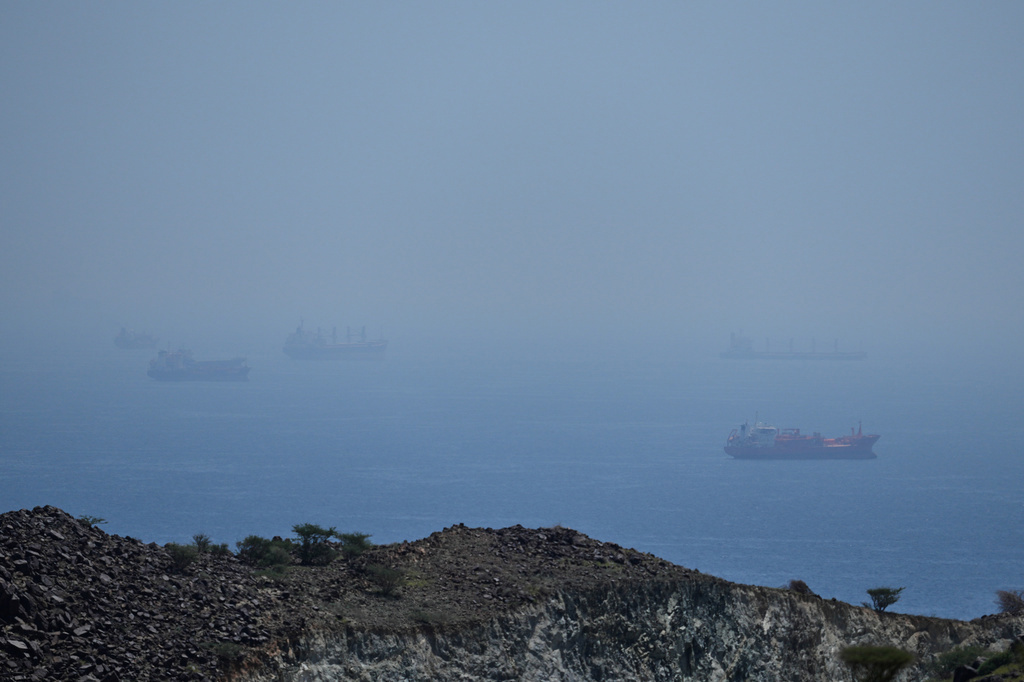
The smoke rising from the tankers in the Strait of Hormuz is not the byproduct of a chaotic accident. It is a signal. On April 18, 2026, the Islamic Revolutionary Guard Corps (IRGC) gunboats opened fire on Indian-flagged vessels near Larak Island, just hours after Tehran’s foreign ministry assured the world the waterway was open. This disconnect between Iranian diplomacy and its naval reality is not a failure of communication. It is a survival strategy by a regime that has seen its leadership decapitated and its nuclear infrastructure scorched by forty days of relentless U.S. and Israeli airstrikes.
The "why" behind the latest spike in maritime aggression is straightforward: Iran is out of traditional levers. Following the February 28 strikes that claimed the life of Supreme Leader Ali Khamenei, the new power structure in Tehran is fragmented. While Foreign Minister Abbas Araghchi attempts to project a veneer of stability to keep a fragile ceasefire alive, the IRGC is using the only remaining asset it has to force a lift of the U.S. naval blockade. By hitting commercial shipping, they are betting that the global economy’s intolerance for $150-a-barrel oil will eventually outweigh Washington’s appetite for regime change. If you liked this post, you should read: this related article.
The Breakdown of the Islamabad Framework
The recent failure of the talks in Pakistan serves as the immediate catalyst for this violence. Negotiators were reportedly close to a deal that would trade a halt in Iranian enrichment for a total lifting of sanctions. The talks collapsed on a single, intractable point: the status of the Strait of Hormuz. Washington demanded a permanent, internationalized security guarantee for the passage; Tehran viewed this as a surrender of its sovereign waters and its most potent defensive tool.
When the Islamabad talks dissolved without a signature, the Trump administration responded with a comprehensive naval blockade starting April 13. This move effectively strangled what was left of the Iranian economy. For the IRGC, the choice was to wither under the blockade or to make the blockade’s cost unbearable for the rest of the world. They chose the latter. For another angle on this development, refer to the latest update from Associated Press.
Tactical Shifts in the Water
We are no longer seeing the simple "limpet mine" attacks of the early 2020s. The IRGC has transitioned to a more aggressive, overt posture. On March 1, the oil tanker MT Skylight was struck by a projectile that killed two Indian crew members. Days later, a drone boat detonated against the engine room of the MKD Vyom. These are not warnings. They are lethal engagements designed to scare the global insurance market into "red-lining" the entire Persian Gulf.
The logistics of this maritime war are brutal. More than 150 oil tankers are currently anchored outside the Strait, essentially acting as sitting ducks while they wait for safe passage that may never come. For the shipping companies, the math is becoming impossible. War risk insurance premiums have surged by over 400% in the last eight weeks. Even if a vessel makes it through, the cost of the transit often eats the entire profit margin of the cargo.
The Myth of the Monolithic Regime
A critical factor overlooked by many analysts is the widening rift within the Iranian state apparatus. The assassination of Khamenei created a power vacuum that has yet to be filled. Araghchi’s announcement on April 17 that the Strait would remain open was likely an attempt by the civilian wing to prevent a full-scale U.S. ground invasion. The IRGC’s decision to fire on Indian ships the very next day suggests that the military wing is no longer taking orders from the diplomats.
This internal friction makes the current ceasefire, scheduled to expire on April 22, almost worthless. If Washington cannot find a single person in Tehran who actually controls the gunboats, there is no one to sign a lasting peace with. The U.S. Navy’s seizure of an Iranian cargo ship yesterday—a move Iran calls a "truce violation"—only adds fuel to the fire.
Global Consequences Beyond the Barrel
While the media focuses on oil prices, the real crisis is the precedent being set for international law. The United Nations Security Council Resolution 2817 condemned Iran’s "egregious attacks," yet Russia and China’s abstentions provide Tehran with enough diplomatic cover to keep the pressure on. The world is watching the death of the principle of "freedom of navigation" in real-time.
For the U.S. and its allies, the options are narrowing. A purely defensive escort mission for every merchant ship is a logistical nightmare that would drain the Fifth Fleet’s resources within months. The alternative is a "shock and awe" campaign against the IRGC’s coastal assets—missile batteries, drone hubs, and fast-attack boat bases. But such an escalation risks a total regional conflagration that neither Washington nor the Gulf states are truly prepared for.
The standoff in the Strait is not a detour from the nuclear negotiations; it has become the negotiation. Iran is using the threat of global economic collapse to reclaim the leverage it lost on the battlefield. As long as the IRGC believes it can hold the world's energy supply hostage, the fire in the Strait will continue to burn.