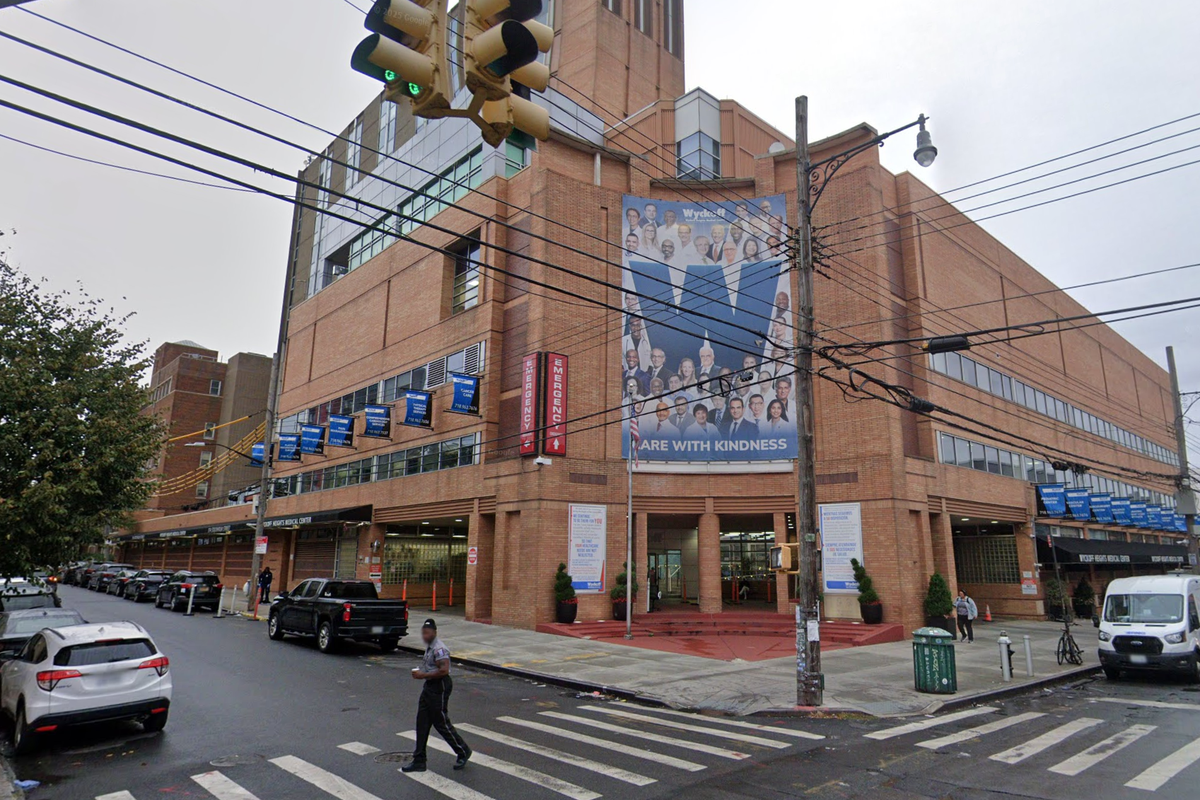
The media loves a predictable riot. Eight people in handcuffs outside a New York hospital makes for a tidy headline, a few seconds of shaky phone footage, and a recycled debate about ICE and police overreach. But if you think that clash was about immigration policy or hospital sanctity, you’ve been played.
The "lazy consensus" surrounding the recent arrests outside Mount Sinai is that this was a spontaneous eruption of civic passion. It wasn't. It was a failure of strategy on both sides—a scripted dance between professional agitators and a police department that still hasn't figured out how to de-escalate without providing a photo op. Most reports frame this as a "clash." That word is a crutch. It suggests two equal forces hitting each other. In reality, it was a systemic breakdown where the only loser was the patient inside the building who couldn't get a quiet room.
The Myth of the "Spontaneous" Protest
I’ve spent fifteen years in the trenches of urban crisis management. I’ve seen these "clashes" from the command center and from the sidewalk. Here is the reality: spontaneous protests involving hospital grounds and federal agencies almost never happen. They are coordinated performances.
When eight people get arrested for "obstructing governmental administration," it usually means the organizers got exactly what they wanted. They wanted the optics of the NYPD dragging someone away from a place of healing. It creates a powerful, albeit dishonest, narrative of "State vs. Sanctuary."
The problem with this narrative is that it treats the hospital as a political stage rather than a critical infrastructure node. When you block an entrance to a medical facility, you aren't "speaking truth to power." You are gambling with the response times of ambulances. You are slowing down the delivery of blood products. You are, quite literally, putting lives at risk to make a point about a policy that isn't even decided at the local level.
Why the NYPD Keeps Losing the Optics War
The police department’s response is equally flawed. Law enforcement continues to use 20th-century crowd control tactics for 21st-century social media wars.
Every time a group of protesters gathers, the NYPD follows a playbook:
- Mass Presence: Send more officers than necessary to "intimidate."
- The Perimeter: Establish a line that protesters will inevitably cross.
- The Extraction: Arrest the loudest people in the most visible way possible.
This is a gift to the protesters. By engaging in high-visibility arrests at the doors of a hospital, the police validate the protesters' claims of a "police state." A smarter, more "contrarian" approach would be total administrative isolation—denying the protest its audience and its conflict. But the department is addicted to the show of force.
The False Premise of Sanctuary Conflict
We need to dismantle the idea that these protests actually help the people they claim to protect. Most "anti-ICE" demonstrations outside local facilities are based on a fundamental misunderstanding of how ICE operates.
Federal agents don't typically hang out in hospital lobbies waiting for people to walk in. They rely on data transfers and administrative handoffs that happen far away from the public eye. Protesting outside a hospital is like shouting at a grocery store because you're mad at the farm subsidies in the Farm Bill. It’s the wrong target, the wrong scale, and the wrong method.
The Real Data on Hospital Interventions
If you look at the actual statistics of federal interventions in municipal spaces, the vast majority occur through:
- Electronic database flags
- Court-ordered transfers
- Inter-agency cooperation agreements
None of these are stopped by eight people holding signs in front of an ER. In fact, these protests often trigger a higher police presence in the area, which inadvertently makes the neighborhood less safe for undocumented individuals who are now forced to navigate a high-security zone just to get a check-up.
The Ethics of Protesting at Healthcare Nodes
There is a "moral high ground" argument often used to justify these actions: "If the law is unjust, no place is neutral."
That’s a dangerous bit of logic. If we accept that hospitals are fair game for political theater, we accept the erosion of the one space in society that must remain agnostic to politics. Once you turn the sidewalk of Mount Sinai into a battleground, you've decided that your political point is more important than the trauma of the person in the ICU twenty feet away.
I’ve worked with hospital administrators who have had to reroute trauma victims because "activists" decided to chain themselves to a gate. There is no nuance here: if your protest delays a doctor, you are the villain of that story, regardless of your stance on immigration.
Better Data, Worse Outcomes
Let’s look at the "success" rate of these clashes.
- Legislation passed? Zero.
- ICE policy changed? No.
- Public opinion shifted? Usually toward the "law and order" side, as the average New Yorker sees the chaos and feels a sense of mounting disorder.
We are stuck in a cycle of performative outrage that produces nothing but court dates and digital clutter. The protesters get their "arrest cred," the police get their overtime, and the actual issue—meaningful immigration reform—remains untouched.
The Strategy Nobody Wants to Admit
If you actually wanted to disrupt ICE operations, you wouldn't be at a hospital. You would be at the administrative level. You would be looking at the digital pipelines that move information from the city to the feds. You would be pressuring the IT departments and the legal counsels who sign off on data-sharing agreements.
But that’s boring. That doesn't look good on a TikTok feed. It doesn't involve the adrenaline of a "clash" with a guy in a blue uniform.
We have replaced effective activism with "conflict tourism." People show up to these protests to feel something, not to change something. The eight people arrested in New York weren't trying to change a policy; they were trying to fulfill a role in a script that has been running for decades.
The Cost of the "Clash"
The financial cost of these events is staggering. Between the NYPD's "Strategic Response Group" (SRG) deployment, the legal processing of the arrested, and the hospital's private security surge, a single afternoon of "clashing" can cost taxpayers hundreds of thousands of dollars.
Imagine if that money went into a legal defense fund for the very people these protesters claim to support. Imagine if the energy spent wrestling with cops was spent on navigating the labyrinthine immigration court system. But that doesn't provide the "heat" that modern activists crave.
Why We Should Stop Romanticizing the Arrest
The media needs to stop treating these arrests as a metric of success or a sign of "increasing tensions." It’s a stagnant pool. It’s the same tension we’ve had since the 1960s, just with better cameras.
The "contrarian" truth is that the most effective activists are the ones you never see on the news. They are the ones in boring offices, filing boring motions, and winning boring cases. They don't get "clashed" with. They don't get arrested outside hospitals. They just win.
The eight people arrested in Manhattan? They didn't win anything. They provided the police with practice, the media with a filler story, and the hospital with a massive headache.
If you want to help, stay away from the hospital. If you want to change the world, stop trying to get arrested and start trying to be effective. The era of the performative riot is over; it's just that nobody told the people on the sidewalk yet.
Go home. Read a policy paper. Call a lawyer. Leave the hospital to the people who are actually trying to save lives.