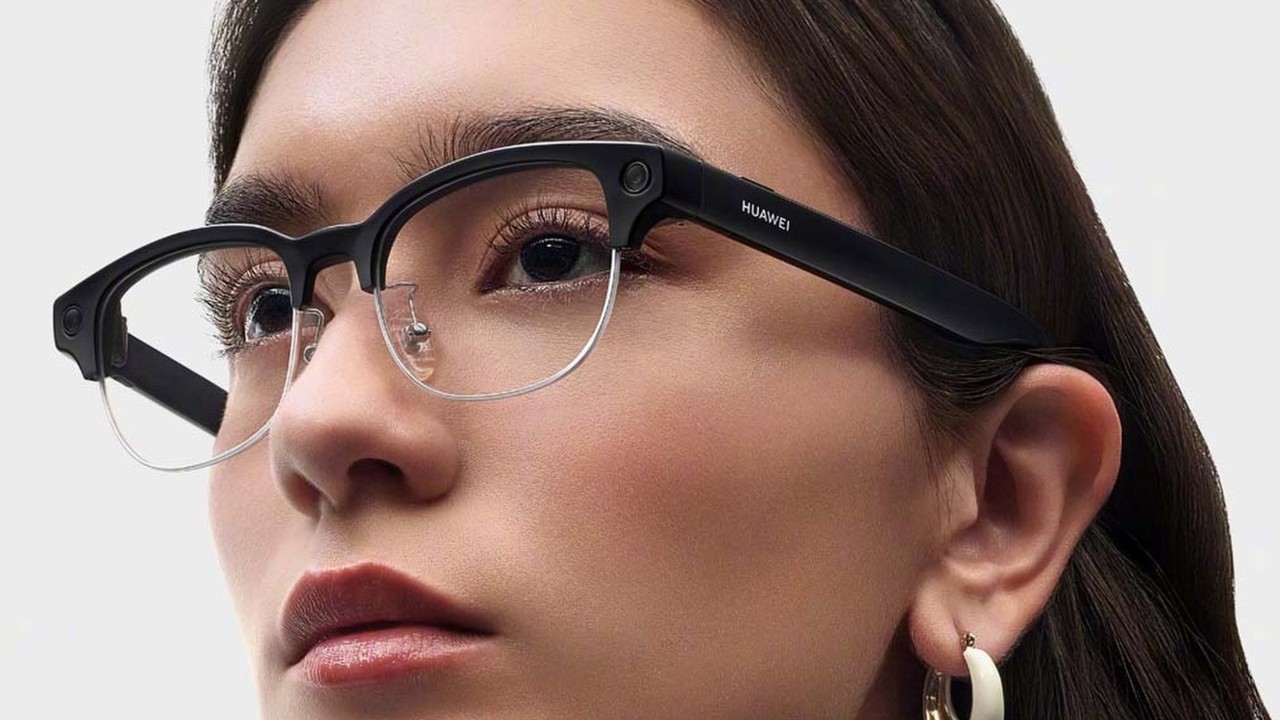
Huawei just threw its weight into a crowded room, but it didn't bring a VR headset or a bulky visor. Instead, the company released the Huawei Eyewear 3, focusing on a lightweight, audio-first experience that avoids the technical traps its rivals are currently falling into. This move signals a massive shift in how the world’s largest hardware manufacturers intend to own the space between your eyes and the world. While Meta chases the dream of full holographic overlays and Alibaba pushes shopping through lens-based interfaces, Huawei is betting on a simpler, more aggressive integration of its HarmonyOS ecosystem directly into the user’s sensory stream.
The strategy is clear. By launching a product that looks like a standard pair of optical frames rather than a piece of lab equipment, Huawei is bypassing the "social friction" that killed Google Glass and currently hampers the adoption of more advanced AR units. This isn't just about selling a gadget. It is a land grab for the most valuable real estate in the digital economy: the human senses.
The Hardware Illusion
Most companies fail at smart glasses because they try to do too much. They pack in cameras, batteries, and cooling systems until the device weighs 80 grams and makes the wearer look like a deep-sea diver. Huawei took the opposite route. The Eyewear 3 weighs roughly the same as a pair of premium Ray-Bans.
The secret lies in the offloading of processing. By tethering the heavy lifting to the smartphone via HarmonyOS, the glasses remain thin. The arms contain miniature speakers that use directional sound technology to beam audio into the wearer's ears without a physical bud. It creates a private bubble of information. You can hear your navigation cues or a summary of your morning emails, but the person sitting next to you on the subway hears nothing.
This design choice highlights a brutal reality in the hardware business. Power efficiency and heat management are the twin walls that every engineer eventually hits. Huawei didn't try to climb those walls; they simply walked around them. They recognized that for a wearable to succeed, it must first be a wearable, and only secondarily a computer.
Alibaba and the Commerce Trap
While Huawei builds for daily utility, Alibaba and Rokid are approaching the market from a different angle. Alibaba’s recent investments in the sector suggest a push toward "visual commerce." They want you to look at a pair of shoes on the street and see a floating "Buy Now" button.
It sounds efficient. In practice, it’s a nightmare. The cognitive load required to navigate a shopping interface while walking through a crowded city is immense. Furthermore, the privacy implications of a camera-centered device in the Chinese market are becoming increasingly thorny. Huawei’s decision to omit a camera on its base model isn't a lack of capability. It is a tactical retreat. By removing the camera, they remove the fear of being watched, making the device acceptable in offices, schools, and private homes where rivals are banned.
The HarmonyOS Moat
You cannot talk about Huawei’s hardware without talking about its software. Since the company was cut off from Google’s Android ecosystem, it has spent billions building HarmonyOS. These glasses serve as a physical extension of that operating system.
If you own a Huawei phone, a Huawei laptop, and a Huawei car, the glasses act as the central nervous system for all of them. They provide a hands-free interface for the AITO M9 electric vehicle, allowing drivers to receive alerts without looking away from the road. This level of vertical integration is something even Meta cannot match. Meta has the social graph, but it doesn't own the hardware stack of the phone in your pocket or the car in your driveway.
Battery Life and the 24 Hour Goal
The biggest hurdle remains the battery. Even with the slimmed-down feature set, the Eyewear 3 struggles to get through a full day of heavy use. Huawei claims 11 hours of audio playback, but real-world testing usually shaves 20% off those marketing figures.
To combat this, they introduced a magnetic charging system that is integrated into the glasses case. It’s a temporary fix for a permanent problem. Until there is a fundamental breakthrough in solid-state battery technology, smart glasses will remain a "part-time" accessory rather than a full-time replacement for the smartphone.
Why Meta is Watching
Mark Zuckerberg has been vocal about his belief that smart glasses will eventually replace the phone. Meta’s collaboration with EssilorLuxottica (the makers of Ray-Ban) has been a surprise success, proving that people will buy smart frames if they look good.
Huawei is essentially running the Meta playbook but with a Chinese twist. They are pricing their units aggressively, often undercutting the competition by several hundred yuan. They are also leveraging their massive physical retail footprint across China to get these frames onto faces. You can't sell a wearable online; people need to feel the weight on their nose and hear the audio quality for themselves.
The competition is no longer about who has the best screen. It is about who can stay on the user's face the longest. Every minute a user wears Huawei glasses is a minute they are generating data for the HarmonyOS ecosystem and staying away from competitors like Xiaomi or Oppo, who are both racing to release their own versions of this technology.
The Audio First Pivot
We are seeing a move away from the "screen-first" mentality. For years, the industry assumed that smart glasses needed to be a heads-up display. We wanted Iron Man’s Jarvis. What we actually need is something much more subtle.
Audio-based AR is more intuitive. It uses the brain’s natural ability to process sound in a 360-degree space. When the glasses tell you to "turn left in fifty feet," you don't need to look at a map. You just walk. This reduction in visual noise is the key to mass adoption. Huawei has bet heavily on this, perfecting the "acoustic leak" protection that ensures your private conversations stay private.
Supply Chain Supremacy
One factor the competitor's article missed is the sheer scale of Huawei’s supply chain control. Unlike Rokid or Xreal, which are relatively small startups, Huawei can command the attention of the world’s best lens grinders and hinge manufacturers.
They are using titanium alloys and carbon fiber in the frame construction—materials that are difficult to work with at scale but offer the best strength-to-weight ratio. This isn't just a tech play; it’s a manufacturing masterclass. By dominating the mid-range price point, they are effectively starving the startups of the oxygen they need to grow. If you can get a pair of Huawei glasses for $250 that work flawlessly with your phone, why would you pay $600 for a pair of experimental AR goggles from a company that might not exist in three years?
The Privacy Paradox
There is an elephant in the room. Any device that sits on your face and listens to your environment is a data collection machine. Huawei’s privacy documentation emphasizes on-device processing for voice commands, meaning the audio isn't sent to the cloud for basic tasks.
However, the integration with a broader OS means your location, your movement patterns, and your communication habits are all being funneled into a single profile. In the current geopolitical climate, this makes the device a non-starter in much of the West. But Huawei isn't looking at the West. They are looking at the 1.4 billion people in China and the growing markets in Southeast Asia and Africa where their infrastructure is already the standard.
The Developer Dilemma
Hardware is only as good as the apps that run on it. This is where the fight will be won or lost. Huawei is currently courting developers to create "Atomic Services" for the glasses. These are tiny, lightning-fast snippets of code that perform one task—like showing a weather update or a flight gate number—without needing a full app installation.
If they can build a library of ten thousand of these services, the glasses become indispensable. If they fail, the glasses remain a glorified pair of Bluetooth headphones. The early signs are promising, with major Chinese travel and banking apps already offering basic support.
The hardware is ready. The ecosystem is hungry. The only question is whether the public is prepared to trade their traditional eyewear for a digital leash that sits on the bridge of their nose. Huawei is betting the house that the answer is yes.
Stop looking at the specs and start looking at the strategy. Huawei isn't trying to build a computer you wear on your face; they are building a face you use to access their computer. The distinction is subtle, but it is exactly why they are currently leading the pack in the race to colonize the human senses.


:max_bytes(150000):strip_icc()/Term-Definitions_monopoly-fa34a19571eb4168876f3a6947aa1a6f.jpg)