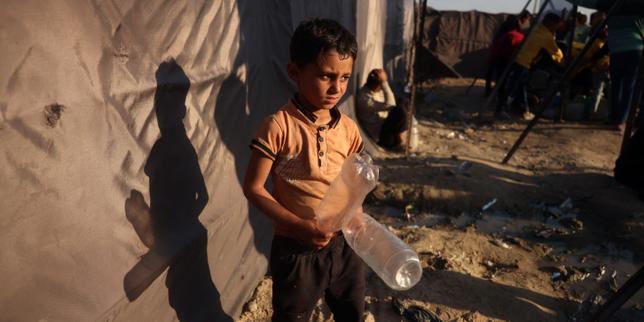
The weaponization of essential resources transforms humanitarian crises into calculated engineering failures. In Gaza, the degradation of the water, sanitation, and hygiene (WASH) sector represents a sophisticated intersection of kinetic destruction, supply chain strangulation, and administrative blockade. While public discourse often focuses on the immediate casualties of conflict, the long-term viability of the territory is being dismantled through the targeted erosion of its hydro-social cycle. The current reality is not merely a byproduct of urban warfare but a systemic deprivation dictated by three primary levers: the severance of energy inputs, the restriction of purification chemicals, and the physical destruction of distribution nodes.
The Triad of Systematic Water Deprivation
The functionality of any modern water system relies on a continuous loop of energy, filtration, and transport. In Gaza, this loop has been severed at every critical junction. To understand the scale of the collapse, one must analyze the three structural pillars Israel controls:
- Energy Asymmetry: Desalination plants and well pumps require consistent electricity or fuel. The cessation of the Gaza Power Plant and the severance of feeder lines from the Israeli grid immediately rendered high-capacity infrastructure inert.
- Chemical and Material Interdiction: Under "dual-use" restrictions, chlorine for disinfection and membranes for Reverse Osmosis (RO) units are frequently blocked. Without these, even functional pumps produce water that is biologically or chemically hazardous.
- Kinetic Infrastructure Erasure: The physical destruction of piping networks and wastewater treatment plants creates a recursive loop of contamination. When sewage lines leak into the shallow aquifer or the streets, the remaining water sources are further compromised.
The Mechanics of Calculated Scarcity
The human body requires a minimum of 15 liters of water per day for basic survival (drinking and hygiene) according to SPHERE standards. In the current operational environment, many displaced populations are subsisting on less than 3 to 5 liters. This deficit is not an accidental logistical hurdle; it is the result of a specific cost function applied to the territory’s geography.
The Energy-Water Nexus
Gaza’s reliance on desalination is a vulnerability by design. The Mediterranean Sea provides an infinite source, but the conversion of seawater into potable water is energy-intensive. By controlling the fuel entry points at Kerem Shalom, the occupying power exerts a "throttle" effect on the total volume of water available. When fuel is restricted, the desalination output drops to zero, forcing the population to rely on the Coastal Aquifer.
Aquifer Exhaustion and Salinity Intrusion
The Coastal Aquifer is Gaza’s only natural water source, yet it has been over-pumped for decades. Over-extraction leads to a drop in the water table, which triggers seawater intrusion. This creates a geochemical "point of no return." Current reports indicate that over 97% of the aquifer’s water is unfit for human consumption due to nitrate levels from sewage and salinity levels that exceed WHO guidelines by a factor of ten. By forcing the population onto this failing resource, the long-term health of the citizenry is compromised via kidney failure and chronic dehydration.
Logistics of the "Slow Death" Framework
The administrative blockade functions as a non-kinetic weapon that is often more effective than direct bombardment. MSF and other international observers have documented a pattern of "administrative attrition" where technical equipment needed to repair water lines is stalled in a labyrinth of bureaucratic approvals.
The Replacement Bottleneck
A broken water main in a high-density area like Khan Younis cannot be fixed with a simple patch. It requires heavy machinery, specialized PVC or ductile iron piping, and skilled engineering teams. By denying the entry of these specific materials, the infrastructure remains in a state of permanent decay. This creates a "bottleneck effect" where even if a temporary ceasefire occurs, the system cannot be restored because the physical components for repair are held in logistics centers outside the border.
Biological Warfare by Proxy
The failure of wastewater treatment is a precursor to an epidemiological explosion. When sewage treatment plants (STPs) cease operations due to power failure or damage, raw effluent is discharged into the sea or pools in low-lying areas.
- Pathogen Proliferation: Stagnant sewage serves as a breeding ground for Hepatitis A, cholera, and various diarrheal diseases.
- The Transmission Loop: Displaced persons living in tents often lack separate facilities for washing and waste disposal. The "fecal-oral route" of disease transmission becomes the dominant health threat, often outpacing kinetic trauma in terms of total morbidity.
The Strategic Utility of Thirst
In strategic logic, the deprivation of water serves several tactical objectives that extend beyond simple punishment. It functions as a "displacement catalyst." By making specific zones unlivable through the removal of water access, military forces can direct the movement of large populations toward "safe zones" which are, in turn, easier to monitor and contain.
However, the "safe zone" designation is often a misnomer in hydrological terms. When 1.5 million people are pushed into an area like Al-Mawasi—which lacks pre-existing water infrastructure—the sudden surge in demand leads to immediate resource exhaustion and an acceleration of disease outbreaks.
Quantifying the Damage: The Long-Term Cost Function
The destruction of the Gaza water system is not a temporary setback; it is a multi-generational economic and health catastrophe. The cost to rebuild the WASH sector is estimated in the billions, but the human capital loss is incalculable.
- Stunting and Developmental Delays: Chronic dehydration and waterborne illness in children lead to permanent physical and cognitive stunting.
- Agricultural Collapse: Without water for irrigation, the small remaining agricultural plots in Gaza are failing, leading to total food dependency and the destruction of the local economy.
- Soil Contamination: The seepage of untreated sewage into the soil creates long-term environmental hazards that will persist long after the kinetic conflict ends.
The Operational Failure of International Law
The Geneva Conventions explicitly prohibit the destruction of "objects indispensable to the survival of the civilian population," including water installations and supplies. The systematic nature of the deprivation in Gaza suggests a policy that prioritizes military objectives over the fundamental biological requirements of a protected population. The "dual-use" argument—claiming that water pipes or fuel can be diverted for military use—is being used as a blanket justification to dismantle the entire civilian life-support system.
Strategic intervention requires more than the delivery of bottled water or the occasional fuel truck. It necessitates the immediate restoration of the "Power-Water-Sanitation" triad. This includes:
- The unconditional entry of technical repair teams and heavy machinery.
- The establishment of "Blue Zones" around critical water infrastructure that are exempt from kinetic operations.
- The bypass of the Kerem Shalom "throttle" through the direct connection of Gaza’s infrastructure to regional water grids.
Failure to address these structural deficits ensures that the region remains in a state of engineered catastrophe, where the primary cause of death shifts from the explosive to the microscopic. The restoration of water is not a humanitarian gesture; it is the fundamental baseline for any viable future in the territory. The current trajectory points toward a total hydrological collapse that will render the Gaza Strip uninhabitable for decades, creating a permanent refugee crisis that no amount of temporary aid can resolve.