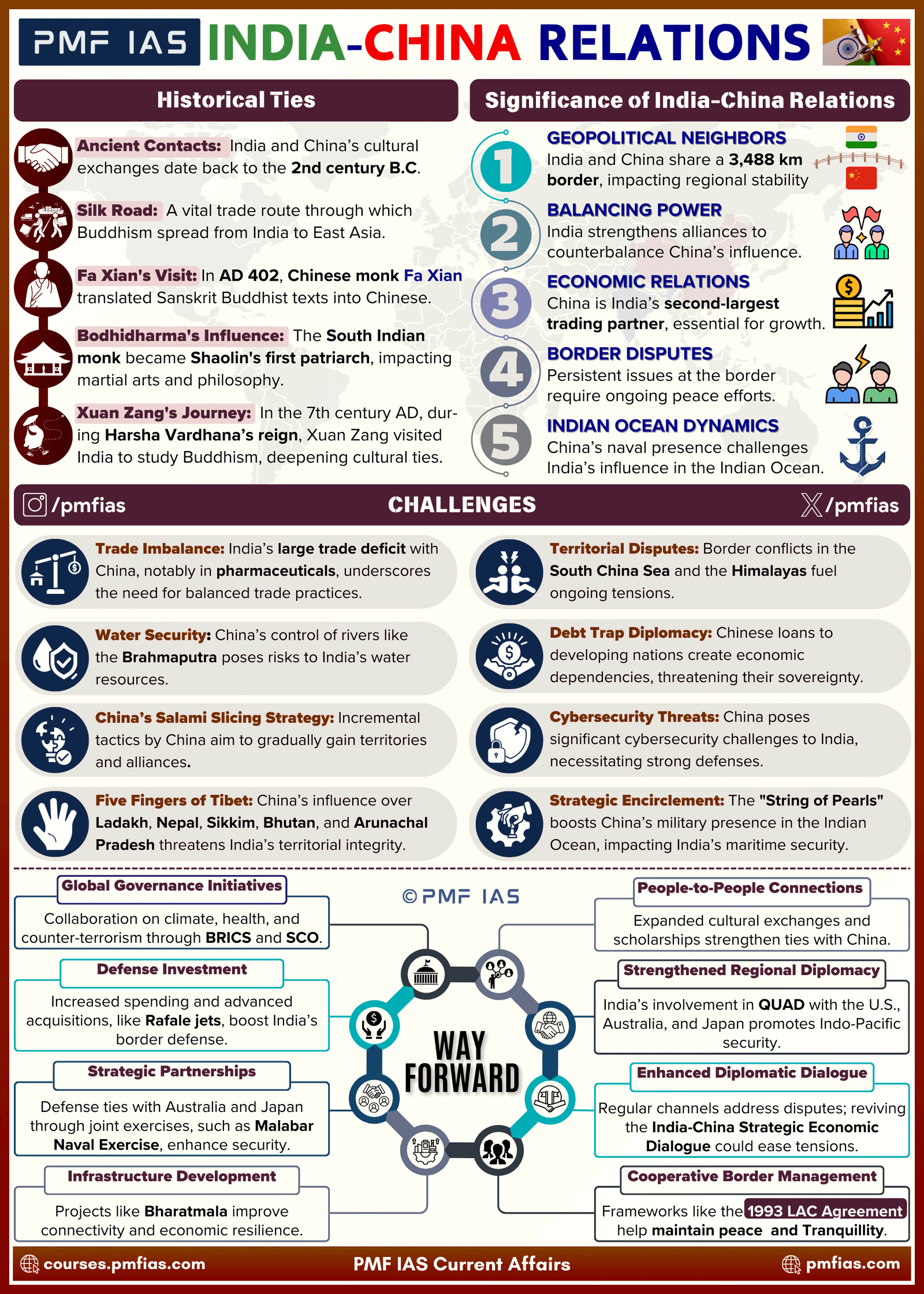
New Delhi and Beijing don't agree on much lately. If you’ve followed the news over the last few years, you know the border situation in Ladakh remains a massive thorn in the side of bilateral relations. Yet, despite the cold shoulders and the military build-ups, both nations just sat down to talk about the Shanghai Cooperation Organization (SCO). It's a move that signals a weird, necessary pragmatism. They aren't friends, but they've realized that neither can afford to let the Eurasian neighborhood fall into chaos without a shared seat at the table.
The recent diplomatic engagement isn't about a sudden burst of warmth. It's about power. Specifically, it's about how these two giants manage a region that is rapidly shifting under the weight of Western sanctions on Russia and the Taliban's presence in Afghanistan. India and China are signaling that while their bilateral issues are messy, the SCO is a platform they’ll use to ensure they aren't sidelined in their own backyard.
The strategic necessity of talking to your rival
India's participation in the SCO has always been a bit of a balancing act. You have a country that's a member of the Quad—sitting alongside the US, Japan, and Australia—while also sharing a room with Russia and China. It looks like a contradiction on paper. In practice, it's about geographic reality. You can't ignore the fact that the SCO covers about 40% of the world's population and a huge chunk of the Eurasian landmass.
When Indian and Chinese officials meet to discuss the SCO agenda, they're looking at specific security threats. Terrorism isn't just a buzzword here. It's a daily concern. The Regional Anti-Terrorist Structure (RATS) based in Tashkent is one of the few places where Indian and Chinese intelligence and security experts actually exchange data. It's cold. It's clinical. It works because both sides fear radicalization in Central Asia.
I’ve seen this play out before in multilateral forums. The tension is thick enough to cut with a knife, but the work gets done because the alternative is worse. If India pulls back, China gets a free hand to dictate the security architecture of Central Asia. If China ignores India, it loses a key partner in stabilizing a region that connects their Belt and Road ambitions.
Why the SCO matters more than the headlines suggest
Most people think the SCO is just a "talk shop." They’re wrong. While it doesn't have the military teeth of NATO or the economic integration of the EU, it serves as the primary diplomatic clearinghouse for Eurasia. Think of it as a pressure valve.
Security and the Afghan vacuum
Since the US withdrawal from Afghanistan, the SCO has become the de facto regional supervisor. India has deep concerns about "spillover" terrorism affecting Jammu and Kashmir. China worries about the East Turkestan Islamic Movement (ETIM) and its impact on Xinjiang. These shared fears create a floor for cooperation. They don't have to like each other to agree that a destabilized Kabul is bad for business.
Energy and connectivity
Central Asia is sitting on massive reserves of natural gas and minerals. India wants in. The International North-South Transport Corridor (INSTC) is India’s big play to bypass Pakistan and reach these markets. China, of course, has the Belt and Road Initiative (BRI). The SCO is where these competing visions of connectivity meet. Sometimes they clash, but the ongoing talks suggest a desire to find a way to coexist without blowing up the whole region’s economic potential.
Navigating the Moscow factor
You can’t talk about India, China, and the SCO without mentioning Russia. Vladimir Putin has long viewed the SCO as his primary vehicle for showing the world that Russia isn't isolated. For India, Russia remains a "time-tested" partner, especially for defense supplies. For China, Russia is a junior partner in the fight against Western hegemony.
India's presence in the SCO prevents the group from becoming a purely anti-Western bloc. That's a huge deal. New Delhi acts as a moderating force. It ensures the SCO stays focused on regional issues rather than becoming a tool for Beijing's global ambitions. The recent talks indicate that China accepts this role for India, perhaps because they realize a Chinese-only bloc would carry less international legitimacy.
The border issue remains the elephant in the room
Let's get real. No amount of SCO meetings will fix the fact that thousands of troops are still eyeing each other across the Line of Actual Control (LAC). Indian External Affairs Minister S. Jaishankar has been very clear: the state of the border determines the state of the relationship.
So, why talk about the SCO now? Because diplomacy isn't a zero-sum game. You can move forward on multilateral security while remaining stuck on bilateral borders. It’s a sophisticated, if frustrating, way of handling a superpower rivalry. Both sides are betting that they can compartmentalize their problems.
Critics say this is a mistake. They argue that India shouldn't give China the "win" of a successful SCO summit while the LAC is still hot. But if India isn't there, who speaks for Indian interests? You don't win by leaving the room. You win by being the loudest voice at the table.
The shift toward a multi-aligned world
The world is moving away from simple blocks. We aren't in a new Cold War; we're in a messier, more complex era of "multi-alignment." India is the poster child for this. They'll buy oil from Russia, conduct naval drills with the US, and talk security with China in the SCO.
It’s about "strategic autonomy." For the average person, this sounds like sitting on the fence. For a diplomat, it’s about having the maximum number of options. By engaging China within the SCO framework, India ensures it has a say in the rules of the game in Eurasia.
What to watch for in the coming months
The signaling is done. Now comes the hard part. Watch the specific language in the upcoming SCO joint statements. If you see more focus on "sovereignty and territorial integrity," that’s a win for the Indian narrative. If the focus is purely on "development and investment," that’s China’s influence at work.
The real test will be the next heads-of-state summit. Will we see a meaningful pull-back on the border beforehand? Probably not. But the fact that the channels are open for SCO coordination means neither side is ready to burn the bridge entirely.
If you're trying to track where this goes next, stop looking for a grand peace treaty. Look for the small, boring stuff. Look at trade protocols. Look at shared data on drug trafficking. Look at the frequency of mid-level diplomatic exchanges. That's where the real story of the India-China-SCO triangle lives. It’s not about friendship; it’s about the hard, grinding work of not letting a rivalry turn into a disaster.
Start paying attention to the RATS meetings in Tashkent. Follow the development of the Chabahar port and how it's discussed within the SCO framework. These are the levers India is pulling to stay relevant in a region China wants to own. Don't expect a handshake that changes the world, but don't ignore the fact that they're still talking. In this climate, talking is a victory in itself.