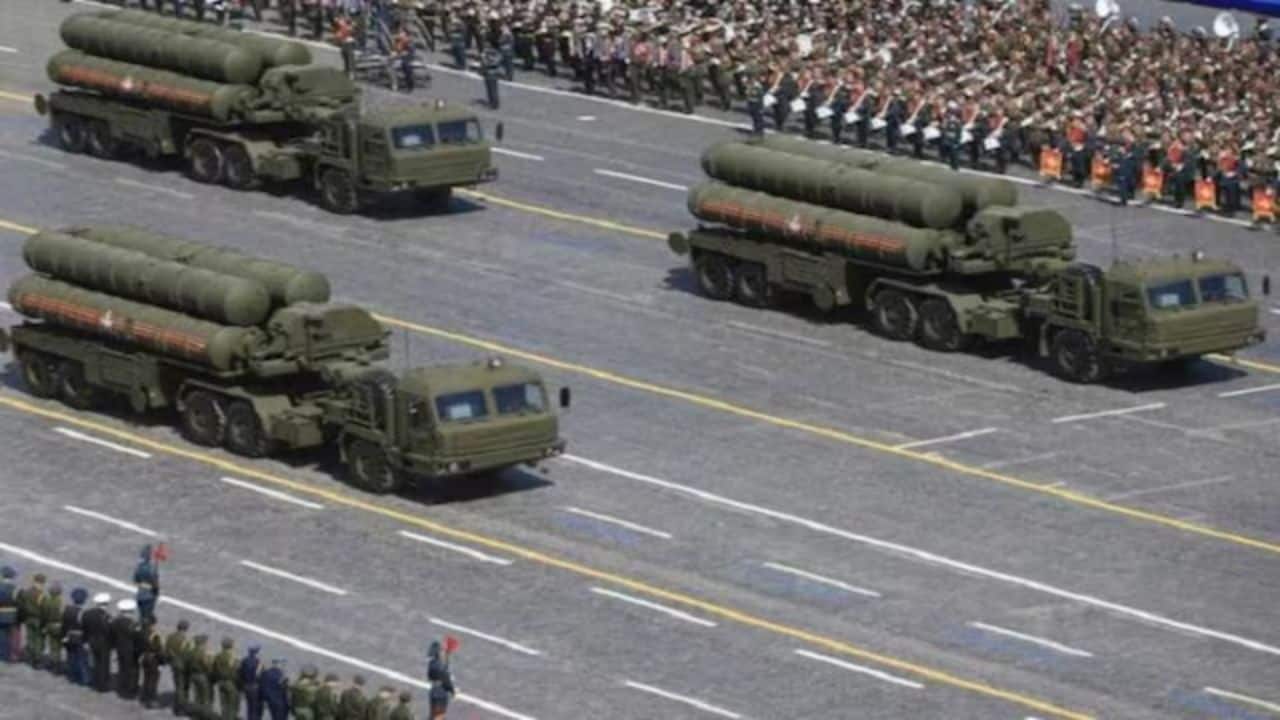
India's defense strategy just took a massive, multi-billion dollar turn. If you've been tracking the shifting power balance in South Asia, the latest move from New Delhi shouldn't surprise you, but the scale certainly might. India is now moving to procure five additional squadrons of the Russian S-400 Triumf air defense system. This isn't just a routine top-up of military hardware. It's a direct consequence of how the system performed during the high-stakes drills of Operation Sindoor.
The Ministry of Defence isn't just buying more of the same. They're responding to a shift in how aerial warfare looks in 2026. The original five-squadron deal signed years ago was meant to provide a basic umbrella. This new push for five more effectively doubles that coverage. It tells us that the Indian Air Force (IAF) is done "testing" the waters. They're now fully committed to a Russian-centric long-range surface-to-air missile (SAM) architecture, despite the constant threat of Western sanctions.
The Operation Sindoor Turning Point
Operation Sindoor wasn't your typical military exercise with blank rounds and choreographed movements. It was a brutal, real-world stress test. The IAF pushed the existing S-400 units to their absolute limits against a saturated environment of simulated stealth fighters, cruise missiles, and "swarm" drone attacks.
The results were eye-opening for the top brass. The S-400 didn't just track targets; it managed a complex integrated battle space where older systems usually fail. One of the most significant takeaways from Sindoor was the system's ability to discriminate between "friend and foe" in a cluttered sky. In modern conflict, the biggest danger often isn't the enemy—it's accidentally shooting down your own jet in the chaos. The Triumf handled it.
Beyond the tracking, the engagement range proved a point. The system's 400km reach creates a "no-fly zone" that begins long before an enemy aircraft even enters Indian airspace. During the drills, the IAF reportedly practiced "forward deployment" scenarios that made the S-400 a proactive weapon rather than a reactive one. This aggressive posture is exactly why the government feels five more squadrons are mandatory, not optional.
Why Five More Squadrons Matter
You might wonder why five more are necessary if the first five were supposed to be "game-changing." The answer lies in geography. India has two massive borders to worry about, and a five-squadron layout left gaps. It was a "point defense" strategy where you protect specific cities or bases.
With ten squadrons, India moves toward an "area defense" strategy. This means the entire northern and western fronts can be under a continuous, overlapping radar and missile canopy. It's about redundancy. If one radar goes down or is targeted by an anti-radiation missile, three others are already painting the target.
The S-400 uses four different types of missiles to create a layered defense. You have the 40N6E for extreme long-range (400km), the 48N6 for long-range (250km), the 9M96E2 for medium-range (120km), and the 9M96E for short-range (40km). By doubling the squadron count, the IAF can saturate a single sector with dozens of these missiles simultaneously. No pilot, no matter how skilled, likes those odds.
Breaking Down the Cost and Geopolitics
Russia and India aren't just trading missiles; they're navigating a diplomatic minefield. The price tag for five more units will likely cross the $5 billion mark. Critics often point to CAATSA—the US law designed to punish countries buying Russian gear. But India's gamble is that its "Major Defense Partner" status with Washington makes it too big to sanction.
So far, that gamble has paid off. The US needs India as a counterweight in the Indo-Pacific. Threatening India over the S-400 would backfire spectacularly, pushing New Delhi even closer to Moscow. It's a classic case of realpolitik. India knows it. Russia knows it. And deep down, the Pentagon knows it too.
Technical Superiority vs Western Alternatives
The debate always circles back to: Why not the Patriot? Or the THAAD? Honestly, the Patriot is a fantastic system, but it's designed for a different kind of war. It's built to work within a massive NATO-style network where the US provides the "big picture" data.
India wants sovereignty. The S-400 is more of a "plug and play" beast for a country that doesn't want to rely on American satellite feeds or software keys. The S-400's radar, the 91N6E, can track up to 300 targets simultaneously. It can see through most modern electronic jamming. For the IAF, which operates a mix of French, Russian, and indigenous jets, the Russian SAM system provides a flexible backbone that doesn't come with the heavy "end-user monitoring" strings that usually accompany US tech.
Managing the Drone Threat
One thing Operation Sindoor highlighted was the evolving threat of cheap, mass-produced drones. While using a multi-million dollar S-400 missile to hit a $50,000 drone seems like a bad trade, the S-400 acts as the quarterback. It detects the swarm and hands off the "kill" to shorter-range systems like the indigenous Akash or the MR-SAM. Without the S-400's powerful eyes, those shorter systems are often blind until it's too late.
The Procurement Timeline
Don't expect these five new squadrons to show up tomorrow. Russia's industrial capacity is currently stretched thin. However, the "Sindoor Success" has fast-tracked the paperwork. Initial reports suggest a "phased delivery" starting in late 2027.
India is also pushing for more "Made in India" components in this second batch. While the core missile tech stays Russian, there's talk about integrating Indian-made heavy-duty trucks (Tatra) and locally produced communication suites. This isn't just about buying a product; it's about making the system "Indianized" so it can't be remotely deactivated or tampered with by an outside power.
The IAF's plan is to eventually integrate these ten squadrons with the upcoming Project Kusha—India's own attempt at building an S-400-class long-range SAM. Until Kusha is ready for prime time in the 2030s, the S-400 remains the only viable shield against high-end threats.
If you're following Indian defense, the next step is watching the official contract signing. Look for the payment mechanism. India has been using a Rupee-Ruble exchange to bypass the SWIFT banking ban on Russia. If this deal goes through using that same mechanism, it'll be a massive signal that the Indo-Russian defense relationship is effectively "sanction-proof." Keep an eye on the upcoming bilateral summits—that's where the final ink will meet the paper.


