The foreign policy establishment is hyperventilating again. Open any mainstream financial daily and you’ll see the same recycled anxiety: "India’s energy security is at risk," or "The diaspora in the Gulf is a ticking time bomb." This is the lazy consensus. It treats India like a fragile observer waiting for permission to exist in a multipolar world.
The truth is far more cynical and, for the bold, far more profitable.
While the "experts" worry about a $10 spike in Brent crude, they ignore the reality that volatility is India’s greatest geopolitical lubricant. We have spent decades playing the victim of Middle Eastern instability. It is time to recognize that a contained, chronic conflict between Iran and its adversaries is exactly what cements India’s status as the indispensable swing power of the 21st century.
The Oil Myth: Why High Prices Are a Paper Tiger
The most frequent argument against an Iranian escalation is the "crude shock." It’s a tired trope from the 1970s that hasn't kept pace with modern refining economics. India isn't just a consumer of oil; it is a global refinery hub.
When the Middle East catches fire, the spread between raw crude and refined products—petrol, diesel, jet fuel—widens. Reliance Industries and Nayara Energy don't fear high oil prices; they thrive on the "crack spread." In 2022, when Russian sanctions sent markets into a frenzy, Indian refiners didn't collapse. They printed money. They bought discounted Urals, refined them, and sold them back to Europe at a premium.
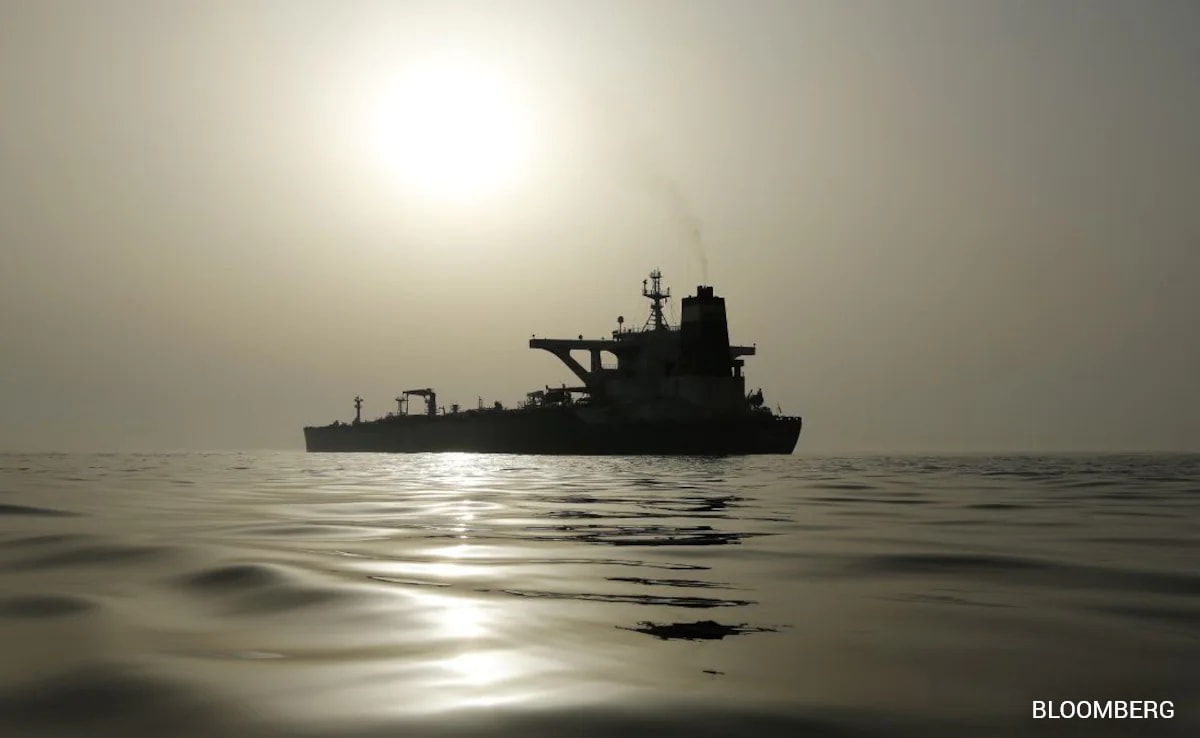
An Iran-Israel or Iran-US flare-up does the same thing. It creates a bifurcated market where India, as a non-aligned refiner, can arbitrage the chaos. If the Strait of Hormuz sees a temporary "tanker war," the insurance premiums go up, yes. But the value of India’s strategic petroleum reserves (SPR) and its ability to process "pariah" barrels increases exponentially.
Stop asking how India will pay for expensive oil. Start asking how much India will charge the world for the finished product.
The Diaspora Paradox: Remittances Thrive on Chaos
The "safety of the 9 million Indians in the Gulf" is the ultimate emotional shield used to justify a passive foreign policy. The narrative says that if Iran closes the Strait, the Gulf economies collapse and our workers come home broke.
History says otherwise. The Indian diaspora in the GCC (Gulf Cooperation Council) is not a monolithic group of construction workers. It is increasingly a managerial and tech-heavy class. During the Gulf War, the 2008 crash, and the COVID-19 pandemic, the "mass exodus" never happened. Instead, we saw a "flight to quality."
In times of regional tension, Gulf monarchies double down on domestic stability and infrastructure to prove they are still open for business. They need Indian labor and brainpower more during a crisis, not less. Furthermore, a weakened Iran or a distracted Saudi Arabia forces these nations to accelerate their "Vision 2030" style diversifications. They need to build faster to survive. Who builds it? Indian firms like L&T and an army of Indian engineers.
Conflict in the region doesn't end the remittance flow; it institutionalizes it. The fear of instability drives capital out of the Middle East and into safe-haven assets. For many NRIs, that safe haven is Indian real estate and the NSE.
Chahbahar is a Sunk Cost, Not a Strategy
The competitor's piece likely moans about the fate of the Chabahar port. They call it India’s "gateway to Central Asia" and a "counter to China’s Gwadar."
Let’s be honest: Chabahar has been a geopolitical vanity project for two decades. It is a slow, bureaucratic nightmare perpetually haunted by the specter of US sanctions. If Iran enters a hot war, Chabahar becomes irrelevant. And that might be the best thing that could happen to India’s Western strategy.
By clinging to the "Chabahar dream," India remains tethered to a regime in Tehran that uses Indian investment as a bargaining chip with Beijing. If the Iran conflict escalates, India is forced to abandon the middle ground and pivot fully to the IMEC (India-Middle East-Europe Economic Corridor).
IMEC is the real prize. It bypasses the volatility of the Persian Gulf by moving goods via rail through Saudi Arabia and Jordan. A hot conflict involving Iran kills the delusion that we can play both sides of the Gulf forever. It forces the completion of the IMEC, which is a far more sophisticated, tech-integrated, and American-backed trade route than a dusty port in Sistan-Baluchestan could ever be.
The Weaponization of Neutrality
The "risk" isn't the war itself; the risk is India’s own hesitation.
In every major conflict of the last decade, the winners have been the "Middle Powers" who refused to take a side until the terms were overwhelmingly in their favor. Look at Turkey. Look at Qatar. India has the unique advantage of being the only country that can talk to Netanyahu, Khamenei, and Biden in the same afternoon.
Instead of "managing risks," New Delhi should be "monetizing neutrality."
- Defense Exports: Every time an Iranian drone hits a target or a Western interceptor misses, the global South watches. India’s homegrown defense platforms—BrahMos, Akash—become more attractive to regional players looking for non-Western, non-Russian alternatives.
- Cyber Security: Iran is a tier-one actor in offensive cyber warfare. A conflict in the region is a live-fire laboratory. Indian tech firms, if they are smart, should be the ones providing the "digital iron dome" for the UAE and Saudi Arabia.
- The Rupee-Rial Deception: We’ve heard about rupee-denominated trade for years. It only happens when Iran is desperate. A conflict increases that desperation. We shouldn't be "helping" a neighbor; we should be securing terms that favor the Indian Rupee as a regional reserve currency, backed by the sheer volume of our purchase power.
Why the "Experts" are Wrong About "Balance"
The term "Strategic Autonomy" is often used as a polite way of saying "indecision." The competitor article likely argues for a "balanced approach" to avoid upsetting either Washington or Tehran.
That is a loser’s game.
In a high-stakes conflict, the "balanced" player gets squeezed by both sides. The superior strategy is Aggressive Multi-Alignment. You don't balance; you over-leverage. You tell the Americans that you'll scale back Iranian oil only if they grant H-1B concessions or jet engine tech transfers. You tell the Iranians you'll keep their port alive only if they stop backing groups that threaten Indian shipping.
I have watched boards of directors lose millions because they waited for "clarity" in the Middle East. Clarity never comes. The only thing that comes is the bill for being late.
The Iran conflict isn't a "threat to India's rise." It is the stress test that proves India has already risen. If we can't navigate a regional skirmish to our own financial and territorial advantage, then we aren't a global power—we’re just a very large market.
The Brutal Reality of the "Energy Transition"
Everyone loves to talk about how a war will derail India's green energy goals. This is nonsense.
A spike in oil prices caused by Iranian instability is the single greatest catalyst for EV adoption and green hydrogen investment in India. When petrol hits ₹150 a liter, the "green transition" stops being a moral imperative and starts being a mathematical necessity for the middle class.
The government’s FAME-II subsidies and PLI schemes for batteries work better when oil is expensive. If you want to see India become a global leader in non-fossil fuel technology by 2030, you should—secretly, at least—be rooting for the end of cheap Middle Eastern oil.
Stop Asking "What Happens to Us?"
The fundamental flaw in the mainstream perspective is the victim mindset. "What will the Iran conflict do to India?"
The correct question is: "What can India extract from the Iran conflict?"
We are no longer the India of 1991, with two weeks of forex reserves and a begging bowl at the IMF. We are a $4 trillion economy with a massive military and a consumer base that the world is dying to access.
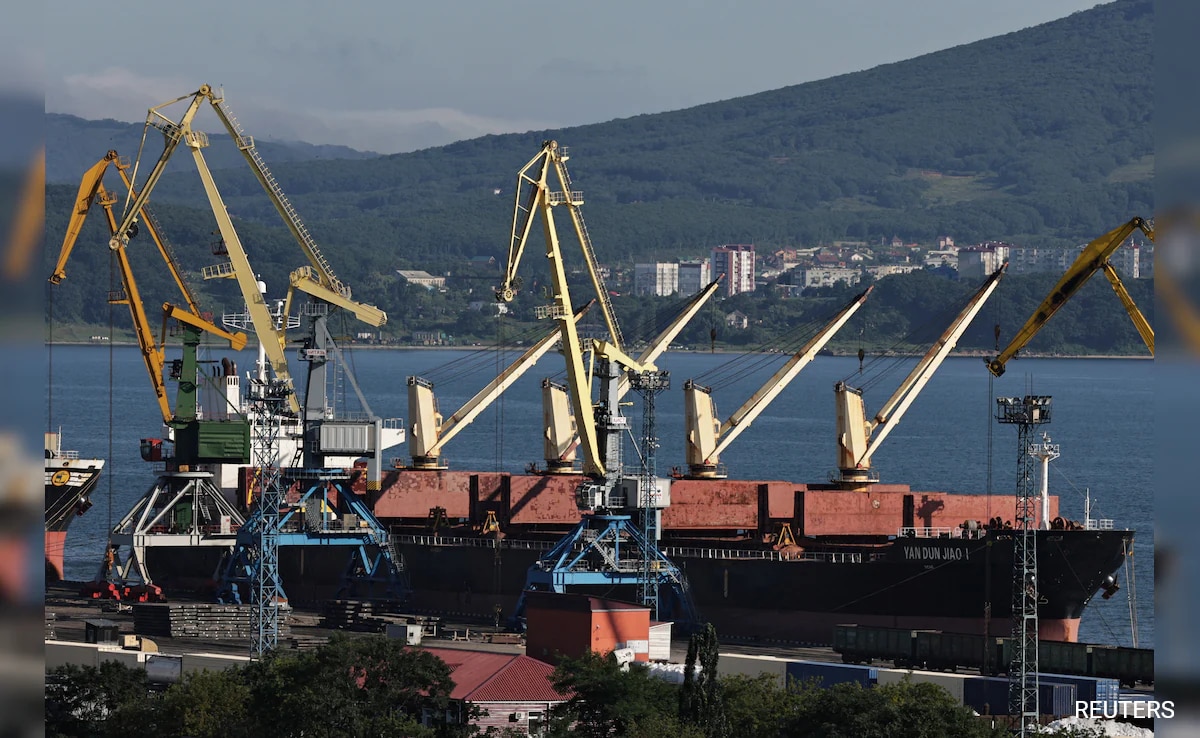
If the Strait of Hormuz closes, the world breaks. India, with its deep-water ports on the Arabian Sea and its growing naval presence in the Indian Ocean, becomes the primary guarantor of whatever trade is left. We aren't the ones at risk. We are the ones who provide the solution—at a price.
The "risks" cited by the competitor are just the costs of doing business at the top table. Pay the premium. Take the seat. Direct the drama.
Stop mourning the end of stability. Stability is for the stagnant. For a rising India, the friction of the Iran conflict is the only way to generate heat.
The era of the "cautious stakeholder" is over. Welcome to the era of the geopolitical vulture.
Secure your energy contracts, hedge your currency, and for God’s sake, stop apologizing for being the only adult in the room.