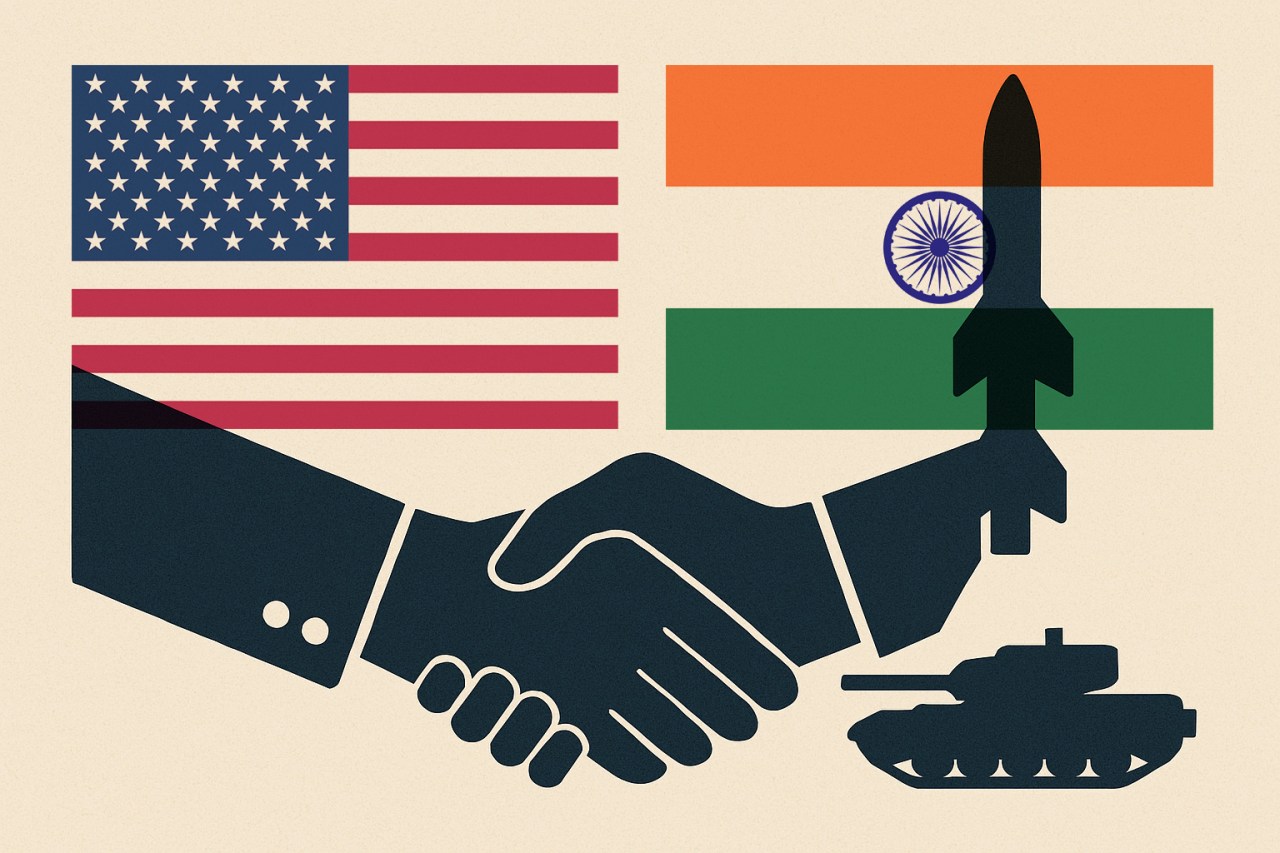
Bureaucrats in DC and New Delhi are back at the table, clinking glasses over the same "historic" defense frameworks they’ve been reheating since the Bush administration. The headlines follow a predictable script: shared values, regional stability, and the ever-elusive promise of "co-production." It sounds like a powerhouse alliance. It looks like progress.
It is actually a masterclass in sunk-cost fallacy.
The consensus view—that India and the US are on the cusp of a military-industrial revolution—ignores the fundamental hardware of how these two nations actually operate. We aren't building a "Global Defense Hub." We are building a giant paper trail of Memorandums of Understanding (MoUs) that will never see a factory floor.
I have watched these negotiations play out from the inside for over a decade. The cycle is always the same: a high-profile visit, a "pathfinding" initiative like iCET (Initiative on Critical and Emerging Technology), a flurry of press releases about jet engines or Stryker vehicles, and then... nothing. The friction of reality grinds the gears to a halt every single time.
The Myth of the Technology Transfer
The biggest lie told in this space is that the US is ready to hand over its crown jewels. It isn't. The US defense establishment is built on a foundation of ITAR (International Traffic in Arms Regulations)—a regulatory labyrinth designed specifically to prevent the very thing India wants: the "source code" of modern warfare.
When we talk about the GE F414 jet engine deal, the pundits treat it like a done deal. They assume "80% technology transfer" means India will soon know how to bake the super-alloys required for high-performance turbines.
It doesn't. In the defense world, "technology transfer" often translates to "licensed assembly." You get the Lego kit and the instruction manual, but you don't get the factory that makes the plastic. If India expects to leapfrog decades of R&D by signing a check, they are profoundly mistaken. The US Congress views technology as leverage. Once you give it away, the leverage evaporates. They have zero incentive to make India truly self-reliant.
India’s Russian Legacy Is an Obstacle, Not a Quirk
Mainstream analysts love to talk about India "diversifying" away from Russia. They treat it like a consumer switching from an iPhone to an Android. It is much more like trying to run Windows software on a microwave.
India’s entire defense DNA—its maintenance pipelines, its doctrine, its metallurgical standards—is rooted in Soviet and Russian engineering. You cannot simply sprinkle American "co-production" on top of a Russian-centric military and expect a functional result.
- Logistics Suicide: Running a fleet that requires parts from both Seattle and Samara is a nightmare for any quartermaster.
- The Interoperability Trap: American systems are designed to "talk" to each other through encrypted datalinks. India’s refusal to fully commit to US-led security architectures means they are buying Ferraris but aren't allowed to drive them on the highway.
The "People Also Ask" sections of the internet often focus on whether India will buy the F-21 or the Rafale. That’s the wrong question. The real question is: Can India’s defense public sector undertakings (DPSUs) actually manufacture to American tolerances?
The answer, historically, is a resounding no. Look at the HJT-36 Sitara or the long, painful gestation of the Tejas. The bottleneck isn't a lack of American "will" to share; it's a structural inability within India’s state-owned giants to absorb and replicate high-end aerospace manufacturing at scale without massive, decade-long delays.
The Sovereign Autonomy Delusion
India prides itself on "Strategic Autonomy." It wants to be a pole in a multipolar world. The US, conversely, wants a "Major Defense Partner" that acts as a regional bulwark against China. These two goals are fundamentally at odds.
The US does not do "partnerships" in the way India defines them. The US does "interoperability," which is code for "buying into the American ecosystem." Every time New Delhi pushes for co-production without strings, they hit the wall of American expectations. Washington expects loyalty; New Delhi offers "issue-based alignment."
Imagine a scenario where a conflict breaks out in the Himalayas. India expects the US to provide real-time intelligence and high-end spares. But if that conflict doesn't align with American interests in the Pacific, those "co-produced" supply lines can be throttled in an afternoon. Dependency is the opposite of autonomy, yet "co-production" is just dependency with a more expensive price tag.
Why the Private Sector Is Being Left Behind
The competitor’s article likely mentions "fostering" (to use their tired vocabulary) the private sector. But here is the reality: The Indian Ministry of Defence remains hopelessly enamored with its own inefficient DPSUs.
The US private sector—Lockheed, Boeing, General Atomics—wants to work with Indian private firms like Tata, Mahindra, or L&T. They speak the same language of margins and efficiency. Yet, the Indian government repeatedly forces these deals through state-owned entities that are more concerned with job preservation than producing a world-class fighter jet.
If you want to disrupt this space, you stop talking about government-to-government MoUs. You start talking about removing the state-owned middlemen. Until a private Indian firm can lead a major platform build without being handcuffed to a state-run laboratory, "co-production" is just a jobs program for bureaucrats.
The Cost of the "Always-Almost" Alliance
There is a massive opportunity cost to this endless flirting. By chasing American tech that is perpetually "ten years away," India is neglecting the development of its own low-end, high-volume domestic capabilities.
We see this in the drone space. While India and the US discuss the multi-billion dollar MQ-9B SeaGuardian deal, the reality of modern warfare—as seen in Ukraine—is being defined by $500 FPV drones.
The US-India defense dialogue is stuck in a 20th-century mindset of big, expensive platforms. We are debating 4th-generation jet engines while the world has moved on to mass-produced, expendable autonomous systems. India is trying to buy yesterday’s prestige at tomorrow’s prices.
The Hard Truth About iCET and Beyond
The latest buzzword is iCET. It’s supposed to be different because it focuses on "emerging" tech like AI and space. But "emerging" is just a polite way of saying "unproven."
It is easy to collaborate on things that don't exist yet because there are no patents to protect and no hardware to ship. But the moment an AI algorithm becomes a viable targeting system, the shutters will come down. The US will classify it, and India will be left holding a brochure.
If India wants to be a true defense power, it needs to stop asking for permission to build American hardware. It needs to stop the "co-production" charade that serves as a temporary geopolitical band-aid.
The downside of this contrarian view is clear: going it alone is slower, more expensive, and carries a higher risk of failure. But it is the only path to true sovereignty. Every hour spent negotiating the "transfer" of a 30-year-old engine design is an hour not spent inventing the propulsion systems of 2040.
Stop treating the US-India defense relationship like a marriage. It’s a series of awkward dates where both parties are terrified of commitment but too polite to leave the table.
The hardware won't save you. The MoUs won't save you. Only the ability to build, fail, and iterate on your own soil matters. Everything else is just expensive noise.
Throw out the press releases. Burn the MoUs. Build your own damn engines.